
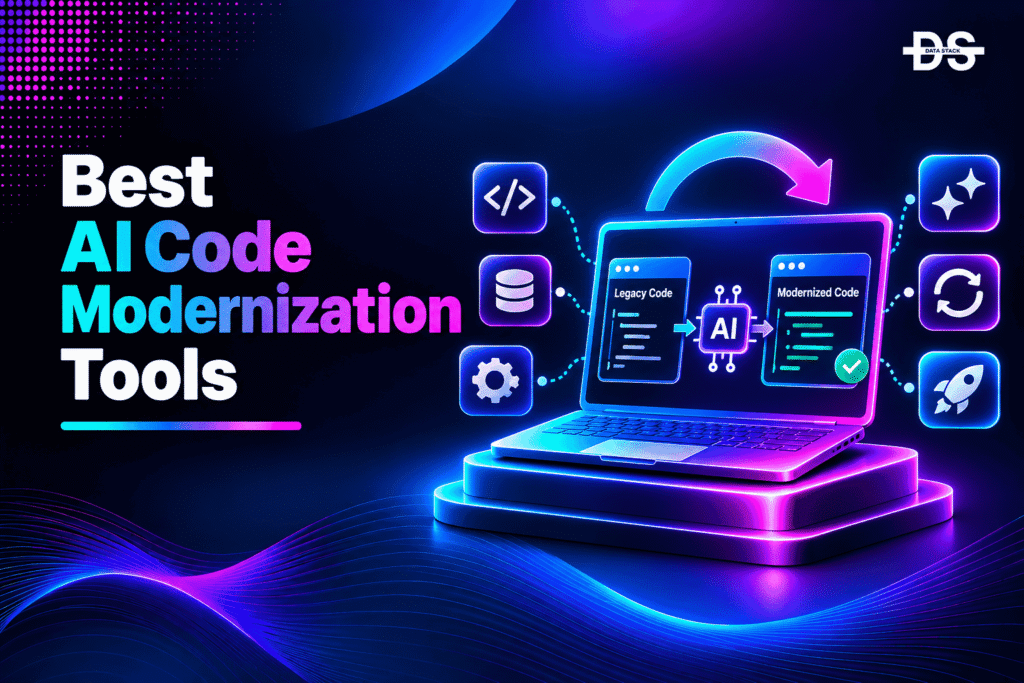
Legacy codebases are becoming increasingly difficult for enterprises to maintain as programming languages, frameworks, infrastructure, and software development practices continue to evolve. Applications built years or even decades ago often contain undocumented business logic, outdated dependencies, tightly coupled components, and architectural limitations. Modernizing these systems manually can require significant engineering effort, particularly when organizations operate hundreds of applications across different technologies.
AI is changing how development teams approach these modernization projects. Instead of relying entirely on manual code reviews and rewriting, AI-powered tools can analyze existing repositories, identify outdated frameworks, explain legacy business logic, recommend architectural changes, and assist with code transformations. Some platforms can also automate repetitive upgrades across multiple repositories and generate tests to help validate modernization work.
However, AI code modernization is different from using a general-purpose AI coding assistant. Modernization requires understanding how an existing application works, preserving important business rules, managing dependencies, and ensuring that transformed code behaves as expected. A tool that generates code quickly may not necessarily be suitable for transforming a mission-critical enterprise application.
In this guide, we explore nine AI code modernization tools that address different stages of the modernization process. From enterprise-wide code transformations and legacy application analysis to architecture modernization and automated code migration, these platforms help development teams reduce technical debt and prepare existing software for modern environments.
What Is AI Code Modernization?
AI code modernization is the process of using artificial intelligence to analyze, refactor, upgrade, translate, and improve existing software codebases. It helps development teams modernize legacy applications, replace outdated frameworks, address technical debt, and transition applications toward modern programming languages and architectures.
Traditional code modernization often involves developers manually reviewing source code, identifying dependencies, rewriting outdated components, and testing the resulting applications. These activities can become particularly difficult when the original developers are no longer available or when business logic is spread across thousands of files.
AI-powered modernization tools use large language models, code analysis engines, automated transformation recipes, and specialized agents to assist with these activities.
Common AI code modernization tasks include:
- Legacy code analysis: Understanding existing source code, application dependencies, and undocumented business logic.
- Code refactoring: Restructuring existing code to improve readability, maintainability, and modularity without unnecessarily changing its behavior.
- Language migration: Converting code from older programming languages into modern alternatives.
- Framework upgrades: Updating applications to newer versions of frameworks, libraries, and runtime environments.
- Architecture modernization: Breaking down tightly coupled applications and preparing monolithic systems for modular or microservices architectures.
- Technical debt remediation: Identifying and addressing outdated dependencies, deprecated APIs, vulnerabilities, and inefficient code patterns.
- Code validation: Generating tests, checking application behavior, and identifying issues introduced during transformation.
AI does not eliminate the need for software engineers during modernization. Developers still need to review generated changes, validate business logic, run regression tests, and approve production deployments.
How We Evaluated AI Code Modernization Tools
AI code modernization tools differ significantly in their capabilities. Some specialize in enterprise-wide code transformation, while others focus on understanding legacy applications, upgrading frameworks, or modernizing application architecture.
We evaluated the platforms based on the following criteria:
- AI-powered code analysis: Ability to understand existing codebases, identify dependencies, and explain legacy application behavior.
- Automated code transformation: Support for refactoring, language conversion, framework upgrades, and repetitive code changes.
- Legacy code modernization: Capabilities for working with older programming languages, frameworks, and enterprise applications.
- Architecture modernization: Support for restructuring monolithic applications, identifying service boundaries, and preparing applications for modern architectures.
- Testing and validation: Availability of code validation, test generation, behavioral comparison, and review workflows.
- Enterprise scalability: Ability to support large repositories, multiple applications, and complex enterprise modernization programs.
- Deployment flexibility: Availability of cloud, self-managed, or enterprise deployment options where applicable.
AI Code Modernization Tools Comparison
The following table compares the nine tools based on their modernization capabilities, ideal use cases, supported environments, and free trial availability. It helps distinguish platforms designed for broad enterprise transformations from those specializing in particular modernization workflows.
| Tool | Key Modernization Capabilities | Best For | Best-Suited Environment | Free Trial |
|---|---|---|---|---|
| AWS Transform | AI Code Analysis, Code Transformation, Language Migration, Technical Debt Remediation | Enterprise-scale code modernization and automated transformations | AWS and enterprise development environments | No |
| IBM Bob | Legacy Code Analysis, Code Refactoring, Language Modernization, Application Transformation | Modernizing IBM Z, IBM i, and enterprise application codebases | IBM Z, IBM i, Java, and enterprise environments | No |
| GitHub Copilot Modernization | Code Assessment, Framework Upgrades, Code Transformation, Application Rearchitecture | AI-assisted Java and .NET application modernization | GitHub Copilot, Visual Studio, and VS Code environments | No |
| Google Cloud Modernization Hub | AI Code Assessment, Legacy Code Transformation, Dependency Analysis, Application Modernization | Modernizing legacy Java, .NET, and mainframe workloads | Google Cloud | No |
| Moderne | Automated Code Refactoring, Framework Migration, Dependency Upgrades, Security Remediation | Large-scale code modernization across multiple repositories | Enterprise multi-repository environments | No |
| Kodesage | Legacy Code Understanding, Business Logic Extraction, Documentation Generation, Test Generation | Understanding and documenting complex legacy applications | Enterprise cloud and on-premises environments | No |
| vFunction | Architectural Analysis, AI-Assisted Refactoring, Monolith Decomposition, Service Extraction | Modernizing Java and .NET monolithic applications | Java and .NET enterprise applications | No |
| Codemod | Automated Code Migration, AST-Based Transformation, Framework Upgrades, AI-Assisted Migrations | Automating framework upgrades and large-scale code changes | JavaScript, TypeScript, and supported development environments | No |
| Mechanical Orchard Imogen | Legacy Code Analysis, AI Code Rewriting, Behavioral Validation, Automated Verification | Modernizing mission-critical mainframe applications | Legacy mainframe environments | No |
9 Best AI Code Modernization Tools in 2027: Detailed Comparison
1. AWS Transform
Deployment: Cloud-based
AWS Transform is an agentic AI service designed to help enterprises modernize legacy applications, infrastructure, and codebases. It supports modernization projects involving Windows applications, mainframes, VMware environments, and custom code transformations.
Unlike traditional code conversion utilities that focus on individual files or predefined migration rules, AWS Transform uses specialized AI agents to assist with different stages of modernization. These workflows can include application assessment, code analysis, dependency mapping, transformation planning, refactoring, and validation.
AWS Transform Custom extends these capabilities to organization-specific code modernization requirements. Development teams can define transformations for programming language upgrades, framework migrations, runtime changes, and architectural modifications. It also supports applying repeatable transformations across multiple repositories.
This makes the platform relevant for enterprises managing large application portfolios where manually upgrading every application would require substantial engineering resources.
Key Features
- Agentic Code Modernization: Uses specialized AI agents to analyze and transform existing codebases through guided modernization workflows.
- Custom Transformations: Allows organizations to define transformations for specific programming languages, frameworks, APIs, and internal development standards.
- Language Migration: Supports custom language conversion workflows, including scenarios such as COBOL-to-Java and other source-to-target transformations.
- Framework and Runtime Upgrades: Provides built-in transformations for supported upgrades involving Java, Python, Node.js, Spring Boot, and other technologies.
- Technical Debt Analysis: Identifies outdated frameworks, dependencies, and code modernization opportunities across repositories.
- Enterprise-Scale Execution: Supports running repeatable transformations across multiple repositories through centralized modernization workflows.
Limitations
AWS Transform is particularly relevant to organizations modernizing applications and infrastructure within AWS-oriented environments. Enterprises operating complex multi-cloud architectures should evaluate how its transformation workflows fit their existing development and deployment processes.
AI-generated transformations also require engineering review and testing. Complex applications may contain undocumented business rules, custom dependencies, or integration requirements that cannot be handled through automated transformations alone.
Why Choose AWS Transform?
AWS Transform is a strong option for enterprises that need to modernize large application portfolios rather than upgrade individual repositories manually. Its combination of agentic workflows, custom transformations, and enterprise-scale execution makes it relevant for organizations addressing technical debt across multiple systems.
2. IBM Bob
Deployment: Cloud and enterprise deployment options
IBM Bob is an AI-powered software development agent designed to support enterprise software engineering and application modernization. It helps developers understand existing applications, work with complex codebases, generate code, and execute modernization workflows.
Legacy enterprise applications often contain years of accumulated business logic, dependencies, and architectural decisions. Understanding these systems before changing them is one of the most challenging parts of modernization. IBM Bob addresses this problem through repository-level context, specialized AI workflows, and enterprise development capabilities.
IBM provides specialized modernization workflows for IBM Z, IBM i, and Java environments. These workflows support activities such as explaining legacy programs, documenting existing systems, refactoring code, updating application structures, and modernizing development processes.
For IBM i environments, for example, supported workflows include modernizing fixed-form RPG into free-form RPG, converting older RPG versions to ILE RPG, and restructuring monolithic programs into more modular components.
Key Features
- Legacy Code Understanding: Helps developers analyze existing applications and understand complex code structures and dependencies.
- Specialized Modernization Workflows: Provides prebuilt and customizable workflows for IBM Z, IBM i, and Java modernization.
- Code Explanation and Documentation: Generates explanations and documentation to help teams understand older applications.
- Code Refactoring: Assists with restructuring legacy programs and improving code organization.
- Language and Framework Modernization: Supports modernization activities involving legacy programming languages and enterprise development environments.
- Multi-Agent Development: Uses specialized agents and workflows to coordinate software development and modernization tasks.
Limitations
IBM Bob is particularly relevant to enterprises working with IBM technologies and complex software development environments. Organizations with unrelated technology stacks should evaluate its compatibility with their existing repositories, tools, and workflows.
AI-generated code changes also require testing and developer validation, particularly when modernizing applications that support critical business operations.
Why Choose IBM Bob?
IBM Bob is suitable for enterprises that need AI assistance across complex software development and modernization workflows. Its specialized capabilities for IBM Z, IBM i, and Java environments make it particularly relevant for organizations maintaining long-lived enterprise applications.
Showcase your software to buyers actively comparing tools. Submit your product for editorial review and get featured on Data Stack Hub.
Submit Your Tool →3. GitHub Copilot Modernization
Deployment: IDE and CLI-based
GitHub Copilot Modernization extends AI-assisted development into application assessment, framework upgrades, code migration, and architectural modernization. It helps developers work with existing Java and .NET applications rather than limiting AI assistance to writing new code.
Modernizing an established application often requires identifying outdated frameworks, deprecated APIs, incompatible dependencies, and architectural limitations before making changes. GitHub Copilot modernization workflows help developers analyze these issues and generate structured upgrade plans.
The modernization capabilities are available through GitHub Copilot integrations and Microsoft’s modernization workflows. Developers can use agent-based workflows to assess projects, plan changes, execute transformations, and validate the results.
Supported modernization scenarios include Java version upgrades, Spring Boot migrations, .NET upgrades, dependency modernization, and application rearchitecture.
Key Features
- Application Assessment: Analyzes existing applications to identify outdated frameworks, dependencies, deprecated APIs, and modernization opportunities.
- Java Modernization: Supports upgrades involving Java versions, Spring Boot, Jakarta EE, and deprecated Java APIs.
- .NET Modernization: Helps upgrade .NET applications and modernize project structures, dependencies, and application architectures.
- Azure Migration Workflows: Supports modernization activities for applications moving toward Azure services.
- Application Rearchitecture: Assists with structural changes, including modularization and monolith-to-microservices modernization.
- Automated Validation: Helps execute build and test checks to identify problems introduced during modernization.
Limitations
GitHub Copilot modernization is most useful for supported application technologies and workflows. Organizations working with highly customized legacy systems may need additional tools for application discovery, dependency analysis, and specialized code conversion.
The quality of generated changes also depends on repository context, existing tests, and the complexity of the application. Developers should review changes and validate application behavior before merging them.
Why Choose GitHub Copilot Modernization?
GitHub Copilot Modernization is a practical option for development teams that already use GitHub Copilot and want to extend AI assistance into application upgrades. Its assessment, planning, execution, and validation workflows help bring modernization activities closer to everyday development environments.
4. Google Cloud Modernization Hub
Deployment: Google Cloud
Google Cloud Modernization Hub is a workspace designed to help enterprises assess, plan, and modernize legacy applications and infrastructure. It brings modernization assessment and transformation workflows together within the Google Cloud environment.
Legacy Java, .NET, and mainframe applications can contain complex dependencies, outdated frameworks, and business logic that is difficult to understand. Modernization Hub helps organizations evaluate these applications before selecting a transformation strategy.
The platform supports automated code assessments, dependency analysis, modernization planning, and AI-assisted transformation workflows. Its capabilities are designed to help teams identify technical debt, understand application complexity, and determine which workloads are suitable for refactoring, replatforming, or rewriting.
Google Cloud also provides AI-powered modernization capabilities for Java and .NET applications, including framework upgrades, code refactoring, and preparation for containerized environments.
Key Features
- Automated Code Assessment: Analyzes source code to identify technical debt, compatibility issues, dependencies, and modernization blockers.
- Java Modernization: Supports Java application assessment, framework upgrades, and modernization toward contemporary Java environments.
- .NET Modernization: Helps identify legacy .NET dependencies and supports transformation toward modern .NET and Linux-based environments.
- AI-Assisted Code Transformation: Uses AI-powered workflows to help refactor legacy application code.
- Dependency Analysis: Identifies application dependencies and potential obstacles that affect modernization planning.
- Mainframe Modernization: Supports assessment and modernization planning for mainframe workloads within the broader Google Cloud modernization portfolio.
Limitations
Google Cloud Modernization Hub is designed around Google Cloud’s modernization ecosystem. Organizations targeting other cloud providers should evaluate how its workflows align with their destination architecture.
The Modernization Hub offering is subject to preview-stage limitations, and individual transformation capabilities may have different availability and maturity levels. Enterprises should also plan for manual code review, testing, and validation when working with complex legacy applications.
Why Choose Google Cloud Modernization Hub?
Google Cloud Modernization Hub is relevant for enterprises that want a structured approach to assessing and modernizing legacy applications. Its combination of code assessment, dependency analysis, and AI-assisted transformation makes it useful for Java, .NET, and broader enterprise modernization initiatives.
5. Moderne
Deployment: SaaS and self-managed enterprise options
Moderne is a code modernization platform built around OpenRewrite, an open-source framework for automated code refactoring and transformation. It helps development teams apply consistent code changes across large repositories without manually updating every application.
Enterprise software portfolios often contain hundreds or thousands of repositories with outdated dependencies, framework versions, and inconsistent coding patterns. Modernizing each repository separately can create significant engineering overhead.
Moderne addresses this challenge through large-scale code transformation. It allows organizations to execute reusable modernization recipes across multiple repositories and coordinate the resulting changes through reviewable pull requests.
The platform combines deterministic code transformation with AI-assisted workflows. Instead of relying entirely on generative AI to rewrite code, it uses structured transformation recipes that apply consistent changes based on code structure and semantic information.
Key Features
- OpenRewrite Integration: Uses the OpenRewrite transformation engine to perform structured code refactoring and migration.
- Multi-Repository Modernization: Executes modernization recipes across large numbers of repositories.
- Framework Upgrades: Supports migrations involving Java, Spring Boot, Quarkus, Hibernate, and other frameworks.
- Dependency Modernization: Helps update outdated libraries, dependencies, and build configurations.
- Security Remediation: Supports automated remediation workflows for supported vulnerabilities and outdated components.
- AI Agent Integration: Provides tools that allow coding agents to discover and execute deterministic modernization recipes.
- Pull Request Management: Generates coordinated, reviewable pull requests for engineering teams to validate before merging.
Limitations
Moderne is primarily focused on structured code transformation and large-scale repository modernization. It is not a universal replacement for tools that specialize in understanding undocumented business logic or rewriting entire legacy applications.
Organizations may also need engineering expertise to develop custom recipes for proprietary frameworks, internal coding standards, or highly specialized transformations.
Why Choose Moderne?
Moderne is particularly useful for enterprises managing large software portfolios with recurring modernization requirements. Its ability to execute consistent transformations across multiple repositories makes it a strong option for framework upgrades, dependency migrations, and technical debt remediation.
6. Kodesage
Deployment: Cloud and on-premises
Kodesage is an AI-powered legacy code understanding and modernization platform designed to help enterprises work with complex, long-running software systems. It focuses on extracting knowledge from existing applications so developers can understand and maintain codebases that may have limited or outdated documentation.
Legacy systems often contain important business rules distributed across source files, databases, documentation, tickets, and other development resources. When this information is fragmented, even relatively small code changes can require extensive investigation.
Kodesage addresses this problem by connecting different knowledge sources and creating a context-aware understanding of enterprise software projects. Developers can use the platform to ask questions about existing applications, explore business logic, generate documentation, and prepare modernization plans.
Its capabilities are particularly relevant before a major refactoring or migration project, when understanding how the original application works is essential.
Key Features
- Legacy Code Understanding: Analyzes complex codebases and helps developers understand existing application behavior.
- Business Logic Extraction: Identifies and documents business logic embedded within legacy source code.
- Knowledge Base: Connects code repositories with documentation, issue trackers, databases, and other knowledge sources.
- Automated Documentation: Generates technical documentation, system descriptions, and architecture diagrams.
- Test Generation: Supports the creation of unit tests, integration tests, and regression test documentation.
- Migration Planning: Helps teams prepare migration guides and understand the dependencies involved in modernization projects.
- Secure Deployment: Provides cloud and on-premises deployment options for enterprises with specific data security requirements.
Limitations
Kodesage focuses strongly on code understanding, knowledge extraction, and documentation rather than providing a complete automated source-to-target code conversion platform.
Organizations looking to transform an entire application into another programming language may need to combine Kodesage with specialized code transformation or migration tools.
Why Choose Kodesage?
Kodesage is a useful option for organizations that need to understand legacy applications before making major changes. Its knowledge extraction, documentation, and test generation capabilities can help reduce uncertainty during complex modernization projects.
Increase your product visibility by reaching software buyers researching the best tools. Every submission is reviewed by our editorial team.
Feature My Tool →7. vFunction
Deployment: Enterprise platform with self-managed components
vFunction is an application architecture modernization platform designed to help enterprises understand and restructure complex Java and .NET applications. It focuses on architectural technical debt, monolithic application dependencies, and the challenges involved in moving toward modular or microservices-based architectures.
Traditional code analysis tools can identify individual code issues, but understanding how a large application behaves at runtime requires additional context. vFunction combines static analysis and runtime insights to map application components, identify dependencies, and reveal architectural boundaries.
The platform uses this information to help development teams plan modernization activities, identify candidate services, and generate structured specifications for refactoring or rewriting application components.
It can also provide context and modernization instructions for AI coding assistants, helping developers carry out architectural changes with a better understanding of the existing application.
Key Features
- Static and Dynamic Analysis: Combines source code analysis with runtime information to understand application structure and behavior.
- Architecture Visualization: Maps application components, dependencies, execution flows, and potential service boundaries.
- Technical Debt Identification: Identifies architectural issues that affect application modularity, maintainability, and scalability.
- Monolith Decomposition: Helps identify opportunities to separate tightly coupled application components into independent services.
- AI-Assisted Refactoring: Generates modernization plans and specifications that can guide AI coding assistants.
- Integration Test Generation: Supports the generation of integration tests for extracted or rewritten application components.
- Java and .NET Support: Focuses on enterprise applications built with Java and .NET technologies.
Limitations
vFunction focuses primarily on application architecture and modernization planning rather than automatically translating every part of a legacy codebase.
Organizations may need to combine it with AI coding assistants, development tools, and testing frameworks to execute the recommended code changes. Its analysis also requires access to application environments and appropriate instrumentation.
Why Choose vFunction?
vFunction is a strong option for enterprises modernizing large Java and .NET monolithic applications. Its combination of runtime analysis, architectural visualization, and AI-assisted refactoring helps teams understand application boundaries before undertaking major structural changes.
8. Codemod
Deployment: Cloud platform and self-managed CLI
Codemod is an AI-powered code migration platform designed to automate framework upgrades, code transformations, and large-scale changes across software repositories.
Development teams frequently need to update application code when frameworks introduce breaking changes, dependencies become outdated, or organizations adopt new development standards. Performing these changes manually across multiple repositories can create repetitive work and inconsistent results.
Codemod helps automate these migrations through code transformation workflows. Its tooling includes a command-line interface, migration workflows, an ecosystem of reusable codemods, and support for AI-powered development environments.
The platform uses Abstract Syntax Tree (AST)-based transformations and semantic analysis to make structured code changes. This allows developers to create migrations that understand code structure rather than relying only on text replacement.
Key Features
- Automated Code Migrations: Supports automated transformations for framework upgrades, dependency changes, and other code modernization tasks.
- Codemod CLI: Allows developers to run, test, and manage code transformations from the command line or CI environments.
- AST-Based Transformations: Uses structured code analysis to identify and update specific code patterns.
- Migration Workflows: Supports multi-step transformations with configuration, execution strategies, and approval controls.
- Codemod Registry: Provides a way to discover, publish, and reuse community migration scripts.
- AI Integration: Supports AI-assisted code analysis and transformation through compatible development environments and MCP integrations.
- Repository-Wide Changes: Helps coordinate repeatable transformations across multiple repositories.
Limitations
Codemod is especially relevant for structured migrations and code changes supported by its transformation ecosystem. It is not a complete enterprise legacy modernization platform for reverse-engineering undocumented business logic or migrating entire mainframe systems.
Complex transformations may require custom codemods and engineering expertise. Teams should also test migration workflows against representative repositories before applying them across production codebases.
Why Choose Codemod?
Codemod is useful for engineering teams that need to automate repetitive code migrations and framework upgrades. Its combination of AST-based transformations, reusable codemods, and AI integrations makes it suitable for maintaining consistency across large development environments.
9. Mechanical Orchard Imogen
Deployment: Enterprise modernization platform
Mechanical Orchard Imogen is a mainframe modernization platform designed to rewrite legacy applications while validating their behavior against existing production systems. It focuses on one of the most challenging aspects of legacy modernization: preserving business functionality when replacing old applications with modern code.
Traditional mainframe modernization projects often require extensive reverse engineering to understand how applications behave. Simply translating source code into another language does not guarantee that the new application will produce the same results or preserve critical business rules.
Imogen takes a behavior-first approach. It analyzes existing applications and captures their behavior through real data flows across component interfaces. This information is used to guide AI-assisted code generation and validate the resulting implementation.
The platform divides modernization into interconnected analysis and rewriting workflows, allowing teams to compare the modernized application against the original system throughout the transformation process.
Key Features
- Deterministic Application Analysis: Analyzes legacy source code and maps application dependencies before transformation.
- Behavioral Specification: Captures application behavior using real data flows across system components.
- AI-Assisted Code Rewriting: Uses AI to generate modern code based on the analyzed application behavior.
- Continuous Verification: Compares transformed code against the original system’s behavior during the modernization process.
- Production Data Validation: Supports verification workflows based on real production data flows.
- Mainframe Modernization: Focuses on modernizing mission-critical legacy applications and mainframe workloads.
- Automated Modernization Pipeline: Connects analysis, code rewriting, and validation into a structured modernization workflow.
Limitations
Imogen is a specialized mainframe modernization platform rather than a general-purpose code refactoring tool. Organizations modernizing ordinary JavaScript, Python, or .NET repositories may find other platforms more appropriate.
Its behavior-based validation approach also requires access to suitable application data and system interfaces. Enterprises should evaluate the platform against their specific mainframe architecture and modernization targets.
Why Choose Mechanical Orchard Imogen?
Imogen is relevant for enterprises that need to replace mission-critical mainframe applications while maintaining existing business behavior. Its combination of AI-assisted rewriting and continuous behavioral verification addresses an important challenge in high-risk modernization projects.
When Should You Use an AI Code Modernization Tool?
AI code modernization tools become valuable when existing applications are difficult to maintain, upgrade, or adapt to changing technology requirements. The right time to adopt one depends on the condition of the codebase, the scale of technical debt, and the organization’s modernization objectives.
1. When You Are Managing Large Legacy Codebases: Large legacy applications can contain thousands of source files, outdated dependencies, and undocumented business rules. AI-powered code analysis tools help developers understand these systems and identify areas that require modernization.
2. When Frameworks and Dependencies Are Outdated: Applications built on older framework versions may become difficult to maintain and expose organizations to compatibility and security risks. Modernization tools can identify outdated dependencies and assist with framework upgrades and code changes.
3. When Manual Code Refactoring Is Becoming Expensive: Repeated manual changes across multiple repositories can consume significant engineering resources. Automated transformation platforms help teams apply consistent code updates and reduce repetitive modernization work.
4. When You Need to Migrate Between Programming Languages: Some enterprises need to move applications from legacy languages to modern alternatives. AI-assisted transformation tools can help analyze source code, extract business logic, and generate target-language implementations.
5. When Monolithic Applications Limit Scalability: Tightly coupled monolithic applications can make independent development and deployment difficult. Architecture modernization tools help identify service boundaries and plan the transition toward modular or microservices-based systems.
6. When Technical Debt Is Slowing Development: Outdated libraries, deprecated APIs, inconsistent coding patterns, and architectural dependencies can make software changes increasingly difficult. AI-powered modernization platforms help identify and address these issues systematically.
7. When Documentation and Internal Knowledge Are Missing: Older applications may depend on knowledge held by developers who are no longer part of the organization. AI code understanding tools can extract business logic, generate documentation, and help new developers understand existing systems.
8. When You Need to Modernize Multiple Repositories: Enterprises with hundreds of repositories often need to apply the same framework upgrades, security fixes, and coding standards across multiple applications. Platforms designed for enterprise-scale transformations can automate these repetitive changes.
How to Choose the Right AI Code Modernization Tool
Selecting an AI code modernization platform requires understanding the type of transformation your application needs. A tool designed for framework upgrades may not be suitable for converting a mainframe application, while a legacy code understanding platform may not provide automated source-to-source transformation.
Consider the following factors before making a decision.
1. Define Your Modernization Objective: Identify whether your primary requirement is legacy code analysis, framework upgrades, language migration, technical debt remediation, or architectural modernization.
For example, AWS Transform supports enterprise-scale transformations, while vFunction focuses on application architecture modernization. Kodesage is more relevant when understanding undocumented legacy code is the primary challenge.
2. Evaluate Programming Language Support: Review the languages, frameworks, runtimes, and application environments supported by the platform. This is particularly important when modernizing COBOL, Java, .NET, RPG, or other enterprise technologies.
Do not assume that a tool supporting one language can automatically modernize every application written in that language.
3. Review Code Analysis and Transformation Capabilities: Some platforms primarily analyze and document code, while others can execute automated transformations. Determine whether you need application discovery, code explanation, framework upgrades, language conversion, or complete architectural restructuring.
4. Assess Testing and Validation Workflows: Code modernization should preserve important application behavior. Review whether the tool supports automated testing, regression checks, dependency validation, behavioral comparison, and developer review.
For mission-critical systems, validation should be a core part of the modernization strategy rather than an activity performed only after code transformation.
5. Consider Enterprise Security Requirements: Enterprise source code can contain proprietary business logic and sensitive information. Review how the vendor handles source code access, data retention, encryption, access controls, and deployment requirements.
Organizations with strict security or regulatory requirements may prefer platforms that support private or on-premises deployment.
6. Check Repository and Development Tool Integrations: The modernization platform should fit into existing development workflows. Evaluate its compatibility with GitHub, GitLab, Bitbucket, IDEs, CI/CD systems, issue trackers, and testing environments.
This can help teams adopt modernization workflows without creating disconnected development processes.
7. Evaluate Scalability and Long-Term Maintenance: Consider how the platform performs across multiple repositories, large application portfolios, and recurring modernization projects. Also review how it handles future framework upgrades, security remediation, and changes to internal development standards.
The best tool should support ongoing modernization rather than solving only one migration project.
Browse expertly curated software recommendations across hundreds of business categories.
Browse Top Tools →Conclusion
AI code modernization is becoming an important part of enterprise software engineering as organizations work to reduce technical debt, upgrade legacy applications, and prepare existing systems for modern development environments. AI-powered platforms can help developers understand complex codebases, automate repetitive transformations, and accelerate modernization workflows that would otherwise require substantial manual effort.
The nine tools covered in this guide address different modernization requirements. AWS Transform and IBM Bob support enterprise application modernization, while GitHub Copilot Modernization and Google Cloud Modernization Hub help developers assess and upgrade existing applications. Moderne and Codemod focus on structured code transformations, whereas Kodesage helps organizations extract knowledge from complex legacy systems. vFunction addresses architectural modernization, and Mechanical Orchard Imogen focuses on behavior-verified mainframe rewriting.
There is no single AI code modernization platform that can handle every type of legacy application or transformation requirement. Organizations should evaluate their programming languages, application architecture, security requirements, and validation needs before selecting a solution.
Most importantly, AI-generated code should not be treated as automatically production-ready. Successful modernization still depends on engineering expertise, comprehensive testing, and careful validation of existing business behavior. The strongest approach combines AI-powered automation with human oversight to make modernization more scalable without compromising application reliability.
Frequently Asked Questions
1. What are AI code modernization tools?
AI code modernization tools are software platforms that use artificial intelligence, code analysis, and automated transformation techniques to upgrade existing applications. They help developers analyze legacy code, refactor applications, migrate between programming languages, update frameworks, and reduce technical debt.
2. What are the best AI code modernization tools in 2027?
Some of the leading AI code modernization tools include AWS Transform, IBM Bob, GitHub Copilot Modernization, Google Cloud Modernization Hub, Moderne, Kodesage, vFunction, Codemod, and Mechanical Orchard Imogen. Each platform addresses different modernization requirements, from enterprise code transformation to legacy application understanding and architecture modernization.
3. How does AI help with legacy code modernization?
AI helps analyze existing source code, explain business logic, identify dependencies, generate documentation, recommend refactoring changes, and assist with code transformation. It can also help generate tests and validate changes, reducing some of the manual work involved in legacy modernization projects.
4. Can AI tools convert legacy code into modern programming languages?
Yes. Some AI-powered modernization platforms support language transformation workflows. AWS Transform, for example, supports custom language transformation scenarios, while specialized mainframe modernization platforms can assist with rewriting legacy applications. However, the accuracy of conversion depends on application complexity, business logic, and validation requirements.
5. What is the difference between AI code modernization and AI coding assistants?
AI coding assistants primarily help developers write, explain, debug, and improve code during development. AI code modernization tools focus more specifically on upgrading existing applications, migrating frameworks, transforming legacy code, reducing technical debt, and restructuring application architecture. Some platforms combine both capabilities.
6. Can AI modernize monolithic applications into microservices?
AI can assist with monolith decomposition by analyzing application dependencies, identifying potential service boundaries, generating modernization plans, and helping developers refactor application components. Platforms such as vFunction provide architectural analysis and AI-assisted workflows for this process. However, service boundaries and business logic still require engineering review.
7. Are AI code modernization tools suitable for enterprise applications?
Yes. Several platforms are designed specifically for enterprise modernization projects involving large repositories, complex dependencies, legacy programming languages, and mission-critical applications. Enterprises should evaluate security, deployment flexibility, scalability, testing, and governance capabilities before adopting a platform.
8. How do AI code modernization tools reduce technical debt?
These tools help identify outdated dependencies, deprecated APIs, unsupported frameworks, inefficient code patterns, and architectural issues. Some platforms can automate repetitive upgrades and security remediation across multiple repositories, helping engineering teams address technical debt more consistently.
9. Can AI code modernization tools work with private source code?
Several enterprise platforms provide security controls and deployment options designed for proprietary source code. Depending on the vendor, these may include private cloud, on-premises, self-managed, or controlled enterprise environments. Organizations should review data handling, retention, encryption, and access policies before connecting private repositories.