
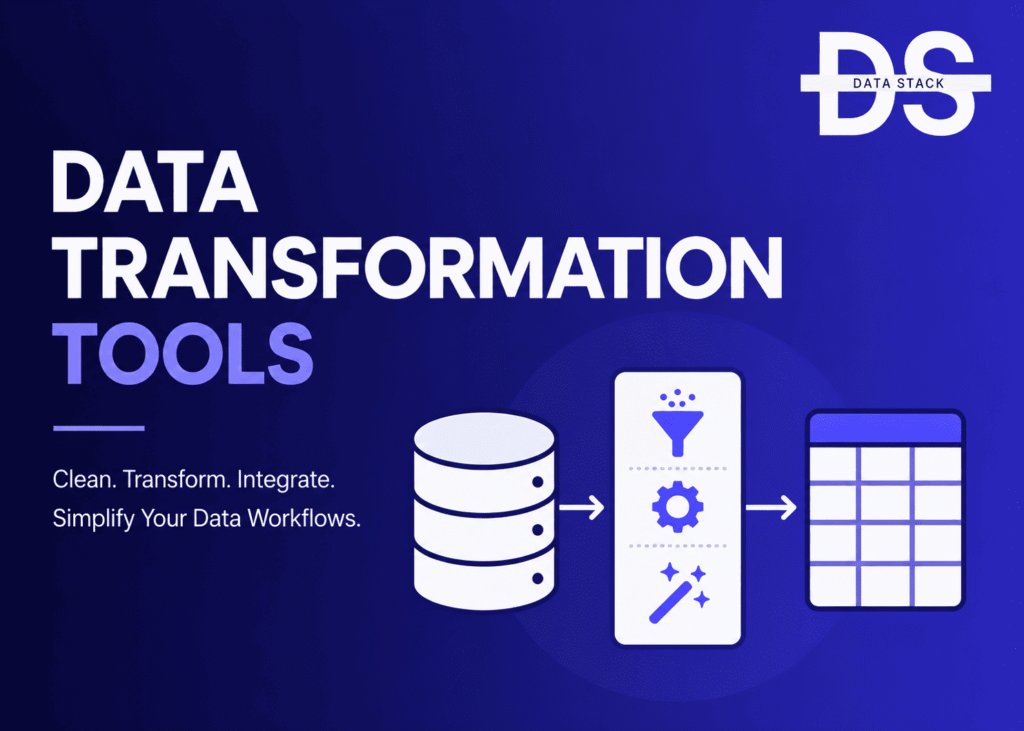
Organizations generate data from applications, APIs, databases, cloud platforms, operational systems, IoT devices, and third-party services. However, raw data is rarely structured in a way that supports reporting, analytics, machine learning, or operational decision-making.
Different systems use different schemas, naming conventions, formats, and data models. Before information can create business value, it typically needs to be cleaned, standardized, aggregated, enriched, filtered, and reorganized.
This is where Data Transformation Tools become essential.
Data Transformation Software helps organizations convert raw information into analytics-ready datasets that support business intelligence, AI initiatives, governance programs, customer analytics, operational reporting, and data-driven decision-making. Modern platforms automate transformation workflows while reducing engineering effort and improving consistency across enterprise data ecosystems.
As cloud warehouses, lakehouses, analytics engineering, and modern ELT architectures continue gaining adoption, data transformation has become one of the most critical layers in the modern data stack.
How We Evaluated Data Transformation Tools
To identify the best Data Transformation Tools, we evaluated platforms across seven important criteria:
- Transformation capabilities
- ETL and ELT support
- Cloud warehouse compatibility
- Automation and orchestration functionality
- Governance and metadata integration
- Ease of implementation and maintenance
- Market adoption and ecosystem maturity
Our rankings include enterprise ETL platforms, cloud-native transformation tools, analytics engineering solutions, and open-source technologies used by modern data teams.
What Are Data Transformation Tools?
Data Transformation Tools are software platforms that convert data from one format, structure, schema, or representation into another. Organizations use these tools to clean, standardize, enrich, aggregate, validate, normalize, and prepare information before it is consumed by analytics platforms, reporting systems, machine learning models, applications, and operational workflows. Modern Data Transformation Software supports ETL, ELT, real-time processing, cloud-native architectures, analytics engineering, and enterprise integration initiatives.
Benefits of Data Transformation Software
- Improve data consistency across systems and departments.
- Support analytics, business intelligence, and AI initiatives.
- Reduce manual preparation and processing effort.
- Accelerate cloud migration and modernization projects.
- Improve data quality and governance outcomes.
- Enable scalable processing across enterprise environments.
- Simplify integration between disparate systems.
Data Transformation Platform Comparison
| Tool | Best For | Pricing Model | Best Fit |
|---|---|---|---|
| dbt | Analytics engineering | Free + Paid | Modern data teams |
| Informatica Cloud Data Integration | Enterprise transformation | Custom | Large enterprises |
| Talend Data Integration | ETL and governance | Custom | Enterprises |
| Fivetran | ELT automation | Usage-based | Cloud analytics teams |
| Matillion | Warehouse-native transformation | Subscription | Cloud warehouses |
| Apache Spark | Large-scale processing | Open Source | Engineering teams |
| Dataiku | Analytics and AI workflows | Custom | Data-driven organizations |
| IBM DataStage | Enterprise ETL | Custom | Large enterprises |
| SnapLogic | Low-code transformation | Custom | Cloud-first organizations |
| AWS Glue | AWS-native transformation | Consumption-based | AWS customers |
| Coalesce | Snowflake transformation | Subscription | Analytics engineering teams |
| Airbyte | Open-source pipelines | Free + Paid | Modern data teams |
| CloverDX | Advanced transformation workflows | Custom | Technical teams |
13 Best Data Transformation Tools
#1 dbt
Overview
dbt has become the de facto standard for analytics engineering and modern warehouse-centric data transformation. Unlike traditional ETL platforms that transform information before loading it into a warehouse, dbt follows an ELT approach where data is first loaded into Snowflake, Databricks, BigQuery, Redshift, or Microsoft Fabric and then transformed directly within the platform.
The popularity of dbt comes from its ability to bring software engineering best practices into analytics workflows. Teams can version-control transformation logic, implement automated testing, manage deployment pipelines, document business logic, and collaborate using Git-based workflows. This approach has helped organizations treat analytics code with the same rigor as application development.
dbt is particularly popular among cloud-native organizations building modern data stacks around warehouses and lakehouses. While it is not a full integration platform like Informatica or Talend, it has become one of the most important technologies in modern data transformation architectures.
Key Features
- Executes transformations directly inside cloud warehouses such as Snowflake, Databricks, BigQuery, Redshift, and Microsoft Fabric, eliminating unnecessary data movement and improving performance.
- Supports modular SQL-based transformation models that make pipelines easier to maintain, audit, and scale across large analytics environments.
- Includes automated testing frameworks that validate transformed datasets before they reach dashboards, reports, machine learning models, and business users.
- Generates comprehensive documentation automatically, helping teams improve transparency and governance across analytics projects.
- Integrates with orchestration platforms, observability tools, CI/CD pipelines, and modern analytics engineering workflows.
- Supports reusable transformation logic that reduces duplication and improves consistency across business teams.
- Enables Git-based collaboration and version control, allowing data teams to manage transformations like software projects.
Pricing
Free open-source version available. Paid cloud plans and enterprise plans are available.
Best For
Analytics engineering teams building modern ELT architectures.
Why Choose This Tool
Choose dbt if your organization primarily transforms data inside cloud warehouses and wants a developer-friendly platform built around analytics engineering best practices. Few tools have influenced modern data transformation workflows as significantly as dbt, making it one of the safest long-term investments for cloud-native analytics teams.
G2 Rating: 4.8/5
Gartner Rating: 4.7/5
Showcase your software to buyers actively comparing tools. Submit your product for editorial review and get featured on Data Stack Hub.
Submit Your Tool →#2 Informatica Cloud Data Integration
Overview
Informatica Cloud Data Integration is one of the most comprehensive enterprise Data Transformation Platforms available today. The solution supports transformation, integration, migration, synchronization, governance, metadata management, master data management, and data quality initiatives across large-scale enterprise environments.
Many organizations choose Informatica because transformation projects rarely exist in isolation. Data often needs to move between applications, warehouses, cloud platforms, operational systems, and analytics environments while maintaining quality, compliance, and governance standards. Informatica addresses these broader requirements through a highly integrated platform.
The solution is particularly attractive to enterprises operating hybrid and multi-cloud architectures, where transformation workflows must support a diverse set of technologies and business requirements. Its maturity, scalability, and extensive connectivity have helped it remain a market leader for enterprise transformation initiatives.
Key Features
- Supports enterprise-scale transformation workflows across cloud, hybrid, and multi-cloud environments while maintaining governance and compliance requirements.
- Provides visual transformation design environments that reduce development effort while supporting highly complex business logic.
- Integrates transformation initiatives with metadata management, lineage tracking, stewardship, and governance programs.
- Connects to hundreds of enterprise applications, databases, warehouses, SaaS platforms, and cloud services through pre-built connectors.
- Supports reusable transformation components that improve consistency across migration, integration, and modernization projects.
- Includes advanced monitoring and operational visibility capabilities that help organizations manage transformation workloads effectively.
- Enables large-scale modernization initiatives involving legacy systems, warehouses, applications, and cloud environments.
Pricing
Custom enterprise pricing. Contact Informatica for a quote.
Best For
Large enterprises managing complex transformation and modernization initiatives.
Why Choose This Tool
Organizations that need transformation capabilities integrated with governance, metadata management, lineage, data quality, and enterprise integration initiatives consistently shortlist Informatica. It remains one of the strongest options for enterprises prioritizing scalability, compliance, and long-term platform consolidation.
G2 Rating: 4.4/5
Gartner Rating: 4.6/5
#3 Talend Data Integration
Talend Data Integration combines transformation, integration, governance, and quality management capabilities within a modern enterprise platform. The solution helps organizations build repeatable transformation workflows that support analytics, operational reporting, cloud migration, application modernization, and enterprise integration projects.
One of Talend’s primary strengths is its balance between enterprise functionality and modern cloud deployment flexibility. Organizations can implement transformation workflows across cloud, hybrid, and on-premises environments while maintaining governance and operational consistency. This flexibility has helped Talend remain relevant as enterprises transition toward cloud-first architectures.
Talend is commonly evaluated alongside Informatica because both platforms address broad enterprise transformation requirements. However, organizations often prefer Talend when they want strong transformation functionality combined with a modern cloud-oriented approach.
Key Features
- Supports both ETL and ELT architectures, allowing organizations to choose transformation strategies that align with their data platforms and business requirements.
- Provides visual transformation development environments that accelerate implementation while reducing dependence on extensive custom coding.
- Integrates transformation workflows with data quality monitoring, validation processes, and governance initiatives.
- Enables reusable transformation components that improve consistency across enterprise integration projects.
- Supports cloud, hybrid, and multi-cloud deployments across modern enterprise environments.
- Includes orchestration and automation capabilities that reduce operational overhead and improve scalability.
- Helps organizations standardize transformation logic across analytics, reporting, and operational systems.
Pricing
Custom pricing. Enterprise licensing available.
Best For
Organizations seeking transformation, quality, and governance capabilities within a single platform.
Why Choose This Tool
Talend is a strong choice for organizations that want transformation functionality tightly integrated with data quality, governance, and modernization initiatives. It offers a balanced combination of enterprise capability, cloud flexibility, and operational scalability.
G2 Rating: 4.3/5
Gartner Rating: 4.5/5
#4 Fivetran
Fivetran is best known for automated data movement, but it has become one of the most important platforms in modern Data Transformation architectures because of its close alignment with ELT workflows. Instead of requiring teams to build and maintain complex transformation infrastructure, Fivetran automates data ingestion and schema management while allowing transformation logic to run inside cloud warehouses through dbt and other analytics engineering tools.
Organizations adopt Fivetran because maintaining traditional ETL pipelines consumes significant engineering resources. Connector updates, API changes, schema drift, and operational maintenance often create bottlenecks. Fivetran eliminates much of this operational burden, allowing teams to focus on business logic and transformation outcomes rather than infrastructure management.
The platform is especially popular among organizations running Snowflake, Databricks, BigQuery, Redshift, and Microsoft Fabric environments where warehouse-centric transformation strategies are becoming the norm.
Key Features
- Automatically handles schema evolution and source-system changes, reducing maintenance effort across transformation pipelines.
- Supports warehouse-first ELT architectures that allow transformations to leverage cloud warehouse compute resources.
- Integrates natively with dbt, enabling organizations to separate ingestion and transformation responsibilities cleanly.
- Provides hundreds of managed connectors for SaaS applications, databases, APIs, and cloud platforms.
- Continuously synchronizes source data while minimizing engineering overhead.
- Supports modern analytics engineering workflows and cloud-native data architectures.
- Reduces operational complexity associated with maintaining traditional ETL pipelines.
Pricing
Usage-based pricing. Free plan available. Enterprise plans available.
Best For
Cloud analytics teams prioritizing automation and low-maintenance ELT architectures.
Why Choose This Tool
Fivetran is ideal for organizations that want to minimize infrastructure management and focus transformation efforts within modern cloud warehouses. It is particularly valuable for lean data teams seeking scalability without increasing operational complexity.
G2 Rating: 4.6/5
Gartner Rating: 4.5/5
#5 Matillion
Matillion is a cloud-native Data Transformation Platform built specifically for cloud data warehouses and lakehouses. Unlike many legacy ETL products that were later adapted for cloud environments, Matillion was designed around platforms such as Snowflake, BigQuery, Databricks, Redshift, and Azure Synapse from the beginning.
The platform combines visual pipeline development with warehouse-native execution, enabling organizations to leverage warehouse compute power while maintaining a low-code development experience. This balance has helped Matillion gain significant adoption among organizations modernizing analytics and reporting environments.
Many companies choose Matillion because it offers a middle ground between highly technical transformation frameworks such as dbt and traditional enterprise ETL platforms that may introduce additional operational complexity.
Key Features
- Executes transformations directly inside cloud warehouses, improving scalability and reducing unnecessary data movement.
- Provides a visual development environment that accelerates implementation and reduces coding requirements.
- Supports both ETL and ELT transformation approaches depending on organizational requirements.
- Integrates with leading cloud warehouses, applications, and data platforms.
- Includes orchestration and scheduling capabilities that simplify operational management.
- Supports reusable transformation logic across analytics and reporting projects.
- Enables faster modernization of legacy ETL environments.
Pricing
Subscription-based pricing. Enterprise plans available.
Best For
Organizations standardizing on cloud warehouses and warehouse-native transformation.
Why Choose This Tool
Matillion is an excellent option for teams seeking cloud-first transformation capabilities with a strong balance between usability, scalability, and warehouse optimization.
G2 Rating: 4.4/5
Gartner Rating: 4.5/5
Increase your product visibility by reaching software buyers researching the best tools. Every submission is reviewed by our editorial team.
Feature My Tool →#6 Apache Spark
Apache Spark remains one of the most influential technologies in modern Data Transformation and large-scale data processing. Rather than functioning as a traditional ETL application, Spark serves as a distributed computing framework capable of handling massive transformation workloads across structured, semi-structured, and unstructured data.
Organizations use Spark for data engineering, analytics, machine learning, streaming, and large-scale transformation initiatives where conventional ETL tools may struggle with volume, complexity, or performance requirements. The technology powers many commercial platforms, including Databricks, which was originally built by Spark’s creators.
Spark is especially valuable for organizations processing large datasets across cloud and hybrid environments where performance and scalability are critical business requirements.
Key Features
- Processes large-scale datasets using distributed computing architectures that support high-performance transformation workloads.
- Supports batch processing, streaming, machine learning, and advanced analytics within a single framework.
- Integrates with modern cloud environments including AWS, Azure, and Google Cloud.
- Handles structured, semi-structured, and unstructured data formats efficiently.
- Supports SQL, Python, Scala, Java, and R development environments.
- Enables advanced transformation logic that extends beyond traditional ETL use cases.
- Powers many modern data lake and lakehouse architectures.
Pricing
Open source. Infrastructure and managed-service costs apply.
Best For
Engineering teams processing large-scale transformation workloads.
Why Choose This Tool
Apache Spark is the preferred choice when transformation requirements exceed the capabilities of traditional ETL platforms and demand large-scale distributed processing.
G2 Rating: 4.5/5
Gartner Rating: 4.6/5
#7 Dataiku
Dataiku combines data preparation, transformation, analytics, and AI capabilities within a unified platform. Rather than focusing exclusively on transformation, Dataiku helps organizations move information from raw data to business outcomes through collaborative workflows that support analysts, engineers, and data scientists.
Organizations frequently adopt Dataiku because transformation activities often support broader analytics and machine learning initiatives. By connecting these disciplines within a single environment, the platform reduces tool fragmentation and improves collaboration across teams.
Dataiku is particularly attractive to enterprises pursuing AI, advanced analytics, and data-driven decision-making programs that require strong transformation capabilities alongside broader analytical functionality.
Key Features
- Supports visual and code-based transformation workflows that accommodate both business and technical users.
- Integrates transformation activities directly with analytics, machine learning, and AI initiatives.
- Provides collaborative environments that improve coordination across teams.
- Connects to warehouses, databases, cloud platforms, and enterprise applications.
- Supports governance, compliance, and operational management requirements.
- Enables reusable transformation pipelines across multiple business use cases.
- Helps organizations accelerate analytics and AI projects.
Pricing
Free edition available. Enterprise pricing available.
Best For
Organizations combining transformation, analytics, and AI initiatives.
Why Choose This Tool
Dataiku is ideal for enterprises that view transformation as part of a broader analytics and AI strategy rather than an isolated technical function.
G2 Rating: 4.5/5
Gartner Rating: 4.6/5
#8 IBM InfoSphere DataStage
IBM InfoSphere DataStage is an enterprise-grade Data Transformation Platform designed for organizations managing large-scale integration, migration, and modernization initiatives. The platform supports complex transformation workflows across cloud, hybrid, and on-premises environments while maintaining governance and operational controls.
Large enterprises frequently choose DataStage because transformation requirements often involve mission-critical systems, regulatory obligations, and high-volume workloads. The platform’s maturity and scalability make it particularly attractive in industries such as banking, healthcare, insurance, telecommunications, and government.
Key Features
- Supports enterprise-scale transformation workloads across complex environments.
- Provides metadata-driven development that improves governance and maintainability.
- Includes visual transformation design environments for accelerated development.
- Supports cloud, hybrid, and traditional deployment models.
- Integrates transformation activities with governance and compliance initiatives.
- Enables operational monitoring and workload management.
- Helps organizations modernize legacy integration environments.
Pricing
Custom enterprise pricing.
Best For
Large enterprises managing mission-critical transformation projects.
Why Choose This Tool
IBM DataStage remains one of the strongest options for organizations prioritizing scalability, governance, operational reliability, and long-term enterprise support.
G2 Rating: 4.2/5
Gartner Rating: 4.5/5
#9 SnapLogic
SnapLogic is a cloud-native integration and Data Transformation Platform that emphasizes low-code development and automation. The platform helps organizations build transformation workflows quickly while reducing the need for extensive custom coding.
Its ease of use and cloud-first architecture have helped SnapLogic gain adoption among organizations modernizing legacy integration environments and accelerating digital transformation initiatives.
Key Features
- Provides low-code transformation development that accelerates implementation timelines.
- Supports cloud-native architectures and modern integration requirements.
- Includes visual workflow design capabilities that improve accessibility.
- Enables real-time and batch transformation processing.
- Connects to applications, databases, APIs, and cloud services.
- Supports automation and orchestration of transformation workflows.
- Reduces development effort compared to traditional coding-heavy approaches.
Pricing
Custom enterprise pricing.
Best For
Organizations seeking low-code cloud transformation capabilities.
Why Choose This Tool
SnapLogic is a strong fit for businesses that want to accelerate transformation projects while reducing dependence on specialized development resources.
G2 Rating: 4.3/5
Gartner Rating: 4.5/5
#10 AWS Glue
AWS Glue is Amazon’s serverless Data Integration and Transformation Platform designed for organizations operating within AWS ecosystems. The service helps teams discover, prepare, transform, catalog, and move data without managing dedicated infrastructure.
One of AWS Glue’s biggest advantages is its serverless architecture. Traditional transformation platforms often require organizations to provision, monitor, and scale infrastructure manually. AWS Glue removes much of this operational burden by automatically allocating resources based on workload requirements.
The platform is widely used for building cloud-native ETL and ELT pipelines, preparing data for analytics, loading warehouses, supporting machine learning initiatives, and processing large-scale operational datasets. Organizations heavily invested in AWS frequently view Glue as a natural extension of their cloud architecture.
Key Features
- Provides serverless transformation capabilities that eliminate infrastructure management requirements.
- Supports both ETL and ELT workflows for analytics, reporting, and operational use cases.
- Automatically discovers schemas and maintains metadata through the AWS Glue Data Catalog.
- Integrates closely with Amazon S3, Redshift, Athena, EMR, and other AWS analytics services.
- Scales transformation workloads automatically based on processing requirements.
- Supports batch and event-driven processing architectures.
- Helps organizations modernize traditional ETL environments within AWS ecosystems.
Pricing
Consumption-based pricing. Pay only for resources used.
Best For
Organizations running AWS-centric analytics and transformation architectures.
Why Choose This Tool
AWS Glue is an excellent choice for organizations seeking scalable transformation capabilities without the operational complexity of managing dedicated infrastructure.
G2 Rating: 4.3/5
Gartner Rating: 4.4/5
#11 Coalesce
Coalesce is one of the fastest-growing modern Data Transformation Platforms and has gained significant attention among analytics engineering teams. Built specifically for cloud data warehouses, the platform focuses on accelerating transformation development while maintaining governance, testing, and operational consistency.
Unlike traditional ETL products designed around data movement, Coalesce focuses primarily on transformation logic within cloud warehouses. This approach aligns closely with modern ELT architectures and allows organizations to leverage warehouse compute resources efficiently.
Many teams evaluate Coalesce alongside dbt because both platforms target warehouse-centric transformation workflows. However, Coalesce emphasizes visual development and automation, making it attractive to organizations seeking faster implementation and broader accessibility.
Key Features
- Executes transformations directly inside cloud data warehouses.
- Provides visual development environments that reduce coding requirements.
- Automates dependency management across transformation pipelines.
- Supports testing, governance, and operational monitoring initiatives.
- Helps analytics teams accelerate transformation development.
- Integrates with modern cloud warehouse ecosystems.
- Improves maintainability of large-scale analytics engineering projects.
Pricing
Subscription pricing. Enterprise plans available.
Best For
Analytics engineering teams working primarily with Snowflake and cloud warehouses.
Why Choose This Tool
Coalesce is a compelling option for organizations that want warehouse-native transformation capabilities with a stronger visual development experience than purely code-based solutions.
G2 Rating: 4.7/5
Gartner Rating: Not Available
#12 Airbyte
Airbyte is one of the most widely adopted open-source data movement and transformation platforms in modern data stacks. Although the platform is primarily known for ingestion, it plays an important role in transformation architectures through its support for normalization, warehouse-centric processing, and integration with tools such as dbt.
Organizations frequently choose Airbyte because it provides flexibility, transparency, and deployment control that many commercial platforms cannot match. The large connector ecosystem and active open-source community have helped it become a common choice for startups, technology companies, and modern analytics teams.
Airbyte is especially attractive to organizations seeking to reduce vendor lock-in while maintaining compatibility with cloud-native analytics architectures.
Key Features
- Supports open-source deployment and customization across modern environments.
- Provides hundreds of connectors for applications, databases, APIs, and cloud platforms.
- Enables warehouse-native transformation approaches through normalization workflows.
- Integrates closely with dbt and analytics engineering ecosystems.
- Allows organizations to self-host and control transformation infrastructure.
- Supports cloud, hybrid, and self-managed deployment models.
- Reduces dependence on proprietary integration and transformation platforms.
Pricing
Open source version available. Cloud and enterprise plans available.
Best For
Modern data teams seeking open-source flexibility and cloud-native architectures.
Why Choose This Tool
Airbyte is ideal for organizations that want greater control over their transformation ecosystem while maintaining compatibility with modern cloud analytics workflows.
G2 Rating: 4.5/5
Gartner Rating: Not Available
#13 CloverDX
CloverDX is a Data Integration and Transformation Platform designed for organizations managing complex transformation, migration, automation, and operational data processing workflows. The platform provides greater flexibility than many low-code tools while remaining more accessible than purely code-driven frameworks.
Organizations often adopt CloverDX when transformation requirements involve sophisticated business logic, custom validation rules, large-scale automation, or highly specialized operational processes. This flexibility makes it popular among technical teams that need greater control over transformation workflows.
Unlike some transformation platforms optimized primarily for analytics environments, CloverDX supports a broad range of operational and business integration use cases.
Key Features
- Supports advanced transformation workflows involving complex business logic and validation requirements.
- Provides visual development capabilities alongside technical customization options.
- Enables automation of migration, integration, and operational processing workflows.
- Supports cloud, hybrid, and on-premises deployment environments.
- Includes orchestration and monitoring capabilities for production workloads.
- Helps organizations manage highly specialized transformation requirements.
- Provides flexibility for technical teams working across diverse environments.
Pricing
Custom enterprise pricing.
Best For
Technical teams managing complex transformation and automation requirements.
Why Choose This Tool
CloverDX is a strong option for organizations that require more flexibility and customization than many low-code transformation platforms can provide.
G2 Rating: 4.5/5
Gartner Rating: 4.4/5
Which Data Transformation Tool Should You Choose?
| Scenario | Recommended Tool |
|---|---|
| Best Overall | dbt |
| Best Enterprise Platform | Informatica Cloud Data Integration |
| Best for Governance-Heavy Organizations | Talend Data Integration |
| Best for Cloud Warehouses | Matillion |
| Best Open Source Option | Airbyte |
| Best for Large-Scale Processing | Apache Spark |
| Best for Analytics Engineering | dbt |
| Best for AWS Users | AWS Glue |
| Best for Low-Code Development | SnapLogic |
| Best for Snowflake Teams | Coalesce |
| Best for AI and Analytics Projects | Dataiku |
| Best for Complex Enterprise Workloads | IBM DataStage |
Browse expertly curated software recommendations across hundreds of business categories.
Browse Top Tools →Conclusion
Data Transformation Tools sit at the center of modern data architectures. Whether organizations are building analytics platforms, supporting AI initiatives, modernizing legacy systems, or improving operational reporting, transformation capabilities determine how effectively raw information becomes business value.
The market has evolved significantly over the last several years. Traditional enterprise ETL leaders such as Informatica, Talend, and IBM continue to dominate large-scale transformation initiatives, while modern platforms such as dbt, Coalesce, Matillion, and Airbyte are reshaping how cloud-native teams approach transformation workflows.
Organizations building warehouse-centric architectures frequently choose dbt as their transformation layer, while enterprises requiring broader governance, metadata management, integration, and compliance capabilities often favor Informatica or Talend. Engineering-heavy organizations processing large-scale workloads continue to rely on Apache Spark, while AWS customers frequently standardize on AWS Glue.
The best Data Transformation Software ultimately depends on your architecture, governance requirements, cloud strategy, team structure, and long-term modernization goals.
FAQs
1. What are Data Transformation Tools?
Data Transformation Tools help organizations convert, clean, standardize, enrich, aggregate, and restructure data before it is used for analytics, reporting, machine learning, integration, and operational processes.
2. Why is data transformation important?
Data transformation ensures information is consistent, usable, and compatible across systems, improving analytics accuracy and business decision-making.
3. What are the best Data Transformation Tools?
dbt, Informatica Cloud Data Integration, Talend Data Integration, Matillion, Apache Spark, AWS Glue, and Dataiku are among the leading platforms available today.
4. What is the difference between ETL and ELT?
ETL transforms data before loading it into a destination system, while ELT loads data first and performs transformations inside the warehouse or lakehouse.
5. Which Data Transformation Tool is best for Snowflake?
dbt, Matillion, and Coalesce are among the most popular options for Snowflake-based transformation workflows.
6. Are there open-source Data Transformation Tools?
Yes. Apache Spark, Airbyte, and dbt Core are among the most widely adopted open-source solutions.
7. How do Data Transformation Platforms support analytics?
These platforms prepare raw information for dashboards, reporting systems, machine learning models, and business intelligence initiatives.
8. Which industries use Data Transformation Software?
Financial services, healthcare, retail, manufacturing, telecommunications, government, insurance, and technology organizations all rely heavily on transformation platforms.
9. How do Data Transformation Tools support cloud migration?
They help organizations standardize, restructure, and move information between legacy environments and modern cloud platforms.
10. How do I choose the right Data Transformation Tool?
Evaluate transformation capabilities, cloud compatibility, governance support, scalability, pricing, operational complexity, and alignment with your overall data architecture.