
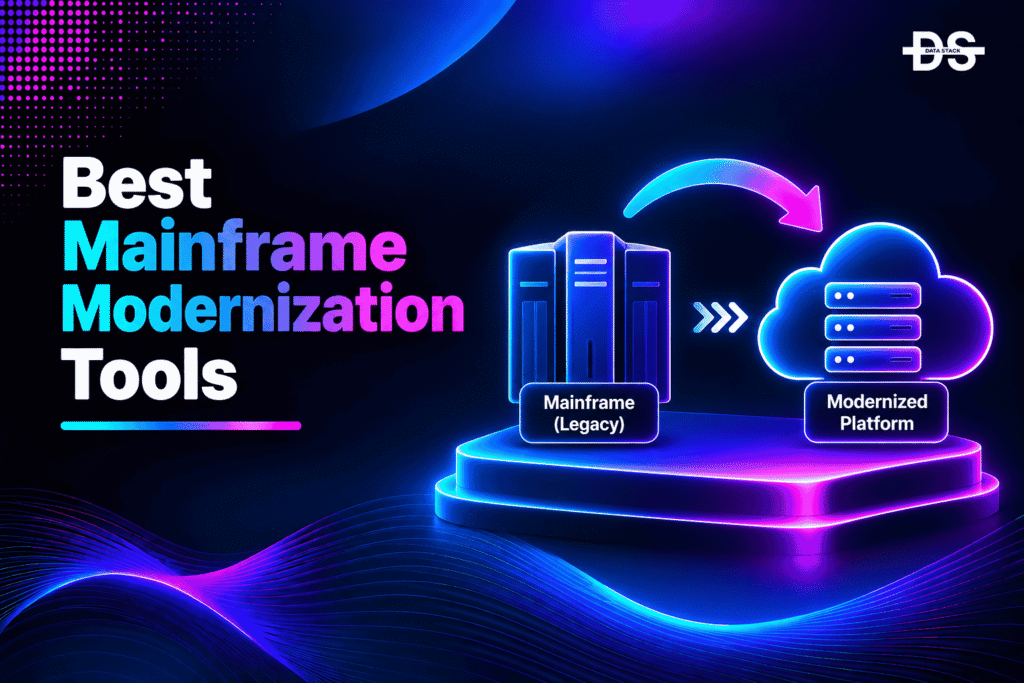
Mainframes continue to support some of the world’s most critical enterprise workloads, including banking transactions, insurance processing, government systems, airline reservations, and large-scale financial operations. However, many organizations still depend on applications developed decades ago using technologies such as COBOL, PL/I, JCL, CICS, IMS, and DB2. Maintaining these environments can become increasingly difficult as experienced mainframe developers retire, integration requirements evolve, and businesses seek more flexible infrastructure.
Mainframe modernization offers a way to address these challenges without necessarily replacing the entire system. Organizations can modernize applications incrementally, move workloads to cloud infrastructure, expose legacy functionality through APIs, refactor COBOL applications into modern programming languages, or retain existing code while changing the runtime environment.
Modernization tools have evolved beyond traditional code conversion utilities. AI-powered platforms can now analyze legacy source code, extract business rules, map application dependencies, generate technical documentation, and assist with code transformation. Other solutions focus on rehosting, application testing, data migration, and integrating mainframe systems with modern applications.
Choosing the right platform depends on the modernization strategy. An organization looking to migrate COBOL applications to Java has different requirements from one that wants to run existing mainframe workloads on distributed infrastructure without rewriting its source code.
This guide examines 10 mainframe modernization tools that support different stages of the process. We compare their capabilities, target environments, and use cases to help enterprises identify suitable platforms for modernizing legacy mainframe applications.
What Is Mainframe Modernization?
Mainframe modernization is the process of upgrading legacy mainframe applications, infrastructure, data, and development workflows to meet current business and technology requirements. It involves improving how applications are developed, maintained, integrated, deployed, and operated without necessarily replacing the entire mainframe environment.
Traditional mainframe systems often rely on tightly coupled applications, older programming languages, specialized databases, and batch-processing workflows. These systems may continue to perform critical business functions, but maintaining them can create challenges involving scalability, integration, development skills, and infrastructure costs.
Mainframe modernization can follow several approaches:
- Rehosting: Moving existing mainframe applications to distributed infrastructure or cloud environments while making minimal changes to application code.
- Replatforming: Moving applications to a different runtime or operating environment while retaining much of their existing source code and business logic.
- Refactoring: Restructuring existing applications to improve maintainability, modularity, and compatibility with modern infrastructure.
- Code transformation: Converting legacy programming languages such as COBOL or PL/I into modern languages such as Java.
- API enablement: Exposing mainframe programs, transactions, and data through APIs so modern applications can access existing business functionality.
- Data modernization: Moving or synchronizing legacy data stored in DB2, VSAM, IMS, and other systems into modern databases and data platforms.
- Application replacement: Replacing selected legacy applications with newly developed systems or commercial software where a rewrite or replacement is justified.
These approaches can also be combined. For example, an enterprise may first expose its mainframe transactions through APIs, then gradually refactor selected business functions while keeping the remaining workloads operational.
How We Evaluated Mainframe Modernization Tools
Mainframe modernization platforms address different technical requirements, so evaluating them requires looking beyond their ability to convert source code. We considered the following capabilities when selecting and comparing the tools:
- Application discovery and assessment: Ability to analyze legacy applications, identify dependencies, understand business logic, and document existing systems.
- COBOL and legacy language modernization: Support for COBOL, PL/I, JCL, Assembler, RPG, and other mainframe technologies.
- Code transformation: Capabilities for refactoring legacy programs, converting source code, and modernizing application structures.
- Rehosting and replatforming: Support for running existing mainframe applications on distributed infrastructure or cloud environments.
- API enablement: Ability to expose mainframe programs, transactions, and data through modern interfaces.
- Testing and validation: Support for regression testing, behavioral comparison, application verification, and migration validation.
- Enterprise compatibility: Integration with mainframe databases, transaction processing systems, development environments, and enterprise infrastructure.
- Deployment flexibility: Availability of cloud, hybrid, on-premises, and distributed deployment options.
Mainframe Modernization Tools Comparison
The following table compares 10 mainframe modernization tools based on their core capabilities, intended use cases, supported environments, and free trial availability. Some platforms focus on transforming legacy code, while others specialize in application discovery, rehosting, or validating modernized workloads.
| Tool | Key Modernization Capabilities | Best For | Best-Suited Environment | Free Trial |
|---|---|---|---|---|
| AWS Transform for mainframe | AI Code Analysis, COBOL Transformation, Business Logic Extraction, Application Decomposition, Testing | AI-assisted mainframe application refactoring and cloud modernization | IBM z/OS and Fujitsu GS21 workloads targeting AWS | No |
| Google Cloud Mainframe Assessment Tool (MAT) | Application Discovery, Dependency Mapping, Business Rule Extraction, Documentation, Assessment | Understanding and assessing complex mainframe application portfolios | COBOL, PL/I, JCL, and mainframe environments | No |
| Google Cloud Dual Run | Parallel Execution, Functional Validation, Data Comparison, Migration Verification | Validating mainframe modernization before production cutover | Mainframe and Google Cloud environments | No |
| IBM watsonx Code Assistant for Z | AI Code Explanation, COBOL Refactoring, Code Generation, Java Transformation, Testing | AI-assisted IBM Z application modernization | IBM z/OS, COBOL, and Java environments | No |
| IBM Application Discovery and Delivery Intelligence (ADDI) | Application Discovery, Dependency Analysis, Impact Analysis, Code Visualization, Documentation | Understanding legacy application dependencies and modernization risks | IBM z/OS and enterprise mainframe environments | No |
| Rocket Enterprise Suite | COBOL and PL/I Replatforming, Application Analysis, Development, Testing, Runtime Modernization | Moving mainframe applications to distributed and cloud environments | IBM mainframe applications and distributed platforms | No |
| OpenText Enterprise Server | Mainframe Emulation, COBOL Application Rehosting, Runtime Compatibility, Distributed Deployment | Running existing mainframe applications outside traditional mainframe infrastructure | COBOL applications on distributed environments | No |
| TSRI JANUS Studio | Automated Code Transformation, Application Refactoring, Architecture Modernization, Documentation | Transforming complex legacy applications into modern architectures | COBOL, PL/I, JCL, Assembler, and other legacy technologies | No |
| Heirloom Computing | COBOL and PL/I Transformation, Java Modernization, Database Migration, Runtime Modernization | Converting mainframe applications into Java-based environments | z/OS, COBOL, PL/I, CICS, IMS, and Java environments | No |
| OpenLegacy Hub | Mainframe Discovery, API Generation, Application Decoupling, Data Integration, Incremental Modernization | Exposing mainframe applications and data through modern APIs | IBM z/OS, IBM i, COBOL, CICS, IMS, DB2, and VSAM | No |
10 Best Mainframe Modernization Tools in 2027: Detailed Comparison
1. AWS Transform for Mainframe
Deployment: AWS cloud-based
AWS Transform for mainframe is an agentic AI-powered modernization service designed to help enterprises analyze, refactor, and modernize legacy mainframe applications. It supports modernization workflows involving COBOL, PL/I, JCL, CICS, BMS, DB2, and VSAM.
Traditional mainframe modernization projects often require extensive manual analysis before developers can begin changing application code. Teams need to understand program relationships, transaction flows, database dependencies, and business rules that may have accumulated over decades. AWS Transform addresses this challenge by using specialized AI agents to analyze application codebases and organize modernization activities into structured workflows.
The platform can identify application assets, map dependencies, extract business logic, generate documentation, and decompose large application structures into business functions. These capabilities help enterprises understand which parts of an application should be modernized first.
For code transformation, AWS Transform can refactor COBOL-based applications into modern Java implementations. Its human-in-the-loop workflows allow developers and architects to review modernization plans and approve important transformation decisions rather than relying entirely on automated execution.
Key Features
- Mainframe Code Analysis: Analyzes COBOL, PL/I, JCL, and associated mainframe artifacts to understand application structure and dependencies.
- Business Logic Extraction: Identifies business functions and extracts the logic embedded in legacy programs.
- Application Decomposition: Helps break large mainframe applications into smaller business-oriented components that can be modernized incrementally.
- COBOL-to-Java Transformation: Supports automated refactoring of COBOL-based workloads into modern Java applications.
- Documentation Generation: Generates technical documentation to help developers understand legacy application behavior and modernization requirements.
- Testing and Validation: Supports modernization testing workflows to help verify transformed application behavior.
- Human-in-the-Loop Workflows: Allows engineering teams to review plans, transformation outputs, and important modernization decisions.
Limitations
AWS Transform is designed for AWS-oriented modernization journeys, so organizations targeting other cloud environments should evaluate the additional work required to adapt its transformation outputs and deployment workflows.
Complex mainframe applications may also contain undocumented business rules, custom integrations, and specialized runtime dependencies that require manual engineering review. AI-generated transformations should be tested against the original application’s behavior before production deployment.
Why Choose AWS Transform for Mainframe?
AWS Transform is a strong option for enterprises looking to modernize large mainframe applications through AI-assisted analysis and code transformation. Its combination of business logic extraction, application decomposition, COBOL refactoring, and validation workflows makes it relevant for organizations planning a structured move toward cloud-native application architectures.
2. Google Cloud Mainframe Assessment Tool (MAT)
Deployment: Google Cloud
Google Cloud Mainframe Assessment Tool (MAT) is designed to help enterprises understand existing mainframe applications and prepare them for modernization. It uses generative AI and mainframe-specific analysis workflows to assess legacy source code, extract business rules, and generate technical documentation.
One of the biggest challenges in mainframe modernization is understanding what an application actually does before changing it. Large COBOL and PL/I environments may contain thousands of interconnected programs, batch jobs, data structures, and transaction flows. Manual discovery can take considerable time, particularly when documentation is incomplete or outdated.
MAT helps automate this discovery process. It analyzes source code and related artifacts to identify application dependencies, map relationships between programs and data stores, and extract business logic. The resulting information provides teams with a clearer view of the existing application landscape.
The tool is primarily intended for the discovery and assessment stages of modernization. It helps organizations determine application complexity, understand dependencies, and prepare modernization plans before using transformation or migration technologies.
Key Features
- Automated Application Assessment: Analyzes legacy mainframe codebases to help identify application structure, complexity, and modernization requirements.
- Dependency Mapping: Identifies relationships between programs, datasets, and other application components.
- Business Rule Extraction: Uses AI-assisted analysis to extract business logic from existing source code.
- Technical Documentation: Generates documentation that helps developers and architects understand legacy application behavior.
- Application Portfolio Understanding: Helps organize application knowledge and identify potential modernization boundaries.
- Migration Planning: Provides assessment information that can support decisions about rehosting, refactoring, and application transformation.
- Modernization Workflow Integration: Works as part of the broader Google Cloud mainframe modernization ecosystem.
Limitations
MAT focuses primarily on application assessment and reverse engineering. It should not be treated as a complete replacement for code transformation, rehosting, or production migration platforms.
The quality of the assessment also depends on the availability and completeness of source code and related application artifacts. Enterprises may need additional tools to execute transformations and validate the resulting applications.
Why Choose Google Cloud Mainframe Assessment Tool?
MAT is useful for organizations that need to understand complex mainframe environments before committing to a modernization strategy. Its AI-assisted documentation, dependency analysis, and business rule extraction capabilities help reduce the uncertainty involved in large-scale mainframe projects.
Showcase your software to buyers actively comparing tools. Submit your product for editorial review and get featured on Data Stack Hub.
Submit Your Tool →3. Google Cloud Dual Run
Deployment: Google Cloud
Google Cloud Dual Run is a mainframe modernization validation solution designed to help enterprises compare the behavior of existing mainframe applications with their modernized counterparts before production cutover.
Migrating a mainframe application is not simply a matter of moving source code or transferring databases. Enterprises need to establish that the modernized application produces the expected results under real workloads. Differences in data processing, transaction handling, batch execution, or business logic can create significant operational risks.
Dual Run addresses this challenge by allowing organizations to execute workloads in parallel across the original mainframe and the target environment. It captures and compares outputs to help identify differences between the two implementations.
This approach is particularly useful for high-value applications where business continuity and functional correctness are essential. Rather than relying only on test cases created during development, teams can use production workload patterns to evaluate whether the modernized system behaves consistently with the original application.
Key Features
- Parallel Workload Execution: Supports running corresponding workloads across legacy and modernized environments.
- Functional Comparison: Compares application outputs to identify differences between the original and target implementations.
- Data Validation: Helps identify discrepancies in generated records and processing results.
- Migration Risk Reduction: Provides additional evidence that modernized workloads behave as expected before cutover.
- Production Workload Validation: Supports validation based on real workload patterns rather than relying exclusively on synthetic tests.
- Cutover Readiness: Helps modernization teams evaluate application behavior before moving production operations to the target environment.
Limitations
Dual Run is a validation solution rather than a general-purpose code conversion or application discovery platform. Organizations still need separate tools and processes to analyze and transform legacy applications.
Parallel execution also requires suitable workload capture, environment preparation, and data comparison strategies. Teams must account for differences in system timing, external integrations, and data handling when interpreting validation results.
Why Choose Google Cloud Dual Run?
Dual Run is particularly relevant for enterprises modernizing mission-critical mainframe applications where functional correctness is a major concern. Its parallel execution and output comparison capabilities help organizations build confidence before moving production workloads to a modern environment.
4. IBM watsonx Code Assistant for Z
Deployment: IBM Z and enterprise deployment environments
IBM watsonx Code Assistant for Z is an AI-powered development and modernization assistant designed specifically for IBM Z mainframe applications. It helps developers understand legacy code, document application behavior, refactor programs, and support transformations into modern programming languages.
Many IBM Z applications contain decades of accumulated code and business logic. Developers working with these systems often need to investigate dependencies, understand older programming patterns, and identify how changes in one program may affect other components.
watsonx Code Assistant for Z addresses these challenges through AI-assisted code explanation, application analysis, and modernization workflows. Its capabilities include understanding application structures, generating technical documentation, assisting with code refactoring, and supporting COBOL-to-Java transformation.
The platform also uses mainframe-specific context and metadata to improve the relevance of AI-generated outputs. This is important when working with enterprise applications where generic code generation may not understand the relationships between programs, transactions, and data structures.
Key Features
- AI-Powered Code Explanation: Generates natural-language explanations of legacy COBOL and other supported mainframe code.
- Application Discovery: Helps developers understand application relationships, program structures, and dependencies.
- Business Logic Documentation: Supports generating technical documentation from existing application code.
- COBOL Refactoring: Assists with restructuring and improving legacy COBOL programs.
- COBOL-to-Java Transformation: Supports modernization workflows that translate COBOL application logic into Java.
- Code Generation: Helps generate code that follows established enterprise development standards.
- Testing Support: Assists developers with generating and improving tests during modernization activities.
- Agentic Workflows: Supports AI-assisted workflows that combine application context, metadata retrieval, and development tasks.
Limitations
watsonx Code Assistant for Z is designed specifically for IBM Z modernization and development workflows. Organizations running other mainframe platforms may need different solutions or additional integration work.
AI-generated code also requires developer review, particularly when applications contain complex transaction flows, external dependencies, and business-critical processing rules. Enterprises should establish a comprehensive testing strategy before adopting generated transformations in production systems.
Why Choose IBM watsonx Code Assistant for Z?
IBM watsonx Code Assistant for Z is a relevant option for enterprises that want to modernize IBM Z applications without losing the context of their existing mainframe environment. Its combination of AI-assisted code understanding, documentation, refactoring, and transformation makes it useful for organizations addressing legacy development challenges.
5. IBM Application Discovery and Delivery Intelligence (ADDI)
Deployment: Enterprise and on-premises environments
IBM Application Discovery and Delivery Intelligence (ADDI) is an application analysis platform designed to help enterprises understand complex mainframe application environments. It provides visibility into source code, application relationships, dependencies, and the potential impact of software changes.
Before modernizing a mainframe application, organizations need to understand how individual programs interact with shared data, transaction processing systems, batch jobs, and external services. Missing these relationships can result in migration failures or unexpected changes in application behavior.
ADDI helps address this challenge through automated application discovery and impact analysis. It analyzes source code and associated artifacts to map dependencies, visualize application structures, and help developers understand how different components interact.
The platform is particularly useful during modernization planning, where teams need to identify application boundaries, estimate the impact of changes, and prioritize workloads for migration or refactoring.
Key Features
- Application Discovery: Analyzes mainframe source code and application assets to create a structured view of existing systems.
- Dependency Analysis: Maps relationships between programs, data structures, and application components.
- Impact Analysis: Helps identify which applications and components may be affected by proposed code changes.
- Code Visualization: Provides visual representations of application relationships and program structures.
- Application Documentation: Helps developers understand existing code and maintain technical knowledge.
- Modernization Planning: Provides insights that can support application migration, refactoring, and transformation decisions.
- Development Integration: Supports development workflows by helping teams understand application changes and their potential impact.
Limitations
ADDI focuses on application discovery and analysis rather than performing complete source-code transformation or rehosting. Organizations planning to convert COBOL applications to Java or move workloads to distributed infrastructure will need additional modernization tools.
Its effectiveness also depends on the availability of relevant source code and application metadata. Complex environments may require additional configuration and analysis to obtain a complete picture of dependencies.
Why Choose IBM ADDI?
IBM ADDI is a suitable choice for organizations that need visibility into complex IBM Z application portfolios before making modernization decisions. Its dependency mapping and impact analysis capabilities help reduce the risk of changing interconnected mainframe applications.
6. Rocket Enterprise Suite
Deployment: Mainframe, distributed, and cloud environments
Rocket Enterprise Suite is a mainframe application modernization solution designed to help organizations replatform existing COBOL and PL/I applications onto distributed infrastructure. It allows enterprises to move workloads away from traditional mainframe hardware while preserving much of their existing application code and business logic.
Not every organization wants to rewrite its mainframe applications in Java or replace established business processes. In many cases, the immediate objective is to reduce infrastructure constraints while continuing to use existing COBOL and PL/I applications.
Rocket Enterprise Suite supports this approach through application replatforming. It helps organizations move mainframe workloads to different production environments while maintaining compatibility with important application components and runtime dependencies.
The broader Rocket modernization portfolio also includes application analysis, development, testing, and runtime technologies. These capabilities help organizations plan and execute modernization projects without treating code conversion as the only available strategy.
Key Features
- Application Replatforming: Supports moving IBM mainframe COBOL and PL/I applications to distributed production environments.
- Application Compatibility: Helps preserve existing business rules and application behavior during replatforming.
- Enterprise Analyzer: Provides application intelligence and analysis capabilities to support modernization planning.
- Enterprise Developer: Offers development tools for maintaining and updating mainframe applications.
- Enterprise Server: Provides a distributed runtime environment for executing supported mainframe applications.
- Testing Support: Includes testing technologies to help validate application changes and modernization activities.
- Cloud Deployment: Supports replatforming strategies that target cloud and distributed infrastructure.
Limitations
Rocket Enterprise Suite is primarily associated with replatforming and preserving existing application code rather than automatically rewriting entire COBOL systems into Java or other modern languages.
Organizations should carefully assess runtime compatibility, third-party dependencies, database behavior, batch scheduling, and transaction processing requirements before selecting a replatforming strategy.
Why Choose Rocket Enterprise Suite?
Rocket Enterprise Suite is a strong option for enterprises that want to move mainframe applications to distributed infrastructure without undertaking a complete code rewrite. Its focus on COBOL and PL/I replatforming makes it relevant for organizations pursuing a lower-disruption modernization strategy.
Increase your product visibility by reaching software buyers researching the best tools. Every submission is reviewed by our editorial team.
Feature My Tool →7. OpenText Enterprise Server
Deployment: Distributed and cloud environments
OpenText Enterprise Server is an application runtime and mainframe emulation platform that helps organizations run supported legacy mainframe applications on distributed infrastructure. It is associated with the Micro Focus Enterprise Server technology portfolio and supports modernization strategies where enterprises want to move applications away from traditional mainframe hardware without completely rewriting their source code.
For many organizations, replacing a mainframe application involves more than translating COBOL into another language. Existing applications may depend on transaction processing, batch execution, database access, job scheduling, and other mainframe behaviors. Recreating these capabilities from scratch can introduce significant complexity.
Enterprise Server addresses this challenge by providing a compatible runtime environment for supported applications. It allows organizations to run and manage legacy workloads on distributed platforms while retaining much of the original application code.
This approach can support rehosting and infrastructure modernization initiatives where preserving existing business logic is more important than rewriting the application architecture.
Key Features
- Mainframe Emulation: Provides a runtime environment that emulates supported mainframe application services.
- COBOL Application Support: Supports execution of compatible COBOL applications in distributed environments.
- Transaction Processing: Supports mainframe-style transaction processing through compatible runtime services.
- Batch Workload Execution: Helps execute supported batch applications and associated job workflows.
- Distributed Deployment: Supports running applications on distributed infrastructure instead of traditional mainframe hardware.
- Development Integration: Works with associated COBOL development and application modernization technologies.
- Infrastructure Modernization: Supports rehosting strategies that retain application code while changing the execution environment.
Limitations
Enterprise Server is a runtime and rehosting solution rather than a comprehensive AI-powered code transformation platform. Organizations that want to refactor COBOL into Java or redesign monolithic applications will need additional tools.
Compatibility should also be evaluated carefully. Applications may depend on specific mainframe behaviors, utilities, databases, and external integrations that require configuration or modification during migration.
Why Choose OpenText Enterprise Server?
OpenText Enterprise Server is relevant for organizations that want to modernize mainframe infrastructure while retaining supported application code. Its emulation-based approach can reduce the scope of changes required compared with a full application rewrite.
8. TSRI JANUS Studio
Deployment: Enterprise modernization platform
TSRI JANUS Studio is an automated software modernization platform designed to transform complex legacy applications into modern programming languages and architectures. It uses a combination of deterministic transformation techniques and generative AI capabilities to support large-scale enterprise modernization projects.
Legacy mainframe applications often contain tightly coupled code, outdated database structures, and complex business rules. Simply translating the source code into another language may preserve many of the architectural limitations that made the original application difficult to maintain.
JANUS Studio takes a broader approach by analyzing and transforming application structures, databases, user interfaces, and internal dependencies. Its modernization workflows can convert legacy source code into target languages and then apply iterative refactoring to improve the resulting application.
The platform supports a broad range of legacy technologies, including COBOL, PL/I, JCL, Assembler, RPG, and other programming languages. This makes it relevant for organizations managing heterogeneous legacy environments rather than only standard IBM Z applications.
Key Features
- Automated Source Code Analysis: Analyzes legacy application code to understand program structures and dependencies.
- Multi-Language Transformation: Supports modernization across COBOL, PL/I, JCL, Assembler, RPG, and other legacy languages.
- Automated Code Conversion: Transforms legacy source code into selected modern target languages.
- Iterative Refactoring: Applies automated and semi-automated changes to improve code structure, maintainability, security, and performance.
- Architecture Modernization: Helps transform monolithic applications into modular, multi-tiered, and cloud-enabled architectures.
- Database Modernization: Supports transformations involving legacy database structures and modern target databases.
- Technical Documentation: Generates detailed documentation and UML representations of existing and transformed applications.
- Composite AI Approach: Combines deterministic modernization techniques with generative AI-assisted analysis and recommendations.
Limitations
JANUS Studio is an enterprise modernization platform rather than a simple self-service code conversion utility. Complex modernization projects generally require collaboration between the vendor, enterprise teams, and implementation partners.
Organizations should also evaluate target-language support, database compatibility, external interfaces, and testing responsibilities before starting a transformation project. Automated conversion does not remove the need for application-level validation.
Why Choose TSRI JANUS Studio?
TSRI JANUS Studio is suitable for enterprises that need to transform complex legacy systems rather than simply move existing workloads to another runtime. Its multi-language support, automated transformation, iterative refactoring, and documentation capabilities make it relevant for large-scale modernization programs.
9. Heirloom Computing
Deployment: Cloud and distributed environments
Heirloom Computing provides mainframe modernization technology designed to transform legacy applications into Java-based environments. It helps organizations move mainframe workloads to modern infrastructure while preserving the original business logic and supporting application behavior.
Traditional mainframe migration can involve complex dependencies across programming languages, databases, transaction systems, and batch processing. Rewriting these applications manually can introduce significant costs and operational risks.
Heirloom addresses this challenge through automated application transformation. Its technology supports the conversion of legacy COBOL and PL/I applications into Java, along with associated mainframe components such as JCL, BMS, CICS, and IMS.
The platform also supports modernization of legacy data environments, including VSAM and other mainframe data structures. This allows enterprises to approach application and data modernization as interconnected activities rather than treating source-code conversion as an isolated task.
Key Features
- COBOL-to-Java Transformation: Supports transforming COBOL applications into Java-based implementations.
- PL/I Modernization: Provides support for converting supported PL/I applications into Java environments.
- Mainframe Component Support: Addresses associated technologies such as JCL, BMS, CICS, and IMS.
- Data Modernization: Supports modernization of legacy data structures, including VSAM and IMS database environments.
- Distributed Deployment: Enables modernized applications to run in cloud and distributed infrastructure.
- Application Compatibility: Supports migration strategies that aim to preserve existing application functionality and business logic.
- Modern Development Environment: Helps organizations transition from traditional mainframe development practices toward Java-based development workflows.
Limitations
Heirloom is focused on mainframe-to-Java modernization rather than providing a universal platform for every legacy programming language and target architecture. Organizations with extensive Assembler, RPG, or proprietary application components may need partner technologies or additional transformation work.
The conversion process also requires validation of database behavior, transaction processing, batch execution, and external integrations. Enterprises should test representative application workloads before moving production systems.
Why Choose Heirloom Computing?
Heirloom Computing is a relevant option for organizations that want to move legacy COBOL and PL/I applications toward Java-based environments. Its support for mainframe application components and associated data structures makes it suitable for enterprises pursuing application-level modernization rather than simple infrastructure rehosting.
10. OpenLegacy Hub
Deployment: SaaS and on-premises
OpenLegacy Hub is a mainframe and IBM i modernization platform designed to expose legacy applications, transactions, and data through modern APIs and integration services. It helps organizations connect existing mainframe systems with cloud applications, web services, mobile applications, and other enterprise technologies without requiring a complete rewrite of the underlying systems.
Many organizations still depend on mainframe applications that perform essential business functions. Replacing these systems can be expensive and risky, particularly when their business logic is tightly integrated with databases, transaction processing, and other enterprise applications.
OpenLegacy takes an incremental modernization approach. It helps organizations discover legacy application assets, understand dependencies, generate APIs, and connect existing systems with modern applications.
Its broader platform also supports application decoupling, data synchronization, and selected replatforming workflows. This allows enterprises to expose specific business functions first and gradually modernize other parts of the environment.
Key Features
- Mainframe API Generation: Creates modern APIs from supported COBOL programs, transactions, screens, and data structures.
- Application Discovery: Helps identify legacy application components, dependencies, operations, and data relationships.
- Legacy Data Integration: Supports exposing DB2, VSAM, IMS, and other supported data sources through modern interfaces.
- API and Event Integration: Helps connect mainframe functionality with REST APIs, messaging systems, and modern applications.
- Application Decoupling: Supports separating selected business functions from legacy systems without requiring a complete rewrite.
- Incremental Modernization: Allows enterprises to modernize individual business processes while keeping existing systems operational.
- IBM i Support: Provides modernization capabilities for IBM i applications, including RPG-related assets and data structures.
- Hybrid Deployment: Supports enterprise integration requirements across cloud, on-premises, and hybrid environments.
Limitations
OpenLegacy focuses strongly on API enablement, integration, and incremental modernization rather than full-scale COBOL-to-Java source-code conversion.
Organizations that want to replace their entire mainframe application architecture will generally need additional code transformation, rehosting, or application development technologies. Its API-led approach is most appropriate when retaining the existing system of record is part of the modernization strategy.
Why Choose OpenLegacy Hub?
OpenLegacy Hub is a suitable option for enterprises that want to make mainframe functionality accessible to modern applications without immediately replacing the underlying systems. Its API generation, application discovery, data integration, and incremental modernization capabilities support a phased approach to mainframe modernization.
When Should You Use a Mainframe Modernization Tool?
Mainframe modernization tools become valuable when legacy infrastructure, application complexity, or integration requirements begin to limit business and technology operations. The appropriate time to adopt these platforms depends on the organization’s mainframe architecture, modernization strategy, and long-term application requirements.
1. When You Are Managing Complex COBOL and PL/I Applications
Large COBOL and PL/I environments can contain decades of accumulated business logic, application dependencies, and outdated programming patterns. Modernization tools help teams analyze these applications, document their behavior, and identify opportunities for refactoring or transformation.
2. When Mainframe Expertise Is Becoming Difficult to Maintain
Organizations may depend on a small number of experienced developers who understand older programming languages and application architectures. Application discovery and AI-assisted documentation tools can help extract technical knowledge and make legacy systems easier for new development teams to understand.
3. When You Want to Move Mainframe Workloads to the Cloud
Traditional mainframe infrastructure may not align with an organization’s cloud strategy. Rehosting and replatforming solutions help move supported workloads to distributed infrastructure while retaining much of their existing application code.
4. When You Need to Convert COBOL Applications into Modern Languages
Some organizations want to move away from legacy programming languages and adopt Java or other modern development technologies. Code transformation platforms can help analyze source code, convert application logic, and restructure selected components.
5. When Legacy Applications Are Difficult to Integrate
Mainframe applications often operate separately from modern business applications, cloud platforms, and digital services. API modernization tools help expose existing functionality through modern interfaces without requiring an immediate application rewrite.
6. When You Need to Reduce Mainframe Infrastructure Dependencies
Organizations looking to reduce dependence on traditional mainframe hardware may consider rehosting or replatforming. These approaches can move supported workloads to distributed environments while preserving important application functionality.
7. When Application Dependencies Are Difficult to Understand
Mainframe systems frequently contain interconnected programs, batch jobs, transaction flows, and databases. Application discovery tools help map these relationships so development teams can plan modernization activities without overlooking critical dependencies.
8. When You Need to Validate a Mainframe Migration
Mission-critical applications must continue producing correct results after modernization. Parallel execution and output comparison tools help enterprises validate the behavior of transformed applications before production cutover.
How to Choose the Right Mainframe Modernization Tool
Selecting a mainframe modernization platform requires understanding the existing application environment and deciding how much of the system needs to change. A rehosting project has different requirements from a COBOL-to-Java transformation or an API-led modernization initiative.
Consider the following factors before choosing a solution.
1. Define Your Modernization Strategy
Start by determining whether you want to rehost, replatform, refactor, rewrite, or incrementally modernize existing applications.
For example, Rocket Enterprise Suite and OpenText Enterprise Server are relevant to replatforming and rehosting approaches, while TSRI JANUS Studio and Heirloom Computing focus more on application transformation.
2. Evaluate Mainframe Language Support
Review the programming languages and technologies used across your existing environment. These may include COBOL, PL/I, JCL, Assembler, RPG, CICS, IMS, and related application components.
Do not assume that a tool supporting COBOL can automatically handle every associated mainframe dependency.
3. Assess Application Discovery Capabilities
Before changing legacy code, organizations need a reliable understanding of application structure, business rules, data dependencies, and transaction flows.
Platforms such as Google Cloud MAT and IBM ADDI help address these requirements through application assessment, dependency analysis, and documentation.
4. Compare Code Transformation and Runtime Options
Determine whether the target architecture requires a new programming language or simply a different execution environment.
If the objective is to move existing COBOL workloads to distributed infrastructure, a rehosting or replatforming solution may be sufficient. If the goal is to adopt Java-based application development, a code transformation platform may be more appropriate.
5. Review Data and Database Compatibility
Mainframe applications may rely on DB2, VSAM, IMS, and other legacy data technologies. Evaluate how the selected tool handles data extraction, conversion, synchronization, database migration, and application access.
Data modernization should be planned alongside application modernization to avoid creating inconsistencies between transformed programs and their underlying data.
6. Prioritize Testing and Functional Validation
A successful modernization project must preserve essential application behavior. Evaluate whether the solution supports automated testing, regression testing, parallel execution, output comparison, and validation of batch and transaction workloads.
For mission-critical applications, functional validation should be planned from the beginning of the project.
7. Consider Integration and Deployment Requirements
Review compatibility with existing development tools, databases, schedulers, security systems, monitoring platforms, and cloud environments.
Organizations should also consider whether the solution supports on-premises, hybrid, distributed, or cloud deployment based on their infrastructure and regulatory requirements.
8. Evaluate Long-Term Maintenance and Modernization Costs
Compare licensing, infrastructure requirements, implementation effort, migration complexity, and ongoing support. A tool that simplifies the initial migration but creates substantial maintenance overhead may not provide the best long-term outcome.
Also consider how the platform will support future application upgrades, security remediation, and development workflows after the initial modernization project is complete.
Browse expertly curated software recommendations across hundreds of business categories.
Browse Top Tools →Conclusion
Mainframe modernization is not a single migration activity. It involves understanding legacy applications, evaluating infrastructure dependencies, transforming code where necessary, modernizing data, and validating application behavior before moving workloads into new environments.
The 10 tools covered in this guide address different parts of that process. AWS Transform and IBM watsonx Code Assistant for Z support AI-assisted application analysis and code modernization. Google Cloud MAT and IBM ADDI help enterprises understand legacy application structures, while Google Cloud Dual Run supports functional validation before migration cutover. Rocket Enterprise Suite and OpenText Enterprise Server address replatforming and rehosting requirements. TSRI JANUS Studio and Heirloom Computing focus on application transformation, while OpenLegacy Hub supports API-led and incremental modernization.
The right platform depends on the organization’s existing mainframe technologies, target architecture, modernization objectives, and tolerance for application change. Some enterprises may benefit from preserving existing COBOL applications while moving them to distributed infrastructure. Others may need to transform selected applications into Java or expose legacy business functionality through APIs.
A successful modernization strategy should prioritize application understanding, controlled transformation, and comprehensive testing. Combining the right modernization tools with experienced engineering teams helps enterprises reduce legacy constraints while preserving the business processes that their mainframe applications support.
Frequently Asked Questions
1. What are mainframe modernization tools?
Mainframe modernization tools are software platforms and technologies that help organizations upgrade legacy mainframe applications, infrastructure, data, and development processes. They support activities such as application discovery, COBOL transformation, rehosting, replatforming, API enablement, data migration, and testing.
2. What are the best mainframe modernization tools in 2027?
Some of the leading mainframe modernization tools include AWS Transform for mainframe, Google Cloud Mainframe Assessment Tool, Google Cloud Dual Run, IBM watsonx Code Assistant for Z, IBM ADDI, Rocket Enterprise Suite, OpenText Enterprise Server, TSRI JANUS Studio, Heirloom Computing, and OpenLegacy Hub. Each platform supports different modernization requirements.
3. What is the difference between mainframe rehosting and refactoring?
Rehosting involves moving an existing mainframe application to another infrastructure environment with minimal changes to its source code. Refactoring involves modifying the application’s internal structure to improve maintainability, modularity, or compatibility with modern architectures. Rehosting generally changes where the application runs, while refactoring changes how the application is structured.
4. Can AI modernize legacy COBOL applications?
Yes. AI-powered tools can analyze COBOL source code, explain business logic, identify dependencies, generate documentation, and assist with code transformation. Platforms such as AWS Transform for mainframe and IBM watsonx Code Assistant for Z support AI-assisted mainframe modernization workflows. Generated code still requires engineering review and functional testing.
5. Can COBOL applications be converted into Java?
Yes. COBOL applications can be transformed into Java using specialized modernization platforms and automated code conversion technologies. AWS Transform, IBM watsonx Code Assistant for Z, TSRI JANUS Studio, and Heirloom Computing support different COBOL modernization and transformation workflows. The complexity of conversion depends on application dependencies, database structures, transaction processing, and embedded business logic.
6. What is the difference between mainframe replatforming and rewriting?
Replatforming moves an existing application to a different runtime or infrastructure environment while preserving much of its source code and business logic. Rewriting involves developing a new implementation, often using a different programming language or architecture. Replatforming can reduce the scope of application changes, while rewriting provides more opportunities to redesign the system.
7. How do mainframe modernization tools handle legacy databases?
Mainframe modernization platforms support different approaches to legacy data. Depending on the solution, they may help migrate DB2, VSAM, IMS, and other data structures to modern databases, expose legacy data through APIs, or maintain synchronization between old and new environments. The appropriate approach depends on the target architecture and application dependencies.
8. How long does mainframe modernization take?
The duration depends on application complexity, code volume, data dependencies, migration strategy, testing requirements, and the number of systems involved. A focused API modernization project may take considerably less time than transforming a large mainframe application portfolio. Enterprise modernization programs are often implemented in phases to reduce operational risk.
9. Is mainframe modernization possible without rewriting COBOL applications?
Yes. Organizations can modernize mainframe environments without rewriting their COBOL applications. Rehosting and replatforming approaches allow supported applications to run on distributed infrastructure while retaining much of their existing source code. API enablement also allows modern applications to access mainframe functionality without replacing the original system.
10. What should organizations consider before starting a mainframe modernization project?
Organizations should first assess their application portfolio, programming languages, database dependencies, transaction flows, batch processes, and existing infrastructure. They should define the target architecture, choose an appropriate modernization strategy, evaluate security and integration requirements, and establish a comprehensive testing and validation plan before beginning production migration.