
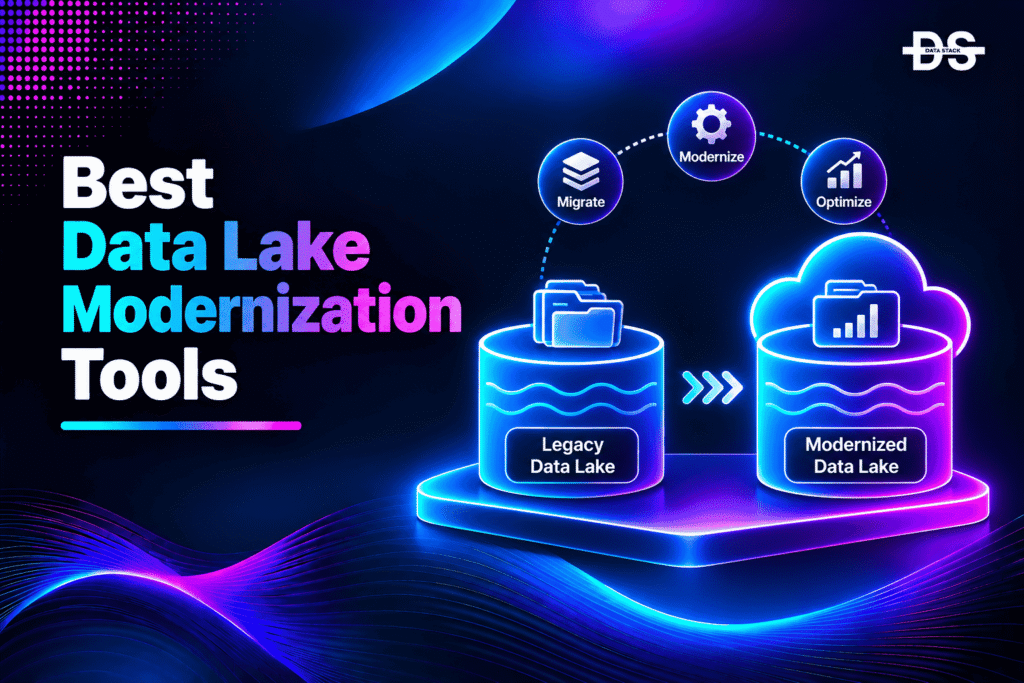
Data lakes have become an important part of enterprise data architecture, providing scalable storage for structured, semi-structured, and unstructured information. However, many organizations still operate data lakes built around traditional object storage, disconnected processing engines, outdated metadata catalogs, and manually maintained data pipelines.
These environments can become difficult to manage as data volumes increase and more teams depend on the same information. Inconsistent schemas, small-file problems, limited governance, duplicated datasets, and fragmented access controls can reduce the value of an otherwise scalable storage architecture.
Modern data lake architectures are moving toward open table formats, managed metadata catalogs, centralized governance, and lakehouse designs. Technologies such as Apache Iceberg and Delta Lake add capabilities that traditional file-based data lakes often lack, including transactional consistency, schema evolution, and more reliable table management.
Data lake modernization tools help organizations make this transition. Some convert existing Hive or Parquet datasets into managed table formats. Others provide unified storage and governance, automate data ingestion, or allow multiple query engines to work with the same underlying data.
However, modernizing a data lake does not always mean moving everything to a new platform. Organizations may choose to retain their existing cloud storage while upgrading metadata management, introducing open table formats, or improving how data is ingested and consumed.
This guide examines nine data lake modernization tools in 2027. It compares their capabilities, supported environments, practical use cases, and limitations to help organizations choose the right approach for building a more scalable and interoperable data architecture.
Why Traditional Data Lakes Need Modernization
A traditional data lake stores large amounts of data in its original or minimally processed form, usually on scalable object storage such as Amazon S3, Azure Data Lake Storage, or Google Cloud Storage. Processing engines and analytical applications access this data through separate services.
Although this architecture offers flexibility, it can become difficult to manage when different applications interpret the same datasets differently or maintain separate metadata and processing workflows.
Data lake modernization addresses these challenges through several architectural improvements:
- Open table formats: Technologies such as Apache Iceberg and Delta Lake add transactional capabilities, schema evolution, and table-level metadata management to data stored in object storage.
- Centralized metadata management: Modern catalogs make datasets easier to discover, govern, and access across multiple processing engines.
- Unified governance: Organizations can establish consistent access policies, data lineage, and auditing across distributed data environments.
- Automated data ingestion: Modern integration tools simplify the movement of data from databases, applications, APIs, and streaming sources.
- Lakehouse architecture: A lakehouse combines the flexibility of data lake storage with table management and analytical capabilities traditionally associated with data warehouses.
- Cross-engine interoperability: Open formats allow different query and processing engines to work with shared datasets without requiring multiple copies.
- Automated table maintenance: Compaction, optimization, snapshot management, and metadata cleanup help maintain performance as datasets grow.
For example, an organization using Hive-managed Parquet tables may migrate to Apache Iceberg to introduce transactional table management. Another organization may retain its existing S3 storage but adopt a centralized catalog and governance platform to make datasets accessible across multiple analytics engines.
The modernization approach should reflect the limitations of the existing data lake rather than automatically replacing its storage infrastructure.
How We Evaluated These Data Lake Modernization Platforms
We selected tools that support meaningful changes to data lake architecture, management, integration, or consumption. The evaluation considered their documented capabilities and the specific modernization problems they address.
The main evaluation criteria included:
- Storage and table modernization: Support for Apache Iceberg, Delta Lake, Parquet, and other open data formats.
- Metadata and catalog management: Capabilities for registering datasets, managing schemas, discovering tables, and coordinating access across engines.
- Data ingestion and integration: Support for batch ingestion, incremental loading, change data capture, and connections to enterprise data sources.
- Lakehouse capabilities: Support for transactional tables, query processing, data transformation, and shared analytical workloads.
- Governance and security: Access controls, data lineage, auditing, catalog discovery, and policy management.
- Interoperability: Ability to connect multiple storage providers, processing engines, and analytical applications.
- Enterprise operations: Deployment flexibility, scalability, monitoring, automation, and integration with existing data engineering workflows.
The selection includes cloud-provider services, lakehouse platforms, open-format data management products, and managed data integration services. These tools do not all perform the same function, so their individual descriptions explain where each one fits into a data lake modernization project.
9 Data Lake Modernization Tools Compared
The following platforms address different modernization requirements, from converting legacy Hive tables and introducing open table formats to improving ingestion, catalog management, and cross-engine analytics. Compare their capabilities and supported environments before selecting a platform.
| Tool | Key Modernization Capabilities | Best For | Best-Suited Environment | Free Trial |
|---|---|---|---|---|
| Amazon S3 Tables | Hive-to-Iceberg Migration, Managed Table Storage, Data Optimization, Schema Evolution, Table Maintenance | Modernizing existing Hive tables into managed Apache Iceberg tables | Amazon S3 and AWS analytics environments | No |
| AWS Glue and Lake Formation | Data Cataloging, Metadata Management, ETL, Data Integration, Centralized Governance | Building and governing enterprise data lakes on AWS | Amazon S3, AWS Glue, Athena, and EMR | No |
| Databricks Lakehouse Platform | Parquet-to-Delta Conversion, Data Ingestion, Lakehouse Pipelines, Governance, Table Optimization | Modernizing traditional data lakes into governed Delta Lake environments | AWS, Azure, and Google Cloud | No |
| Microsoft Fabric OneLake | Unified Data Storage, Shortcuts, Mirroring, Delta Tables, Data Integration, Governance | Consolidating distributed data into a unified organizational lake | Microsoft Fabric and Azure environments | No |
| Google Cloud Lakehouse for Apache Iceberg | Iceberg Table Management, Open Catalog, Cross-Engine Access, Data Governance, Lakehouse Analytics | Building interoperable Apache Iceberg data lakes on Google Cloud | Google Cloud Storage, BigQuery, and open-source engines | No |
| Dremio | Iceberg Lakehouse, Open Catalog, Data Virtualization, SQL Analytics, Table Optimization | Modernizing existing object storage into an Iceberg-based lakehouse | Amazon S3, Azure Data Lake Storage, and Google Cloud Storage | No |
| Starburst | Distributed SQL Analytics, Data Federation, Iceberg Support, Catalog Management, Governance | Making distributed data lake environments queryable across multiple engines | Cloud object storage, hybrid, and on-premises environments | No |
| Fivetran Managed Data Lake Service | Automated Ingestion, Iceberg and Delta Tables, CDC, Catalog Management, Table Maintenance | Building managed, interoperable data lakes across cloud storage providers | Amazon S3, Azure Data Lake Storage, and Google Cloud Storage | No |
| Informatica Intelligent Data Management Cloud | Data Integration, Data Quality, Metadata Management, Governance, Cloud Modernization | Modernizing enterprise data integration and governance around data lakes | Multi-cloud and hybrid environments | No |
A Closer Look at the 9 Data Lake Modernization Platforms
Let’s examine the key features, limitations, and practical applications of each data lake modernization tool to understand how they support different modernization requirements and where they fit within a modern data lake architecture.
1. Amazon S3 Tables
Deployment: AWS-managed cloud service
Amazon S3 Tables is a managed storage service designed for Apache Iceberg tables. It helps organizations build and operate tabular data lakes on Amazon S3 without managing all the underlying table maintenance processes themselves.
One particularly relevant modernization capability is its managed migration from existing Hive tables to Apache Iceberg. Organizations operating AWS Glue-registered Hive tables stored as Parquet in S3 general-purpose buckets can use the migration workflow to create corresponding Iceberg tables in S3 Tables.
The migration process validates, converts, and copies the source data into the new table structure. It also combines small files and optimizes storage through compression. Importantly, the source table remains available for reads and writes while migration takes place.
The workflow uses three main stages: start, sync, and complete. The start stage creates the destination table and transfers the existing data. Sync catches up with changes made to the source, and complete makes the migrated table available for normal read and write operations.
Beyond migration, S3 Tables provides managed table maintenance capabilities for workloads that need reliable storage and query performance as data volumes increase.
Key Features
- Managed Hive-to-Iceberg migration: Converts supported AWS Glue-registered Hive tables stored as Parquet into managed Iceberg tables.
- Migration synchronization: Supports syncing source changes into the destination before completing the migration.
- Source availability: Keeps the original source table available for reads and writes during the migration workflow.
- Automatic optimization: Combines small files and applies storage optimizations during supported migration operations.
- Managed table maintenance: Reduces the operational effort involved in maintaining Iceberg tables.
- Open table format: Uses Apache Iceberg to support compatible query and processing engines.
- Migration controls: Provides migration operations through the AWS console, CLI, APIs, and supported automation workflows.
Limitations
Amazon S3 Tables is an AWS-specific storage and table management service. It is not a general-purpose migration platform for moving entire data lakes between AWS, Azure, and Google Cloud.
Its managed Hive migration currently has specific source requirements, including AWS Glue-registered Hive tables stored as Parquet in S3 general-purpose buckets. Organizations using other table formats or storage architectures may need a different conversion workflow.
It also does not replace the need for data ingestion, processing, and governance tools across the complete data lake architecture.
Why Choose Amazon S3 Tables?
Amazon S3 Tables is particularly relevant for AWS customers modernizing traditional Hive-based data lakes. Its managed migration workflow provides a direct path toward Iceberg without requiring organizations to build and operate a separate conversion pipeline for every eligible table.
2. AWS Glue and Lake Formation
Deployment: AWS-managed cloud services
AWS Glue and AWS Lake Formation provide complementary capabilities for building, managing, and governing enterprise data lakes on Amazon S3. Together, they help organizations replace fragmented data integration and metadata workflows with a more centralized architecture.
AWS Glue is a serverless data integration service that supports data discovery, cataloging, ETL processing, and pipeline development. Its Data Catalog stores metadata about datasets, including their schemas, locations, and table definitions. Glue jobs can process data using Apache Spark and other supported execution environments.
AWS Lake Formation focuses on data lake administration and governance. It provides centralized permission management for registered data locations and catalog resources, helping organizations control how users and applications access datasets.
This combination is useful when modernizing a data lake that has grown organically across multiple S3 buckets and processing systems. Teams can organize datasets through a shared catalog, introduce standardized ingestion workflows, and apply more consistent access controls.
AWS Glue also supports modern table formats, including Apache Iceberg, Delta Lake, and Apache Hudi in documented configurations. This helps organizations introduce table-level capabilities without abandoning their existing S3 storage architecture.
Key Features
- Centralized data catalog: AWS Glue Data Catalog maintains metadata for datasets across supported storage and processing environments.
- Serverless ETL: Builds and executes data transformation jobs without managing dedicated ETL infrastructure.
- Data discovery: Crawlers can discover supported data sources and populate metadata in the catalog.
- Open table format support: Supports workflows involving Apache Iceberg, Delta Lake, and Apache Hudi.
- Data lake permissions: Lake Formation provides centralized access controls for registered data locations and catalog resources.
- Data integration: Connects supported databases, applications, and storage systems through Glue connectors and jobs.
- AWS analytics integration: Works with services such as Amazon Athena, Amazon EMR, and other AWS analytics tools.
Limitations
AWS Glue and Lake Formation are closely integrated with the AWS ecosystem. Organizations operating data lakes across several cloud providers may need additional tools to maintain consistent metadata and governance outside AWS.
The two services also address different responsibilities. Glue handles cataloging and data integration, while Lake Formation focuses on data lake governance. Neither should be treated as a complete replacement for every data engineering, query, and table maintenance requirement.
Why Choose AWS Glue and Lake Formation?
This combination is a strong option for organizations building or modernizing data lakes on Amazon S3. Glue provides the integration and metadata foundation, while Lake Formation adds centralized governance. Together, they help establish a more manageable architecture for enterprise analytics and data engineering.
Showcase your software to buyers actively comparing tools. Submit your product for editorial review and get featured on Data Stack Hub.
Submit Your Tool →3. Databricks Lakehouse Platform
Deployment: Cloud-based
The Databricks Lakehouse Platform combines data storage, processing, analytics, engineering, and governance capabilities to help organizations modernize traditional data lakes. Its architecture is built around Apache Spark, Delta Lake, and Unity Catalog.
Traditional data lakes often store datasets as Parquet files without providing the transactional and management capabilities expected from database tables. Delta Lake adds features such as ACID transactions, schema enforcement, schema evolution, and time travel to data stored in object storage.
Databricks provides migration utilities for converting existing Parquet and Apache Iceberg tables into Delta Lake. The CONVERT TO DELTA command supports one-time conversion, while CLONE provides incremental conversion options for supported scenarios where source data continues to change.
The platform also provides Auto Loader for incremental file ingestion from cloud object storage. It can discover and process new files as they arrive in Amazon S3, Azure Data Lake Storage, and Google Cloud Storage. Lakeflow Pipelines and Lakeflow Jobs help teams build, orchestrate, and manage batch and streaming data workflows.
Unity Catalog adds centralized governance, permissions, lineage, and auditing across supported data assets. This helps organizations move beyond isolated storage buckets toward a governed lakehouse environment.
Key Features
- Parquet-to-Delta conversion: Converts eligible existing Parquet datasets into Delta Lake tables.
- Iceberg migration: Supports conversion and cloning workflows for eligible Apache Iceberg tables.
- Incremental ingestion: Auto Loader processes new files arriving in supported cloud object storage.
- Lakehouse pipelines: Lakeflow Pipelines supports batch and streaming data processing.
- Workflow orchestration: Lakeflow Jobs coordinates data engineering tasks and dependencies.
- Centralized governance: Unity Catalog provides access controls, lineage, and auditing.
- Table optimization: Supports Delta Lake maintenance and performance optimization capabilities.
- Multi-cloud deployment: Databricks is available across AWS, Azure, and Google Cloud.
Limitations
Databricks is a broad lakehouse platform rather than a standalone migration utility. Organizations moving existing data lakes may need to redesign ingestion pipelines, governance policies, and processing workflows in addition to converting table formats.
Its architecture is also closely associated with Delta Lake and the Databricks ecosystem. Organizations prioritizing completely engine-neutral Apache Iceberg architectures should evaluate the implications of their chosen table formats, catalogs, and downstream engines.
Why Choose Databricks Lakehouse Platform?
Databricks is worth considering when an organization wants to move beyond traditional file-based data lakes toward a managed lakehouse architecture. Its conversion utilities, incremental ingestion, pipeline orchestration, and centralized governance provide capabilities across several stages of modernization.
4. Microsoft Fabric OneLake
Deployment: Microsoft-managed cloud platform
Microsoft Fabric OneLake is a unified data lake designed to provide a shared storage foundation for an organization’s analytical workloads. Every Fabric tenant includes OneLake, which allows different Fabric experiences to access data through a common organizational data layer.
Traditional data lake architectures often create separate storage locations for data engineering, analytics, reporting, and machine learning. OneLake aims to reduce this fragmentation by providing a shared namespace and common storage foundation for Fabric workloads.
It supports Delta Parquet as a primary table storage format and provides interoperability features for external data sources. OneLake shortcuts allow organizations to reference data stored in external environments such as Amazon S3, Azure Data Lake Storage, and Google Cloud Storage without copying the underlying files.
Mirroring provides another way to integrate external databases and catalogs with Fabric. Depending on the source, data can be accessed in place or continuously replicated into OneLake.
OneLake also supports shortcut transformations that can convert supported CSV, Parquet, JSON, and Excel files into queryable Delta tables. These capabilities help organizations make existing datasets available to Fabric workloads without building a separate ingestion pipeline for every source.
Key Features
- Unified data storage: Provides a shared organizational data lake for Fabric workloads.
- OneLake shortcuts: References supported external data without copying the underlying files.
- Database and catalog mirroring: Connects supported external databases and catalogs with Fabric through in-place access or replication.
- Delta table support: Stores and manages analytical tables using Delta Parquet.
- Shortcut transformations: Converts supported file formats into queryable Delta tables.
- Shared data access: Allows Spark, SQL, Power BI, and other Fabric workloads to use the same underlying data.
- Data integration: Connects with Fabric pipelines, Dataflows, copy jobs, and other ingestion services.
- Centralized security: Integrates data access with the broader Fabric governance and security model.
Limitations
OneLake is closely integrated with Microsoft Fabric. Organizations that need a fully independent storage architecture across multiple cloud providers may prefer a more platform-neutral approach.
Shortcuts and mirroring also serve different purposes from full data integration pipelines. Shortcuts reference supported external data, while mirroring provides source-specific integration. Complex transformations, scheduled processing, and multi-source data movement may still require pipelines or other Fabric services.
Why Choose Microsoft Fabric OneLake?
OneLake is a practical option for organizations consolidating analytics and data engineering around Microsoft Fabric. Its shared storage model, external data shortcuts, and mirroring capabilities can help reduce unnecessary data duplication while making distributed datasets accessible through a unified environment.
5. Google Cloud Lakehouse for Apache Iceberg
Deployment: Google Cloud-managed services
Google Cloud Lakehouse for Apache Iceberg, formerly known as BigLake, provides a managed foundation for building open data lakehouse architectures on Google Cloud. It combines Apache Iceberg tables, managed metadata, cloud object storage, and analytical processing capabilities.
Traditional data lakes often depend on separate metadata catalogs for different processing engines. This can make it difficult to share datasets across Spark, Trino, Flink, and other analytical technologies without duplicating metadata or creating additional integration layers.
Google Cloud’s Lakehouse runtime catalog addresses this challenge by providing a centralized catalog for Apache Iceberg tables stored in Cloud Storage. Compatible engines can use the same catalog to discover and access shared tables.
The architecture also supports integration with BigQuery and Google Cloud’s managed Spark services. This allows organizations to use different compute engines against the same underlying data rather than creating separate copies for each workload.
Knowledge Catalog, formerly Dataplex, provides additional data management and governance capabilities, including discovery, lineage, profiling, and quality-related functionality.
Google Cloud also supports catalog federation with external ecosystems, including AWS Glue, Databricks Unity Catalog, and Snowflake Horizon Catalog. This can help organizations access distributed data assets without first moving every dataset into Google Cloud.
Key Features
- Managed Iceberg catalog: Provides a centralized metadata service for Apache Iceberg tables stored in Cloud Storage.
- Cross-engine interoperability: Supports shared data access across BigQuery, Spark, Trino, Flink, and compatible engines.
- Open table formats: Uses Apache Iceberg to support interoperability and reduce dependence on proprietary table formats.
- Catalog federation: Connects supported external catalogs, including AWS Glue, Unity Catalog, and Snowflake Horizon.
- Metadata modernization: Helps organizations move away from self-managed Hive metastore infrastructure.
- Data governance: Integrates with Knowledge Catalog for discovery, lineage, profiling, and data quality workflows.
- Managed table operations: Supports table management and maintenance capabilities for eligible configurations.
- Cloud-native storage: Uses Google Cloud Storage as the underlying data storage layer.
Limitations
Google Cloud Lakehouse is designed around Google Cloud services and its managed Iceberg architecture. Organizations operating entirely outside Google Cloud may find other catalog and lakehouse platforms more suitable.
Some advanced capabilities, including selected Iceberg write operations and automated table management features, have availability or feature-specific limitations. Teams should verify the current support matrix before depending on preview capabilities in production.
Why Choose Google Cloud Lakehouse for Apache Iceberg?
Google Cloud Lakehouse is worth evaluating when an organization wants an open Iceberg-based data architecture on Google Cloud. Its managed catalog and cross-engine access capabilities help reduce metadata fragmentation while allowing different analytical engines to work with shared datasets.
6. Dremio
Deployment: Cloud-based and self-managed options
Dremio is a lakehouse platform designed to make data stored in object storage accessible through SQL analytics and open table formats. It helps organizations modernize existing data lakes without necessarily moving all their data into a proprietary warehouse.
One of its central capabilities is Apache Iceberg support. Dremio can work with data stored in Amazon S3, Azure Data Lake Storage, and Google Cloud Storage, allowing organizations to build lakehouse architectures around existing cloud object storage.
Its Open Catalog, built on Apache Polaris, provides centralized metadata management and access to Iceberg tables through the Apache Iceberg REST Catalog API. This helps compatible query engines work with shared tables rather than maintaining separate catalog definitions.
Dremio also provides query acceleration and data optimization capabilities. Its platform supports automated table maintenance operations such as compaction, clustering, and vacuuming in supported configurations.
The platform includes SQL-based data access and transformation capabilities, helping teams query data directly from the lake and create reusable virtual datasets. This can reduce the need to copy data into multiple analytical systems simply to make it accessible to business users.
Key Features
- Iceberg lakehouse: Supports building managed Apache Iceberg architectures over existing cloud object storage.
- Open Catalog: Provides centralized catalog capabilities based on Apache Polaris.
- Multi-cloud storage access: Connects to Amazon S3, Azure Data Lake Storage, and Google Cloud Storage.
- SQL analytics: Allows users to query data directly from connected lakehouse sources.
- Data virtualization: Creates logical datasets and views without requiring every source to be physically consolidated.
- Table maintenance: Automates supported Iceberg optimization operations such as compaction and cleanup.
- Cross-engine interoperability: Uses open catalog interfaces to support compatible query and processing engines.
Limitations
Dremio is primarily a lakehouse and query platform rather than a universal data lake migration service. It does not automatically rebuild every legacy ingestion pipeline or convert all existing data processing code.
Its Open Catalog and table management capabilities also require attention to supported Iceberg features, catalog compatibility, and deployment configuration. Organizations should evaluate their existing processing engines and governance requirements before adopting it as a central lakehouse platform.
Why Choose Dremio?
Dremio is a strong option for organizations that want to modernize object-storage-based data lakes around Apache Iceberg while retaining flexibility over their storage infrastructure. Its catalog, SQL analytics, and table optimization capabilities can help create a more interoperable lakehouse environment.
Increase your product visibility by reaching software buyers researching the best tools. Every submission is reviewed by our editorial team.
Feature My Tool →7. Starburst
Deployment: Managed cloud and self-managed enterprise environments
Starburst is a distributed SQL analytics platform built on Trino. It helps organizations query data across data lakes, databases, and other distributed sources without requiring all datasets to be copied into one central warehouse.
Traditional data lake environments often rely on multiple processing engines and storage systems. This can create fragmented access patterns and force data engineering teams to build additional pipelines simply to make datasets available for analysis.
Starburst addresses this through federated query processing. Its engine connects to supported object storage catalogs and databases, allowing users to query multiple sources through a common SQL interface.
Starburst supports Apache Iceberg and other table formats used in modern data lake architectures. Its integration with Apache Polaris provides an open catalog approach for Iceberg tables, enabling compatible engines to access shared datasets through standardized interfaces.
The platform also provides data discovery, access controls, query monitoring, and performance optimization capabilities. Starburst Galaxy offers a managed cloud experience, while Starburst Enterprise supports self-managed deployments across cloud, hybrid, and on-premises environments.
Key Features
- Distributed SQL engine: Uses Trino to query large datasets across multiple distributed sources.
- Data lake connectivity: Connects to object storage and supported data lake catalogs.
- Apache Iceberg support: Queries Iceberg tables and integrates with supported Iceberg catalogs.
- Data federation: Allows users to query multiple databases and storage systems without centralizing all the data.
- Open catalog integration: Supports Apache Polaris for shared Iceberg metadata and access management.
- Data discovery: Provides catalog exploration and dataset discovery capabilities.
- Enterprise governance: Supports access controls and security features for distributed data environments.
- Flexible deployment: Offers managed cloud and self-managed enterprise options.
Limitations
Starburst focuses on querying, accessing, and governing distributed data rather than performing every stage of data lake modernization. It does not independently convert all legacy data formats, migrate historical datasets, or rebuild ingestion pipelines.
Federated queries can also introduce performance considerations when data is distributed across multiple sources. Query execution depends on source capabilities, network conditions, connector behavior, and workload design.
Why Choose Starburst?
Starburst is useful for organizations that want to make distributed data lakes accessible without forcing all datasets into a single storage platform. Its Trino-based query engine and Iceberg support help create a more flexible analytical layer across existing data infrastructure.
8. Fivetran Managed Data Lake Service
Deployment: Cloud-managed service
Fivetran Managed Data Lake Service helps organizations build and maintain structured data lakes on their own cloud storage infrastructure. It automates data ingestion, table organization, metadata management, and ongoing maintenance while keeping the underlying data in the customer’s cloud storage account.
Traditional data lakes often require engineering teams to build and maintain ingestion pipelines, organize files, manage metadata, and handle table maintenance. These responsibilities become increasingly complex as the number of data sources and downstream analytical engines grows.
Fivetran addresses this through a managed data lake architecture. It ingests data from supported source systems, processes it into Parquet files, and stores the resulting data in the customer’s Amazon S3, Azure Data Lake Storage, or Google Cloud Storage environment.
The service creates Apache Iceberg metadata for managed tables and can optionally maintain Delta Lake metadata for compatible workloads. Its catalog capabilities make datasets discoverable and accessible through supported query engines, including Spark, Dremio, Databricks, Snowflake, and other compatible platforms.
Fivetran also handles ongoing table maintenance operations, helping organizations maintain data reliability and query performance without building every operational process themselves.
Key Features
- Automated data ingestion: Connects supported business applications, databases, and other sources to cloud data lakes.
- Managed table creation: Organizes ingested data into structured Parquet-based tables.
- Apache Iceberg support: Creates and maintains Iceberg metadata for managed data lake tables.
- Delta Lake compatibility: Can optionally maintain Delta Lake metadata for supported configurations.
- Managed catalog: Provides catalog services for discovering and accessing Iceberg tables.
- Table maintenance: Automates supported maintenance activities to help keep tables reliable and performant.
- Multi-cloud storage: Supports Amazon S3, Azure Data Lake Storage, and Google Cloud Storage.
- Cross-engine access: Allows compatible query engines to access shared data without requiring duplicate ingestion.
Limitations
Fivetran Managed Data Lake Service is primarily an ingestion and managed table service. It does not automatically convert every existing legacy data lake, rebuild all processing logic, or migrate complex Spark applications.
Its table format and query engine compatibility also have specific limitations. For example, its Delta Lake support is subject to supported protocol versions and features. Organizations should review the current compatibility documentation before connecting multiple processing engines.
Why Choose Fivetran Managed Data Lake Service?
Fivetran is a useful option for organizations that want to simplify data ingestion and table management while retaining control over their underlying cloud storage. Its managed Iceberg architecture helps reduce operational work and makes data available across compatible analytical engines.
9. Informatica Intelligent Data Management Cloud
Deployment: SaaS and hybrid environments
Informatica Intelligent Data Management Cloud (IDMC) is an enterprise data management platform that helps organizations integrate, discover, govern, and manage data across cloud and on-premises environments. It supports data lake modernization by bringing data integration, data quality, cataloging, lineage, and governance capabilities into a unified platform.
Large data lakes frequently contain information from multiple business applications, operational databases, files, and external systems. Without consistent integration and governance, organizations can end up with duplicated datasets, incomplete metadata, inconsistent quality rules, and limited visibility into where data originates.
IDMC addresses these challenges through its data engineering and governance services. Data Integration supports ETL and ELT workflows across connected systems, while Data Quality helps profile, cleanse, and validate datasets. Enterprise Data Catalog and lineage capabilities help users discover data assets and understand how information moves through the organization.
Its CLAIRE AI capabilities provide metadata-driven automation and assistance across data management workflows. This can help teams accelerate integration development, improve data discovery, and reduce repetitive governance tasks.
IDMC is also relevant to broader cloud modernization programs. Organizations moving legacy Informatica PowerCenter environments or other data integration platforms toward cloud-native operations can use its modernization capabilities to establish a more centralized data management architecture.
Key Features
- Data integration: Builds ETL and ELT pipelines across enterprise databases, applications, and cloud storage.
- Data lake connectivity: Connects and manages data across supported cloud and hybrid environments.
- Data quality: Provides profiling, cleansing, validation, and monitoring capabilities.
- Enterprise data catalog: Helps users discover, classify, and understand data assets.
- Data lineage: Tracks data movement and transformations across connected systems.
- Governance and security: Supports enterprise data governance and policy management.
- CLAIRE AI: Provides AI-assisted automation across supported data management workflows.
- Cloud modernization: Supports migration from legacy data management environments to cloud-based IDMC services.
Limitations
IDMC is a broad data management platform rather than a dedicated data lake storage or Iceberg migration product. Organizations looking to convert Hive tables into Iceberg or perform specialized table-format migrations will need additional tools.
Its broad feature set can also introduce implementation complexity. Teams should define which integration, quality, catalog, and governance services are required rather than adopting the entire platform without a clear architecture plan.
Why Choose Informatica IDMC?
Informatica IDMC is worth considering for enterprises modernizing fragmented data management environments across multiple cloud and on-premises systems. Its integration, quality, cataloging, and governance capabilities help establish a more consistent foundation for enterprise data lakes.
Which Data Lake Modernization Strategy Fits Your Architecture?
The best modernization approach depends on how the existing data lake is structured and what limitations the organization wants to address. The following scenarios illustrate where different tools may be relevant.
1. Moving From Hive Tables to Apache Iceberg
Organizations operating Hive-managed Parquet tables may want to adopt Iceberg for transactional table management, schema evolution, and improved interoperability.
Amazon S3 Tables provides a managed Hive-to-Iceberg migration workflow for eligible AWS environments. Organizations with broader conversion requirements can also evaluate other Iceberg-compatible migration approaches.
2. Converting Traditional Parquet Data Lakes to a Lakehouse
If the objective is to introduce transactional table management over existing Parquet data, Databricks provides CONVERT TO DELTA and incremental cloning capabilities for supported datasets.
This approach allows organizations to introduce Delta Lake without necessarily rebuilding their entire storage architecture.
3. Consolidating Data Across Multiple Storage Environments
Enterprises often store data across several cloud accounts, storage buckets, and business domains. Moving all datasets into one location may be unnecessary or expensive.
Microsoft Fabric OneLake shortcuts, Google Cloud’s Lakehouse runtime catalog, and Starburst can help connect distributed data environments through different approaches.
4. Introducing Centralized Data Lake Governance
Organizations that struggle with inconsistent access controls and limited metadata visibility should prioritize cataloging and governance.
AWS Glue and Lake Formation provide a closely integrated approach for AWS data lakes, while Google Cloud’s Lakehouse and Knowledge Catalog provide an alternative for Iceberg-based environments. Informatica IDMC is relevant for broader multi-cloud and hybrid governance requirements.
5. Rebuilding Data Ingestion for Modern Data Lakes
Traditional data lakes may depend on custom scripts and manually maintained ingestion jobs.
Fivetran Managed Data Lake Service helps automate ingestion and table management, while Databricks Auto Loader and Lakeflow support file ingestion and pipeline modernization within a Databricks architecture.
6. Making Existing Data Accessible Across Multiple Engines
Organizations adopting open table formats may want Spark, Trino, BigQuery, and other engines to access shared datasets without duplicating storage.
Dremio, Starburst, Google Cloud Lakehouse, and Fivetran provide different capabilities for this type of interoperability.
Planning a Data Lake Modernization Project
Modernizing a data lake requires more than selecting a new storage format or query engine. Organizations should evaluate their existing architecture and define how data will be stored, discovered, governed, processed, and consumed after modernization.
1. Inventory Existing Data and Metadata
Start by identifying storage locations, file formats, table definitions, catalogs, processing jobs, and downstream consumers.
Determine which datasets are stored as raw files, which are registered as Hive tables, and which already use formats such as Delta Lake or Apache Iceberg. This inventory helps establish the scope of modernization.
2. Choose an Open or Managed Table Format
Evaluate whether Apache Iceberg, Delta Lake, or another table format is appropriate for the target architecture.
Consider transaction requirements, schema evolution, time travel, engine compatibility, and long-term interoperability. Avoid selecting a format solely because it is the default option in a particular platform.
3. Review Metadata and Catalog Dependencies
Data lake catalogs play an important role in table discovery, permissions, and interoperability.
Identify which applications depend on the current Hive metastore or catalog and determine how metadata will be migrated, federated, or synchronized in the new environment.
4. Define the Governance Model
Establish data ownership, access policies, classification requirements, lineage expectations, and auditing procedures.
A modernized data lake should make it easier to understand who can access datasets and how sensitive information is used across different processing engines.
5. Modernize Ingestion and Processing Pipelines
Review existing batch and streaming pipelines to identify opportunities for automation and standardization.
Consider whether legacy ingestion jobs should be migrated, rebuilt, or replaced with managed services. Also evaluate incremental ingestion, schema evolution, data quality checks, and pipeline orchestration.
6. Validate Data Before Changing Production Workloads
Run representative migration tests and compare source and target datasets.
Check record counts, schema definitions, null values, data types, partitioning, query results, and downstream application behavior. For table-format migrations, also validate transactional behavior and compatibility across the query engines that will consume the data.
7. Plan for Ongoing Table Maintenance
Modern data lakes require continuous operational management.
Define how the organization will handle file compaction, metadata cleanup, snapshot expiration, partition management, and performance monitoring. Managed services can automate some of these tasks, but their capabilities and configuration requirements should be reviewed.
Browse expertly curated software recommendations across hundreds of business categories.
Browse Top Tools →Conclusion: Moving Toward an Open and Governed Data Lake
Data lake modernization is about making existing data infrastructure more manageable, interoperable, and suitable for modern analytics and AI workloads. Simply moving files into cloud object storage does not address the challenges associated with metadata management, data quality, governance, table maintenance, and processing complexity.
The nine platforms covered in this guide address different parts of that modernization process. Amazon S3 Tables supports managed Hive-to-Iceberg migration, while AWS Glue and Lake Formation provide data integration and governance capabilities. Databricks and Microsoft Fabric offer broader lakehouse architectures, and Google Cloud Lakehouse provides managed Iceberg catalog and cross-engine interoperability.
Dremio and Starburst help organizations query and manage distributed data, Fivetran simplifies ingestion and managed table operations, and Informatica IDMC supports enterprise integration, data quality, and governance across hybrid environments.
There is no single tool that solves every data lake modernization requirement. The right choice depends on the current storage architecture, table formats, metadata dependencies, governance requirements, and the analytical engines that need access to the data.
For many enterprises, a phased approach is more practical than replacing the entire data lake at once. Organizations can start by modernizing table formats and metadata, then improve ingestion, governance, and query access. This allows engineering teams to preserve existing data investments while building a more flexible foundation for future analytics and AI workloads.
Frequently Asked Questions
1. What are data lake modernization tools?
Data lake modernization tools are software platforms and services that help organizations upgrade data lake storage, table formats, metadata catalogs, governance, ingestion, and processing workflows. They support activities such as Hive-to-Iceberg migration, Parquet-to-Delta conversion, data integration, catalog modernization, and lakehouse adoption.
2. What is the difference between a data lake and a lakehouse?
A traditional data lake stores large volumes of data in formats such as Parquet, JSON, CSV, and Avro, often using separate processing and metadata services. A lakehouse adds table management, transactional capabilities, governance, and analytical processing features to data lake storage. Technologies such as Apache Iceberg and Delta Lake help provide these capabilities.
3. Why are organizations migrating from Hive to Apache Iceberg?
Organizations adopt Apache Iceberg to introduce capabilities such as ACID transactions, schema evolution, time travel, and improved table metadata management. Iceberg also supports interoperability across compatible query and processing engines, making it useful for organizations that want to reduce dependence on a single data platform.
4. Can an existing Parquet data lake be converted into a lakehouse?
Yes. Existing Parquet datasets can be converted into managed table formats such as Delta Lake or Apache Iceberg through supported conversion workflows. Databricks provides Parquet-to-Delta conversion capabilities, while Amazon S3 Tables supports eligible Hive-registered Parquet table migrations to Iceberg.
5. What is the difference between Apache Iceberg and Delta Lake?
Apache Iceberg and Delta Lake are open table formats that add transactional and table management capabilities to data stored in data lakes. Both support features such as schema evolution and time travel, but they differ in their architectures, metadata management, ecosystem integrations, and compatibility characteristics. The right choice depends on the processing engines and platforms an organization intends to use.
6. What role does a metadata catalog play in data lake modernization?
A metadata catalog stores information about datasets, including schemas, table definitions, storage locations, and access details. It helps users and processing engines discover and access data consistently. Modern catalogs also support governance, lineage, and interoperability across different analytical platforms.
7. How can organizations modernize data lakes without moving all their data?
Organizations can use data virtualization, federated query engines, shortcuts, and external catalogs to access existing data in place. Microsoft OneLake shortcuts, Starburst, Dremio, and Google Cloud’s Lakehouse runtime catalog provide different approaches to accessing distributed datasets without requiring every file to be copied into a new storage location.
8. Are there open-source data lake modernization technologies?
Yes. Apache Iceberg, Delta Lake, Apache Hudi, Apache Spark, and Trino are examples of open-source technologies used in modern data lake and lakehouse architectures. Organizations can combine these technologies with managed cloud services or commercial platforms depending on their infrastructure and operational requirements.
9. How long does data lake modernization take?
The timeline depends on the volume of data, number of datasets, metadata complexity, existing pipeline dependencies, and target architecture. Converting a limited number of Parquet tables may be relatively straightforward, while modernizing an enterprise data lake with thousands of datasets, multiple catalogs, and complex governance requirements can take several months or longer. A phased assessment and pilot migration can help establish a realistic timeline.