
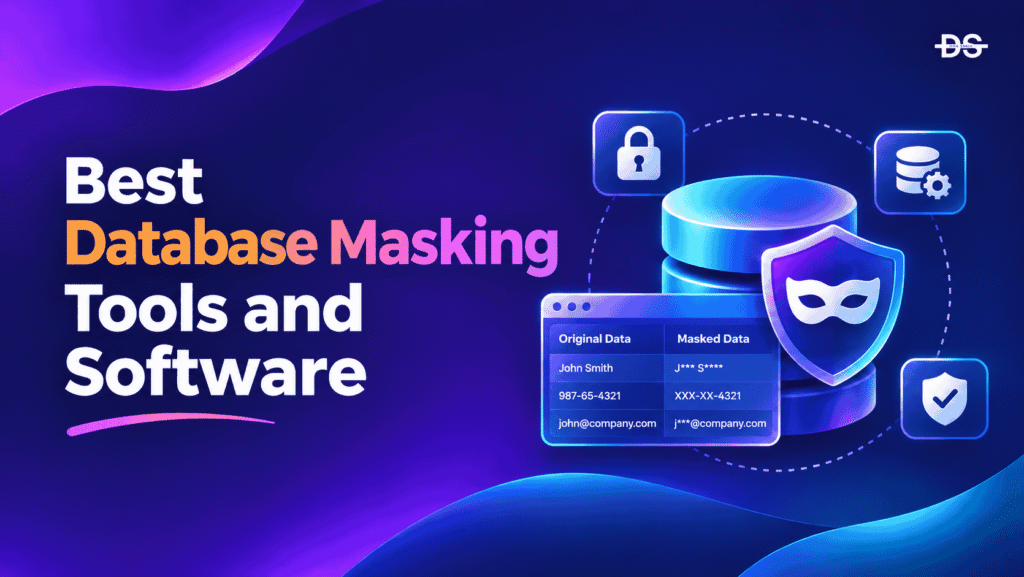
Organizations use databases to store customer information, payment records, employee details, healthcare data, and other sensitive business information. However, developers, QA engineers, analysts, and external partners often need access to production-like datasets to build applications, test changes, and perform analysis. Providing access to original production records can expose personally identifiable information (PII) and confidential business data to people who do not need to see the real values.
Database masking tools address this problem by replacing, transforming, or hiding sensitive information while preserving the structure and usefulness of the underlying data. For example, a real customer name can be replaced with a fictitious name, a payment card number can be substituted with a realistic test value, and an email address can be transformed without breaking relationships between database records. This allows teams to work with representative information without unnecessarily exposing original customer data.
Different database masking solutions use different techniques. Static data masking permanently changes sensitive values in a separate database copy, making it useful for development and testing environments. Dynamic data masking hides selected values when users query a database, while deterministic masking ensures that the same original value receives a consistent replacement across related tables and systems. Some platforms also combine masking with sensitive data discovery, data subsetting, synthetic data generation, and test data provisioning.
Choosing the right database masking software depends on the database platforms an organization uses, the level of masking required, and whether data needs to remain consistent across multiple environments. This guide covers 10 database masking tools in 2027, including enterprise platforms, database-focused solutions, and open-source options for PostgreSQL.
What Are Database Masking Tools?
Database masking tools are software solutions that replace or hide sensitive database values with fictitious, transformed, or anonymized information. They help organizations create usable database copies for development, testing, analytics, and data sharing without exposing original sensitive records.
These tools apply different masking techniques depending on how the protected data will be used:
- Static Data Masking: Permanently replaces sensitive values in a database copy before it is shared with development, testing, or analytics teams.
- Dynamic Data Masking: Hides or modifies sensitive values when users query a database, without permanently changing the underlying stored information.
- Deterministic Data Masking: Produces consistent replacement values for the same original input, helping preserve relationships between records and tables.
- Format-Preserving Masking: Replaces sensitive information while maintaining its original format, length, or structure so applications can continue processing the masked values.
- Synthetic Data Generation: Creates artificial records that resemble real-world data without directly copying original personal information.
- Data Subsetting: Extracts smaller, relevant portions of a database and applies masking to create manageable datasets for development and testing.
- Tokenization: Replaces sensitive values with tokens that can be mapped back to the original information through a protected tokenization system.
Database masking software may support one or several of these techniques. Organizations should distinguish between masking that permanently transforms data and masking that only controls what users see when querying a live database.
Why Do You Need Database Masking Tools?
Production databases often contain information that developers, testers, and analysts do not need to access in its original form. However, completely removing this information can make testing and development less effective because teams still require realistic datasets that preserve relationships, formats, and business rules.
Database masking solutions help organizations reduce this exposure while keeping data useful for legitimate business activities.
Key reasons to use database masking software include:
- Protect Personally Identifiable Information: Replace names, email addresses, phone numbers, government identifiers, and other sensitive values before sharing database copies with non-production teams.
- Secure Development and Testing Environments: Create realistic test databases without exposing actual customer or employee records to developers and QA engineers.
- Preserve Referential Integrity: Maintain relationships between related tables and records so applications can continue using masked datasets without breaking database constraints.
- Support Regulatory Requirements: Reduce exposure of sensitive information and support privacy controls relevant to regulations such as GDPR, HIPAA, and PCI DSS.
- Control Production Data Access: Apply dynamic masking to hide selected fields from users who need database access but should not view original sensitive values.
- Reduce Data Exposure During Sharing: Prepare anonymized database copies for external developers, vendors, consultants, and business partners.
- Automate Data Privacy Workflows: Integrate masking processes into test data management and CI/CD pipelines to reduce manual data preparation.
- Maintain Realistic Test Data: Use deterministic masking, format-preserving transformations, and synthetic data generation to preserve useful characteristics of production datasets.
Database Masking Tools Comparison
Database masking platforms differ in their masking methods, supported database technologies, and test data management capabilities. Some focus on enterprise-scale data provisioning, while others specialize in database masking, sensitive data discovery, or open-source anonymization.
The following table compares 10 database masking tools based on their core capabilities, supported platforms, licensing, and intended use cases.
| Tool | Core Capabilities | Supported Databases | Best For | Open Source | Pricing | G2 Rating |
|---|---|---|---|---|---|---|
| Delphix Continuous Compliance | Sensitive data discovery, static masking, deterministic masking, tokenization, and data subsetting | Oracle, SQL Server, PostgreSQL, MySQL, MariaDB, Db2, Sybase ASE | Enterprises creating masked production-like database copies | No | Usage-based, custom quote | N/A |
| Informatica Test Data Management | Persistent masking, masking policies, data subsetting, and test data workflows | Supported relational databases and enterprise data sources | Enterprises managing privacy across development and testing environments | No | Custom pricing | N/A |
| IBM Optim Data Privacy | Policy-driven masking, de-identification, format preservation, and referential integrity | Db2, Oracle, SQL Server, PostgreSQL, Snowflake, MongoDB | Large organizations with complex data estates | No | Custom pricing | 4.6/5 |
| Oracle Data Masking and Subsetting | Sensitive data discovery, static masking, masking formats, and database subsetting | Oracle Database | Oracle environments preparing secure non-production data | No | Commercial license; quote required | 4.5/5 |
| Redgate Data Masker | Static masking, substitution, shuffling, masking rules, and automated test data preparation | SQL Server, Oracle | SQL Server and Oracle development and testing teams | No | Commercial; free trial available | 3.8/5 |
| K2view Data Masking | Sensitive data discovery, static and dynamic masking, entity-based masking, and referential integrity | Relational databases, NoSQL databases, mainframes, and cloud data stores | Enterprises masking related data across multiple systems | No | Custom pricing | 4.6/5 |
| DATPROF Privacy | Static masking, deterministic masking, synthetic data generation, and conditional masking | Oracle, Db2, PostgreSQL, SQL Server, MySQL, MariaDB | Teams creating realistic and consistent test datasets | No | Custom pricing | 4.5/5 |
| IRI FieldShield | Data classification, field-level masking, pseudonymization, and format-preserving encryption | Supported relational databases, files, and other structured sources | Organizations masking structured data across databases and files | No | Custom pricing | N/A |
| Greenmask | Logical dump anonymization, deterministic transformations, database subsetting, and synthetic data generation | PostgreSQL; MySQL support is experimental | PostgreSQL teams preparing anonymized development and testing databases | Yes | Free, Apache 2.0 | N/A |
| PostgreSQL Anonymizer | Static masking, dynamic masking, replica masking, backup masking, and anonymized exports | PostgreSQL | PostgreSQL teams requiring database-native anonymization | Yes | Free, open source | N/A |
10 Best Database Masking Tools in 2027
The following database masking tools address different requirements, from enterprise-wide sensitive data protection to PostgreSQL-specific anonymization. Some provide complete test data management workflows, while others focus on transforming sensitive values or controlling access to live database records.
1. Delphix Continuous Compliance
Delphix Continuous Compliance, developed by Perforce, is an enterprise data masking platform that helps organizations identify sensitive information and create anonymized database copies for development, testing, and analytics. It combines sensitive data discovery, profiling, masking, tokenization, and data transformation to protect production information while maintaining the usability of non-production datasets.
The platform identifies sensitive information such as names, email addresses, payment details, and other personal identifiers across supported databases and files. Organizations can apply predefined masking algorithms or create custom transformations to replace original values with realistic alternatives. Delphix also supports deterministic masking, which helps maintain consistent replacement values across related tables and data sources. This is particularly important when applications depend on relationships between customer records, transactions, and other database entities.
Delphix combines masking with data virtualization and test data provisioning capabilities. Teams can create virtual database copies and deliver masked datasets to downstream environments without repeatedly creating complete physical copies. Its standard database connectors include Oracle, Microsoft SQL Server, PostgreSQL, MySQL, MariaDB, Db2 LUW, and SAP ASE, with additional connectors available separately. This makes Delphix relevant for enterprises managing large database environments and frequent testing requirements.
Key Features
- Sensitive Data Discovery: Identifies sensitive information such as names, email addresses, financial details, and other personal identifiers across supported databases and files, helping organizations determine which fields require masking.
- Deterministic Data Masking: Applies consistent masking algorithms so the same original value receives the same replacement across different records, tables, and supported data sources.
- Referential Integrity Preservation: Maintains relationships between related database records during masking, helping applications continue functioning with anonymized datasets.
- Custom Masking Algorithms: Provides predefined masking algorithms and customizable transformations for organizations that need to handle specific data formats and business requirements.
- Data Tokenization: Replaces sensitive values with tokens through supported tokenization workflows, allowing organizations to reduce exposure of original information.
- Database Subsetting: Creates smaller database copies containing relevant records for development and testing while maintaining important relationships between tables.
- Continuous Compliance Workflows: Supports repeatable masking and profiling jobs through APIs and automated workflows, helping organizations incorporate privacy protection into regular data provisioning.
- Broad Database Connectivity: Provides standard connectors for Oracle, SQL Server, PostgreSQL, MySQL, MariaDB, Db2 LUW, and SAP ASE, with additional connectors available through separate configurations.
G2 Rating: N/A
2. Informatica Test Data Management
Informatica Test Data Management provides data masking and subsetting capabilities that help organizations prepare protected datasets for application development, testing, and quality assurance. Its data masking functionality replaces sensitive information in selected database columns with realistic test values, reducing the exposure of personal and confidential records in non-production environments.
The platform uses masking rules, data domains, and policies to determine which database fields should be transformed. Administrators can define masking plans that apply consistent rules to selected columns and data types. Informatica supports techniques such as substitution, shuffling, and other masking methods, allowing organizations to protect sensitive fields while retaining the structure and usefulness of their datasets.
Informatica also integrates masking with broader test data management workflows. Teams can create subsets of production data, apply masking policies, and generate workflows that move protected information into target environments. This is particularly relevant for enterprises that already use Informatica’s data management ecosystem and need to manage privacy requirements across multiple testing projects. Database connector availability depends on the specific Informatica product and deployment.
Key Features
- Persistent Data Masking: Replaces original sensitive values in target datasets with realistic test values, helping organizations create protected copies for development and quality assurance.
- Policy-Based Masking: Uses data masking policies to define which columns and data domains require protection and which transformation rules should be applied.
- Standard Masking Rules: Provides predefined masking techniques that can replace sensitive values based on data types and selected masking requirements.
- Custom Masking Rules: Allows organizations to define transformation logic for specific database fields and business requirements instead of relying only on predefined rules.
- Data Subsetting: Creates smaller datasets containing selected records and related information, reducing the size of test databases while retaining relevant business data.
- Referential Integrity: Supports relationship-aware data preparation so masking and subsetting operations can preserve important database relationships.
- Workflow Automation: Uses masking plans and generated workflows to execute repeatable data protection processes across source and target environments.
- Structured and XML Data Masking: Supports masking of sensitive information in database columns and selected XML elements and attributes through documented data masking workflows.
G2 Rating: N/A
Showcase your software to buyers actively comparing tools. Submit your product for editorial review and get featured on Data Stack Hub.
Submit Your Tool →3. IBM Optim Data Privacy
IBM Optim Data Privacy is an enterprise data protection solution that helps organizations de-identify sensitive information while maintaining data formats, relationships, and business context. It is part of the broader IBM Optim portfolio, which focuses on managing enterprise data throughout its lifecycle, including provisioning, privacy, archiving, and governance.
The platform uses policy-driven masking to protect sensitive database information used for testing, analytics, and AI/ML training. Organizations can apply predefined masking policies or create custom transformations through user-defined functions. These methods allow teams to replace original values while maintaining the structure and usability required by downstream applications. Context-aware masking also helps preserve referential integrity across related records and systems.
IBM Optim Data Privacy supports a range of enterprise data sources, including Db2, Oracle, Microsoft SQL Server, PostgreSQL, Snowflake, and MongoDB through its documented connectivity options. Its flow-based interface allows users to connect data sources, define access and masking policies, create subsets, and deliver protected datasets to target environments. This makes it suitable for organizations that need consistent privacy controls across complex hybrid data estates.
Key Features
- Policy-Driven Data Masking: Applies centralized privacy policies to identify and transform sensitive database information, helping organizations maintain consistent masking practices across projects.
- Predefined Masking Policies: Provides ready-to-use masking policies that reduce manual configuration when protecting common sensitive data types used in testing and AI/ML development.
- Context-Aware Masking: Preserves data formats, relationships, and business context during transformation, allowing masked datasets to remain useful for application testing and analysis.
- Flexible Masking Functions: Supports different masking techniques, including custom masking formats and user-defined functions for handling specialized data protection requirements.
- Referential Integrity Preservation: Maintains relationships between related records across supported data sources so that applications can continue using masked datasets.
- Data Subsetting: Allows organizations to select relevant tables and records to create smaller datasets for development and testing.
- Flow-Based Data Provisioning: Provides a visual flow builder for connecting sources, defining access rules, applying masking policies, and delivering protected datasets to target systems.
- Hybrid Data Source Connectivity: Connects to enterprise and cloud data sources, including Db2, Oracle, SQL Server, PostgreSQL, Snowflake, and MongoDB through supported integrations.
G2 Rating: 4.6/5
4. Oracle Data Masking and Subsetting
Oracle Data Masking and Subsetting is a database privacy solution designed to help organizations prepare secure, representative datasets for development, testing, and partner environments. It combines sensitive data discovery, static masking, and database subsetting within Oracle Enterprise Manager, allowing administrators to manage data protection activities through a centralized interface.
The platform identifies sensitive database fields and uses masking formats to replace original values with realistic alternatives. Organizations can create application data models that define relationships between database objects and determine how masking rules should be applied. This helps maintain referential integrity across related tables and ensures that masked datasets remain usable for testing and application development.
Oracle Data Masking and Subsetting also provides data subsetting capabilities that allow teams to extract smaller, relevant portions of production databases. It supports in-database and in-export masking approaches, helping organizations reduce the need for additional staging infrastructure. The solution is particularly relevant for enterprises using Oracle Database and Oracle Enterprise Manager that want database-native privacy and test data provisioning workflows.
Key Features
- Sensitive Data Discovery: Identifies and classifies sensitive database information so administrators can determine which columns and records require masking before sharing data with non-production environments.
- Static Data Masking: Replaces original sensitive values with realistic anonymized values in database copies, reducing the exposure of production information.
- Predefined Masking Formats: Provides built-in masking formats for common sensitive data types, helping organizations configure transformations without creating every masking rule manually.
- Application Data Models: Uses application data models to define relationships between database objects and preserve data dependencies during masking and subsetting.
- Referential Integrity Preservation: Maintains important relationships between related tables so applications can continue using masked datasets without breaking database dependencies.
- Database Subsetting: Extracts smaller, targeted datasets from production databases to reduce storage requirements and accelerate development and testing workflows.
- In-Database and In-Export Masking: Supports different masking execution approaches, allowing organizations to choose a suitable workflow based on their infrastructure and data provisioning requirements.
- Oracle Enterprise Manager Integration: Provides centralized administration through Oracle Enterprise Manager, allowing teams to manage masking definitions, application data models, and subsetting policies.
G2 Rating: 4.5/5
5. Redgate Data Masker
Redgate Data Masker is a database masking solution designed to help SQL Server and Oracle teams protect sensitive production information before using it in development and testing environments. It automates the process of replacing personal and confidential values with realistic alternatives, allowing organizations to provide representative database copies without exposing original customer information.
The platform uses configurable masking rules to transform selected database columns. Administrators can apply techniques such as substitution, shuffling, and other value transformations to names, email addresses, dates, and other sensitive fields. Its masking sets can be maintained and reused, helping database teams apply consistent protection rules when preparing new test database copies.
Redgate Data Masker also integrates with the wider Redgate database tooling ecosystem, including SQL Clone and SQL Data Catalog. This allows teams to connect data classification and masking workflows with the provisioning of non-production databases. It is particularly relevant for organizations working primarily with Microsoft SQL Server and Oracle that want a focused masking product rather than a broader enterprise data privacy platform.
Key Features
- Automated Database Masking: Replaces sensitive values in database copies through configurable masking rules, helping organizations prepare protected datasets for development and testing.
- Substitution Masking: Replaces original values with alternative values, allowing teams to create realistic test records without retaining actual customer or employee information.
- Data Shuffling: Rearranges selected values within a column or dataset to obscure original information while retaining representative data characteristics.
- Reusable Masking Sets: Allows administrators to maintain masking rules and reuse them when preparing new database copies, reducing repetitive configuration work.
- SQL Server Support: Provides database masking functionality for Microsoft SQL Server environments, helping teams protect non-production database copies.
- Oracle Database Support: Extends its masking capabilities to Oracle databases, making it relevant for organizations operating both SQL Server and Oracle environments.
- SQL Data Catalog Integration: Connects with SQL Data Catalog to use data classification information when identifying sensitive columns that require masking.
- Automation and Process Integration: Supports automated masking workflows and integration with related Redgate products, helping teams include data protection in recurring database provisioning processes.
G2 Rating: 3.8/5
6. K2view Data Masking
K2view Data Masking is part of the K2view Data Product Platform and its test data management capabilities. It helps organizations discover sensitive information, apply masking policies, and deliver compliant datasets to development, testing, analytics, and other non-production environments.
The platform uses an entity-based data architecture to manage related information across different systems. Instead of treating every table independently, K2view can work with connected records belonging to a business entity, such as a customer or account. This approach helps preserve relationships between records when masking information across multiple databases and applications.
K2view supports static and dynamic masking, as well as masking during data ingestion and provisioning workflows. Its sensitive data discovery capabilities help identify PII and other protected information before masking rules are applied. Organizations can also combine masking with data subsetting, synthetic data generation, and self-service test data provisioning. This makes K2view relevant for enterprises that need consistent data protection across complex, interconnected environments.
Key Features
- Sensitive Data Discovery: Automatically identifies and classifies sensitive information across supported data sources, helping organizations locate PII and other confidential fields before masking.
- Static Data Masking: Permanently transforms sensitive values in prepared datasets so that development, testing, and analytics teams can work with protected information.
- Dynamic Data Masking: Applies masking policies during supported data access workflows, allowing organizations to control how sensitive values are exposed to different users and applications.
- Entity-Based Masking: Uses business entities to manage related records across multiple systems, helping preserve relationships when sensitive information is transformed.
- Referential Integrity Preservation: Maintains consistency between connected records and data sources, reducing the risk of breaking application relationships during masking.
- Customizable Masking Functions: Provides a library of masking functions and supports custom rules for handling different sensitive data types and business requirements.
- Data Subsetting and Test Data Provisioning: Combines masking with subsetting and self-service provisioning to deliver relevant, protected datasets to development and QA teams.
- Synthetic Data Generation: Supports synthetic data creation alongside masking, allowing teams to generate additional test scenarios without relying exclusively on production records.
G2 Rating: 4.6/5
Increase your product visibility by reaching software buyers researching the best tools. Every submission is reviewed by our editorial team.
Feature My Tool →7. DATPROF Privacy
DATPROF Privacy is a data masking and synthetic data generation tool designed to help organizations prepare realistic, privacy-safe datasets for software development and testing. It connects to existing database environments and allows administrators to define masking rules for sensitive columns without having to manually write and maintain extensive SQL scripts.
The platform provides a range of masking functions, including blanking, scrambling, shuffling, value lookup, random lookup, and custom expressions. These functions can be applied to selected columns based on data types and configured conditions. DATPROF also supports deterministic masking through translation tables, allowing identical input values to receive consistent masked replacements across multiple databases and environments.
DATPROF Privacy supports Oracle, Db2, PostgreSQL, Microsoft SQL Server, MySQL, MariaDB, and other database technologies. Its synthetic data generation capabilities include more than 50 built-in generators, while its Runtime API supports scheduled and automated masking workflows. This makes DATPROF useful for organizations that need repeatable masking and test data provisioning without adopting a large enterprise data management platform.
Key Features
- Multiple Masking Functions: Provides masking techniques such as blanking, scrambling, shuffling, value lookup, random lookup, and custom expressions for transforming sensitive database values.
- Deterministic Data Masking: Uses translation tables to ensure that identical original values receive consistent masked replacements across different tables, databases, and environments.
- Synthetic Data Generation: Includes more than 50 built-in generators that create realistic replacement values and new test records without exposing original personal information.
- Conditional Masking: Allows administrators to apply masking rules to selected records based on configured SQL conditions, providing additional control over which values are transformed.
- Referential Integrity: Supports consistent masking across related tables and systems, helping organizations preserve important relationships in their test datasets.
- JSON and JSONB Masking: Supports masking individual fields within JSON and JSONB database columns through JSONPath-based configuration for documented database platforms.
- High-Performance Masking: Performs masking and data generation within the database through its bypass system and parallel processing capabilities, supporting large datasets.
- Runtime API and CI/CD Integration: Automates masking template execution and test data deployment through DATPROF Runtime, allowing teams to include data protection in recurring development workflows.
G2 Rating: 4.5/5
8. IRI FieldShield
IRI FieldShield is a data masking and de-identification tool designed to protect sensitive information across structured databases, flat files, and other supported data sources. It provides a range of field-level protection techniques that organizations can use to secure personally identifiable information, financial records, and other confidential data.
The platform supports multiple masking and transformation methods, including pseudonymization, redaction, hashing, encryption, and format-preserving encryption. Its deterministic masking capabilities allow organizations to replace the same original value consistently across different datasets and processing jobs. This is particularly useful when applications depend on matching identifiers across multiple database tables or files.
FieldShield also includes data profiling and classification capabilities that help identify sensitive fields before masking. It can be operated through graphical interfaces, command-line tools, and APIs, making it suitable for integration with existing data processing and test data workflows. Organizations can also combine it with other IRI products, including RowGen for synthetic test data generation and DarkShield for protecting unstructured and semi-structured information.
Key Features
- Sensitive Data Classification: Uses pattern matching, dictionary lookups, metadata analysis, and classification rules to identify fields that contain sensitive information.
- Deterministic Masking: Applies repeatable transformations so the same original value receives the same replacement across supported sources and processing workflows.
- Format-Preserving Encryption: Protects sensitive values while maintaining their original format, helping applications continue processing masked information without major structural changes.
- Pseudonymization: Replaces direct identifiers with consistent substitute values, reducing the exposure of personal information in test and analytics environments.
- Multiple Data Transformation Methods: Provides encryption, hashing, redaction, substitution, and other transformation techniques for protecting different types of structured data.
- Referential Integrity Support: Helps maintain consistent masked values across related database records and files so applications can continue using transformed datasets.
- Command-Line and API Automation: Supports graphical, command-line, and API-based workflows, allowing organizations to integrate masking into existing data processing and automation pipelines.
- Integration with IRI Data Protector: Works alongside IRI tools such as CoSort, RowGen, and DarkShield for broader data discovery, masking, and synthetic test data generation workflows.
G2 Rating: N/A
9. Greenmask
Greenmask is an open-source database anonymization and test data management utility designed primarily for PostgreSQL. It creates logical database dumps and applies configurable transformations to sensitive information during the dumping process. This allows organizations to prepare anonymized database copies for development, testing, and analytics without first creating a separate unmasked backup.
The tool uses a stateless, stream-based architecture that transforms database values as they move through the logical dump process. Administrators can configure deterministic transformers, conditional transformations, and custom logic to replace sensitive values while preserving important data relationships. Greenmask also supports database subsetting, allowing teams to create smaller datasets containing only relevant records for specific testing scenarios.
Greenmask is distributed under the Apache 2.0 license and supports PostgreSQL in production-ready configurations. MySQL support is under development and should be treated as experimental rather than production-ready. Its dumps remain compatible with standard PostgreSQL utilities such as pg_restore, making it a practical option for teams that want an open-source masking workflow integrated with existing PostgreSQL backup and restoration processes.
Key Features
- Open-Source Database Anonymization: Provides an Apache 2.0-licensed utility for anonymizing and transforming PostgreSQL data without requiring a commercial data masking platform.
- In-Flight Data Masking: Applies transformations during logical database dumping, helping organizations avoid storing an unmasked production dump as an intermediate file in the normal workflow.
- Deterministic Transformations: Supports hash-based transformers that generate consistent replacement values for identical inputs, helping maintain relationships across related database records.
- Database Subsetting: Extracts selected records and related information to create smaller development and testing databases while maintaining important database relationships.
- Conditional Transformations: Allows administrators to apply transformations according to configured conditions, providing control over which values should be anonymized.
- Dynamic Parameters: Supports transformations that depend on other column values, helping preserve logical relationships and data constraints in masked datasets.
- PostgreSQL Utility Compatibility: Produces logical dumps compatible with standard PostgreSQL restoration workflows, allowing teams to use familiar database utilities.
- Custom Transformer Support: Allows developers to extend masking behavior with custom transformation logic and reusable templates for specialized data protection requirements.
G2 Rating: N/A
10. PostgreSQL Anonymizer
PostgreSQL Anonymizer is an open-source PostgreSQL extension that helps organizations hide or replace personally identifiable and commercially sensitive information stored in PostgreSQL databases. It provides database-native masking functionality through declarative rules, allowing administrators to define which columns and values should be protected.
The extension supports several masking strategies, including static masking, dynamic masking, replica masking, backup masking, masking views, and masking data wrappers. Static masking permanently replaces sensitive values, while dynamic masking controls what selected users can see when querying the database. Administrators can define masking rules through PostgreSQL security labels and use predefined or custom masking functions to transform sensitive information.
PostgreSQL Anonymizer is particularly useful for teams that want privacy controls directly within their PostgreSQL environment rather than relying exclusively on an external test data management platform. Its capabilities include anonymized database exports and replica masking, which help organizations prepare protected copies for testing and data sharing. The project is maintained as an open-source PostgreSQL extension, but organizations should carefully review its masking configuration and access controls before using it with sensitive production information.
Key Features
- Open-Source PostgreSQL Extension: Provides database-native masking and anonymization functionality through an open-source extension designed specifically for PostgreSQL.
- Static Data Masking: Permanently replaces sensitive values within a database, allowing organizations to create anonymized datasets for development, testing, and data sharing.
- Dynamic Data Masking: Hides sensitive values from selected users at query time without permanently changing the underlying stored information.
- Replica Masking: Supports anonymizing replicated PostgreSQL data, helping organizations prepare protected database replicas for non-production use.
- Backup Masking: Provides anonymized database export workflows, allowing teams to create privacy-protected backups and share them without exposing original sensitive values.
- Masking Views: Allows administrators to expose masked representations of sensitive database information through controlled views rather than giving users unrestricted access to original values.
- Declarative Masking Rules: Supports masking policies defined through PostgreSQL security labels, allowing teams to configure data protection rules within their database schemas.
- Custom Masking Functions: Supports predefined and custom masking functions, giving developers flexibility to transform different sensitive data types according to application requirements.
G2 Rating: N/A
Browse expertly curated software recommendations across hundreds of business categories.
Browse Top Tools →Conclusion
Database masking helps organizations reduce exposure of sensitive information while allowing developers, testers, analysts, and other teams to work with realistic datasets. The right solution depends on whether an organization needs to prepare masked database copies, hide information during live queries, or automate privacy protection across multiple database environments.
| Tool | Best Suited For |
|---|---|
| Delphix Continuous Compliance | Enterprise masking, sensitive data discovery, and virtualized test data provisioning |
| Informatica Test Data Management | Policy-driven masking and data subsetting across enterprise testing environments |
| IBM Optim Data Privacy | Context-aware masking with format and referential integrity preservation |
| Oracle Data Masking and Subsetting | Oracle-native sensitive data discovery and non-production database masking |
| Redgate Data Masker | SQL Server and Oracle masking for development and testing |
| K2view Data Masking | Cross-system masking with entity-level consistency and sensitive data discovery |
| DATPROF Privacy | Deterministic masking and synthetic test data generation |
| IRI FieldShield | Structured data masking, pseudonymization, and format-preserving encryption |
| Greenmask | Open-source PostgreSQL dump anonymization and database subsetting |
| PostgreSQL Anonymizer | Open-source static and dynamic masking within PostgreSQL |
For enterprises managing large and interconnected database environments, Delphix, IBM Optim Data Privacy, and K2view provide broad masking and test data management capabilities. Informatica is another option for organizations that already use its data management ecosystem and need policy-driven masking workflows. Oracle Data Masking and Subsetting is particularly relevant for organizations that rely on Oracle Database and want native integration with Oracle Enterprise Manager.
Teams working primarily with Microsoft SQL Server and Oracle can evaluate Redgate Data Masker, while DATPROF Privacy provides a flexible approach to deterministic masking and synthetic test data generation across multiple database technologies. IRI FieldShield is worth considering when organizations need structured data masking alongside broader data discovery and transformation workflows.
For PostgreSQL environments, Greenmask and PostgreSQL Anonymizer provide open-source alternatives. Greenmask is useful for anonymizing logical database dumps before restoring them into non-production environments, while PostgreSQL Anonymizer provides static and dynamic masking directly within PostgreSQL.
Before selecting a database masking tool, evaluate its supported database versions, masking techniques, referential integrity capabilities, sensitive data discovery, automation options, and performance requirements. Also determine whether you need static masking for non-production datasets or dynamic masking for controlling access to live database records. These considerations will help you choose a solution that protects sensitive information while keeping database workflows functional.
Frequently Asked Questions
1. What are database masking tools?
Database masking tools are software solutions that replace, transform, or hide sensitive database values with fictitious or anonymized information. They help organizations protect personal and confidential records while preparing usable datasets for development, testing, analytics, and data sharing.
2. What are the best database masking tools in 2027?
Some of the best database masking tools in 2027 include Delphix Continuous Compliance, Informatica Test Data Management, IBM Optim Data Privacy, Oracle Data Masking and Subsetting, Redgate Data Masker, K2view Data Masking, DATPROF Privacy, and IRI FieldShield. Open-source options include Greenmask and PostgreSQL Anonymizer.
3. What are some free database masking tools available?
Greenmask and PostgreSQL Anonymizer are two open-source database masking options. Greenmask anonymizes PostgreSQL logical dumps through configurable transformations, while PostgreSQL Anonymizer provides static and dynamic masking capabilities directly within PostgreSQL.
4. What are some open-source database masking tools?
Some open-source database masking tools include Greenmask and PostgreSQL Anonymizer. Both focus on PostgreSQL but use different approaches. Greenmask transforms data during logical dumping, while PostgreSQL Anonymizer provides database-native masking rules and anonymization workflows.
5. What is the difference between static and dynamic database masking?
Static database masking permanently replaces sensitive values in a separate database copy, making it useful for development and testing environments. Dynamic database masking hides selected values when users query a database without permanently changing the original stored information. Static masking is commonly used for non-production data provisioning, while dynamic masking is used to limit exposure during live database access.
6. Does database masking preserve referential integrity?
Many database masking tools support referential integrity preservation by applying consistent transformations to related values across tables and systems. Deterministic masking is particularly useful because identical original values receive the same masked replacement. However, organizations should verify how each product handles foreign keys, unique constraints, and complex relationships before masking production-derived datasets.
7. What is deterministic data masking?
Deterministic data masking is a technique that generates the same masked value whenever the same original value is processed using the same masking configuration. It helps preserve relationships between records in different tables and databases. This is useful when applications rely on consistent customer IDs, email addresses, or other shared identifiers.
8. What is the difference between data masking and data anonymization?
Data masking replaces or hides sensitive values using techniques such as substitution, scrambling, shuffling, and tokenization. Data anonymization aims to transform information so individuals cannot be identified from the resulting dataset, including through combinations of indirect identifiers. Masking can contribute to anonymization, but simply replacing names does not necessarily make a dataset anonymous.
9. Which database masking tool is best for PostgreSQL?
Greenmask and PostgreSQL Anonymizer are two useful open-source options for PostgreSQL. Greenmask is suitable for anonymizing logical dumps and creating masked database copies for testing, while PostgreSQL Anonymizer provides database-native static and dynamic masking. Commercial platforms such as Delphix, DATPROF Privacy, and IBM Optim Data Privacy also support PostgreSQL through documented connectors.
10. Which database masking tool is best for Oracle?
Oracle Data Masking and Subsetting is a suitable option for organizations that primarily use Oracle Database. It provides sensitive data discovery, static masking, predefined masking formats, and data subsetting through Oracle Enterprise Manager. Redgate Data Masker and Delphix are additional options for organizations that need masking across Oracle and other supported database platforms.
11. Can database masking tools generate synthetic data?
Yes. Some database masking platforms include synthetic data generation capabilities that create artificial records without directly copying original production values. DATPROF Privacy, Delphix, K2view, and Greenmask provide different approaches to generating or transforming data for testing and development. Synthetic data can also be combined with masked production records to create more comprehensive test datasets.
12. What is dynamic data masking in SQL Server?
Microsoft SQL Server Dynamic Data Masking is a built-in feature that hides selected column values in query results for users without the required UNMASK permission. It supports masking methods such as default, email, random, and partial masking. It does not permanently change the stored information and should not be treated as a replacement for static masking or database access controls.
13. Is database masking enough to meet GDPR and HIPAA requirements?
Database masking can help organizations reduce exposure of personal and sensitive information in non-production environments, but it does not automatically establish compliance with GDPR or HIPAA. Organizations must also consider data discovery, access controls, encryption, audit logging, retention, and re-identification risks. Masking policies should be implemented as part of a broader data protection program.
14. Can database masking tools work across multiple database platforms?
Yes. Several enterprise database masking platforms support multiple database technologies through connectors and integration workflows. Delphix, IBM Optim Data Privacy, Informatica, DATPROF Privacy, and IRI FieldShield support different combinations of relational databases and other structured data sources. Organizations should verify specific connector availability and feature compatibility before selecting a platform.
15. What should organizations consider when choosing database masking software?
Organizations should evaluate static and dynamic masking support, database compatibility, sensitive data discovery, deterministic masking, referential integrity, synthetic data generation, automation, and deployment options. It is also important to review masking performance, licensing requirements, and whether the platform can handle the organization’s database size and data relationships.