
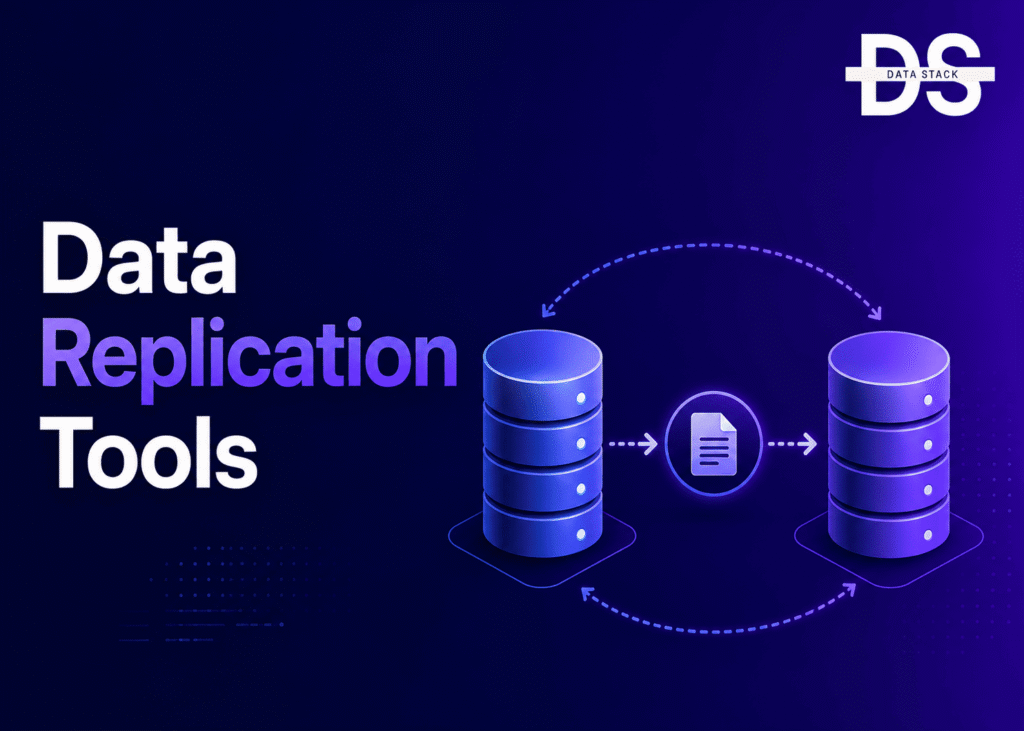
According to Gartner, organizations increasingly expect analytics, operational applications, AI systems, and customer-facing services to access information in near real time. However, business data is often spread across operational databases, cloud applications, data warehouses, data lakes, and legacy systems, making synchronization a major challenge.
Traditional batch integration processes can leave teams working with stale information for hours or even days. As organizations adopt modern analytics platforms, AI workloads, and cloud-native architectures, the need for continuous data movement has become significantly more important.
This is where Data Replication Tools play a critical role.
Data Replication Software helps organizations continuously synchronize information between databases, applications, warehouses, cloud platforms, and operational environments. These tools support cloud migration, analytics modernization, disaster recovery, operational reporting, high availability, and real-time decision-making initiatives.
One of the biggest trends shaping the market is the shift toward Change Data Capture (CDC) and streaming architectures. Instead of repeatedly moving entire datasets, modern platforms capture only incremental changes, reducing latency, improving efficiency, and enabling real-time analytics.
To identify the best Data Replication Tools, we evaluated vendors based on CDC capabilities, replication performance, cloud compatibility, scalability, ecosystem maturity, operational simplicity, and enterprise adoption. Our selections include enterprise replication platforms, modern cloud-native vendors, open-source solutions, and emerging real-time data movement technologies.
What Are Data Replication Tools?
Data Replication Tools are software platforms that continuously copy, synchronize, and distribute information between databases, applications, cloud services, warehouses, data lakes, and operational systems. Organizations use these platforms to improve data availability, support analytics initiatives, reduce downtime, enable cloud migration, and maintain consistency across distributed environments. Modern Data Replication Platforms often include CDC, streaming, monitoring, automation, governance, and real-time synchronization capabilities.
Benefits of Data Replication Software
- Enable near real-time analytics and reporting.
- Improve data availability across business systems.
- Support cloud migration and modernization projects.
- Reduce recovery times during outages.
- Synchronize operational and analytical environments.
- Support machine learning and AI initiatives.
- Improve business continuity and disaster recovery readiness.
Data Replication Software Comparison
| Tool | Best For | Pricing Model | Best Fit |
|---|---|---|---|
| Fivetran | Automated cloud replication | Usage-based | Modern data teams |
| Qlik Replicate | Enterprise CDC | Custom | Large enterprises |
| Estuary Flow | Real-time streaming replication | Usage-based | Cloud-native teams |
| Hevo Data | No-code replication | Subscription | Growing companies |
| Striim | Operational real-time replication | Custom | Enterprises |
| Oracle GoldenGate | Database replication | Custom | Oracle environments |
| AWS DMS | AWS replication | Usage-based | AWS customers |
| Airbyte | Open-source replication | Free + Paid | Modern data teams |
| Integrate.io | Unified integration and replication | Subscription | Data teams |
| IBM InfoSphere Data Replication | Enterprise synchronization | Custom | Large enterprises |
| HVR (Fivetran) | High-volume CDC | Custom | Global enterprises |
| SAP Replication Server | SAP environments | Custom | SAP customers |
| Confluent | Event-driven replication | Subscription | Streaming architectures |
13 Best Data Replication Tools
#1 Fivetran
Fivetran has become one of the most widely adopted Data Replication Platforms because it eliminates much of the operational complexity traditionally associated with data movement projects. Instead of requiring teams to build custom replication pipelines, maintain connectors, and constantly monitor schema changes, Fivetran automates most of the process.
Organizations frequently choose Fivetran because replication projects rarely fail due to technology limitations; they fail because maintaining pipelines becomes expensive and time-consuming. Fivetran addresses this problem through managed connectors, automated schema evolution, built-in monitoring, and cloud-native scalability.
Compared with enterprise-heavy platforms such as Qlik Replicate and Oracle GoldenGate, Fivetran prioritizes simplicity and operational efficiency. While organizations requiring extensive customization may prefer more configurable platforms, teams focused on analytics modernization, cloud warehouses, and ELT architectures often view Fivetran as the fastest route to reliable replication.
The platform is especially popular among organizations standardizing on Snowflake, Databricks, BigQuery, Redshift, and modern analytics ecosystems.
Key Features
- Supports hundreds of connectors across databases, SaaS applications, APIs, and cloud services.
- Automatically adapts to schema changes without requiring extensive manual intervention.
- Uses CDC capabilities to minimize latency and improve data freshness.
- Integrates natively with Snowflake, Databricks, BigQuery, Redshift, and modern lakehouse platforms.
- Provides centralized monitoring and operational visibility across replication pipelines.
- Reduces maintenance overhead through fully managed infrastructure.
- Supports analytics engineering and ELT workflows.
- Helps organizations accelerate cloud modernization initiatives.
Pricing
Usage-based pricing. Free plan available for smaller workloads.
Best For
Organizations seeking highly automated cloud-based replication.
Why Choose This Tool
Choose Fivetran if reducing operational overhead is a higher priority than deep customization. Few vendors match its balance of reliability, automation, and ease of deployment for modern cloud analytics environments.
G2 Rating: 4.6/5
Gartner Rating: 4.5/5
Showcase your software to buyers actively comparing tools. Submit your product for editorial review and get featured on Data Stack Hub.
Submit Your Tool →#2 Qlik Replicate
Qlik Replicate is one of the most mature CDC and enterprise replication platforms available today. The solution is widely deployed by large organizations that need reliable synchronization across databases, warehouses, cloud environments, analytics systems, and operational applications.
Unlike cloud-native vendors that primarily target analytics use cases, Qlik Replicate was built to support enterprise-scale replication requirements involving heterogeneous environments, legacy systems, mission-critical databases, and modernization projects. This makes it particularly attractive to organizations managing complex infrastructures.
Many enterprises choose Qlik Replicate because replication often becomes a strategic dependency. Reporting environments, cloud migrations, AI platforms, and operational systems may all rely on the same replication infrastructure. Qlik’s maturity, stability, and extensive connectivity help reduce risk in these situations.
Compared with Fivetran, Qlik Replicate requires more administration but provides significantly greater control over replication behavior and enterprise architectures.
Key Features
- Provides enterprise-grade CDC for low-latency synchronization.
- Supports heterogeneous databases, warehouses, cloud services, and applications.
- Minimizes performance impact on production environments.
- Enables cloud migration and modernization initiatives.
- Supports large-scale analytics and reporting ecosystems.
- Provides centralized administration and monitoring capabilities.
- Handles high-volume replication workloads reliably.
- Supports complex enterprise architectures.
Pricing
Custom enterprise pricing.
Best For
Large enterprises managing mission-critical replication workloads.
Why Choose This Tool
Qlik Replicate remains one of the strongest choices for organizations requiring mature CDC functionality, enterprise reliability, and broad platform compatibility.
G2 Rating: 4.4/5
Gartner Rating: 4.6/5
#3 Estuary Flow
Estuary Flow represents a newer generation of Data Replication Platforms designed specifically for real-time data movement. Rather than treating replication as an extension of traditional ETL processes, Estuary was built around streaming architectures from the beginning.
Organizations increasingly evaluate Estuary because modern analytics and AI environments often cannot tolerate long synchronization delays. Dashboards, machine learning systems, customer experiences, and operational applications increasingly depend on continuously updated information. Estuary addresses this challenge through streaming-first replication.
Compared with older enterprise platforms such as Oracle GoldenGate and IBM InfoSphere Data Replication, Estuary emphasizes cloud-native simplicity and real-time performance. Compared with Fivetran, it focuses more heavily on low-latency operational synchronization rather than warehouse-focused analytics replication.
This positioning has made Estuary particularly attractive to organizations building event-driven architectures and real-time data products.
Key Features
- Provides real-time streaming replication across cloud and operational systems.
- Supports CDC-based synchronization with minimal latency.
- Enables event-driven architectures and operational analytics.
- Integrates with cloud warehouses, databases, and streaming platforms.
- Supports modern cloud-native deployment models.
- Improves data freshness for analytics and AI workloads.
- Reduces delays associated with traditional batch synchronization.
- Scales across high-volume streaming environments.
Pricing
Usage-based pricing with free tier availability.
Best For
Organizations requiring real-time data movement and streaming architectures.
Why Choose This Tool
Estuary is one of the strongest modern options for teams prioritizing low-latency replication and real-time business operations.
G2 Rating: 4.8/5
Gartner Rating: Not Available
#4 Hevo Data
Hevo Data is a no-code Data Replication Platform designed for organizations that need reliable synchronization without maintaining complex infrastructure. The platform combines ease of use with strong cloud compatibility, making it particularly attractive to growing companies and lean data teams.
Many organizations struggle with replication because they lack dedicated data engineering resources. Building CDC pipelines, maintaining connectors, monitoring failures, and managing schema changes can quickly become resource intensive. Hevo addresses these challenges through automation and a highly accessible user experience.
Compared with Qlik Replicate and Oracle GoldenGate, Hevo sacrifices some enterprise-level customization in exchange for faster deployment and easier management. Compared with Fivetran, it provides a similar ease-of-use experience while often appealing to teams looking for predictable subscription pricing and integrated transformation capabilities.
The platform is frequently adopted by organizations implementing cloud warehouses, modern reporting environments, and analytics initiatives.
Key Features
- Supports 150+ connectors across databases, applications, APIs, and cloud platforms.
- Provides CDC-based replication for near real-time synchronization.
- Automatically manages schema changes and pipeline monitoring.
- Integrates with Snowflake, BigQuery, Redshift, Databricks, and analytics ecosystems.
- Includes built-in transformation capabilities for downstream processing.
- Provides no-code administration and deployment experiences.
- Supports cloud migration and analytics modernization projects.
- Reduces engineering effort required for replication management.
Pricing
Plans start at approximately $239/month. Free tier available.
Best For
Growing organizations seeking no-code replication and cloud analytics support.
Why Choose This Tool
Hevo is an excellent option for teams that want enterprise-grade reliability without enterprise-grade complexity. Its combination of usability, automation, and cloud compatibility makes it particularly attractive to modern data teams.
G2 Rating: 4.6/5
Gartner Rating: 4.5/5
#5 Striim
Striim is a real-time data movement platform designed for organizations that require continuous replication across operational systems, cloud platforms, databases, streaming environments, and analytics ecosystems. Unlike many replication tools that primarily focus on feeding data warehouses, Striim is frequently deployed where business operations depend on immediate access to changing information.
Organizations choose Striim because modern applications increasingly rely on live data. Fraud detection systems, customer-facing platforms, operational dashboards, IoT environments, and AI applications often require information updates within seconds rather than hours. Striim addresses these requirements through a streaming-first architecture built around continuous data movement.
Compared with Fivetran and Hevo, Striim places significantly greater emphasis on operational workloads and real-time event processing. Compared with Confluent, Striim focuses more heavily on replication and CDC use cases rather than serving as a complete event streaming ecosystem.
The platform is particularly common in financial services, telecommunications, retail, and technology environments where low-latency replication directly impacts business performance.
Key Features
- Provides real-time CDC and streaming replication capabilities.
- Supports continuous synchronization across cloud, on-premises, and hybrid environments.
- Enables operational analytics and event-driven architectures.
- Integrates with major databases, warehouses, cloud services, and streaming platforms.
- Minimizes replication latency for mission-critical workloads.
- Includes monitoring and visibility into replication performance.
- Supports cloud migration and modernization projects.
- Helps organizations build real-time data products and applications.
Pricing
Custom enterprise pricing.
Best For
Organizations requiring operational real-time replication and low-latency synchronization.
Why Choose This Tool
Choose Striim when replication is not just about analytics but also about powering real-time applications, customer experiences, and operational systems.
G2 Rating: 4.4/5
Gartner Rating: 4.5/5
Increase your product visibility by reaching software buyers researching the best tools. Every submission is reviewed by our editorial team.
Feature My Tool →#6 Oracle GoldenGate
Oracle GoldenGate is one of the most recognized names in enterprise data replication and has been trusted by large organizations for decades. The platform is widely used for database synchronization, disaster recovery, high availability, migration projects, and enterprise-scale CDC initiatives.
Many enterprises continue to choose GoldenGate because replication environments often involve business-critical systems where downtime, latency, or data inconsistency can create significant operational risks. GoldenGate’s maturity and reliability make it a preferred option in these scenarios.
While cloud-native vendors such as Estuary and Fivetran emphasize ease of deployment, GoldenGate focuses on performance, flexibility, and enterprise control. Organizations running Oracle environments often view it as the default choice because of its deep ecosystem integration, although it also supports heterogeneous database architectures.
GoldenGate remains especially popular among financial institutions, healthcare organizations, government agencies, and large enterprises managing mission-critical workloads.
Key Features
- Supports enterprise-grade CDC and real-time synchronization.
- Enables high availability and disaster recovery architectures.
- Replicates information across heterogeneous database environments.
- Supports cloud migration and modernization initiatives.
- Minimizes performance impact on production systems.
- Enables bidirectional and active-active replication scenarios.
- Provides extensive monitoring and management capabilities.
- Supports mission-critical enterprise workloads.
Pricing
Custom enterprise pricing.
Best For
Large enterprises running Oracle and business-critical database environments.
Why Choose This Tool
Oracle GoldenGate remains one of the strongest options for organizations that prioritize reliability, scalability, and advanced enterprise replication capabilities over deployment simplicity.
G2 Rating: 4.3/5
Gartner Rating: 4.6/5
#7 AWS Database Migration Service (AWS DMS)
AWS Database Migration Service (AWS DMS) is Amazon’s managed replication and migration platform designed to simplify database synchronization across cloud and hybrid environments. Although many organizations initially adopt AWS DMS for migration projects, it is also widely used for ongoing replication workloads.
Organizations choose AWS DMS because migration and replication initiatives frequently occur together. Teams moving workloads into AWS often need a solution that can synchronize information continuously during transition periods while minimizing downtime and business disruption.
Compared with Oracle GoldenGate and Qlik Replicate, AWS DMS provides less advanced customization but offers significantly simpler deployment for organizations already standardized on AWS. It integrates naturally with services such as Amazon RDS, Aurora, Redshift, S3, and analytics platforms throughout the AWS ecosystem.
The platform is particularly attractive for organizations modernizing legacy database environments and building cloud-native analytics architectures.
Key Features
- Supports database migration and ongoing replication workloads.
- Provides CDC functionality for near real-time synchronization.
- Integrates closely with AWS databases, storage services, and analytics platforms.
- Supports heterogeneous and homogeneous replication scenarios.
- Reduces downtime during migration initiatives.
- Provides managed infrastructure with minimal operational overhead.
- Supports hybrid cloud replication architectures.
- Helps accelerate cloud modernization projects.
Pricing
Usage-based pricing.
Best For
Organizations operating AWS-centric environments and migration initiatives.
Why Choose This Tool
AWS DMS is often the most practical choice for organizations that want replication and migration capabilities tightly integrated with AWS services.
G2 Rating: 4.2/5
Gartner Rating: 4.4/5
#8 Airbyte
Airbyte has become one of the fastest-growing open-source data movement platforms and is increasingly used for replication, synchronization, CDC, and modern ELT architectures. Its open-source foundation has made it particularly attractive to organizations seeking flexibility and greater control over their data infrastructure.
Many teams choose Airbyte because proprietary replication platforms can become expensive as workloads scale. Airbyte offers an alternative approach where organizations can self-host, customize connectors, and maintain ownership of their replication environment.
Compared with Fivetran, Airbyte generally requires more operational involvement but provides significantly greater flexibility. Compared with enterprise platforms such as Qlik Replicate and GoldenGate, Airbyte focuses more on cloud-native analytics environments and modern data stacks.
The platform has gained strong adoption among startups, SaaS companies, technology organizations, and data teams building cloud-first architectures.
Key Features
- Provides hundreds of connectors for databases, APIs, SaaS applications, and cloud services.
- Supports CDC-based replication and synchronization workflows.
- Offers open-source deployment and customization options.
- Integrates with modern cloud warehouses and lakehouse platforms.
- Reduces vendor lock-in through open architectures.
- Supports cloud, hybrid, and self-managed deployment models.
- Enables extensive connector customization and extension.
- Supports modern ELT and analytics engineering workflows.
Pricing
Open source. Cloud plans available. Usage-based enterprise options available.
Best For
Organizations seeking open-source replication and maximum deployment flexibility.
Why Choose This Tool
Airbyte is an excellent option for teams that want greater ownership, transparency, and customization than most commercial replication platforms provide.
G2 Rating: 4.5/5
Gartner Rating: Not Available
#9 Integrate.io
Integrate.io combines data integration, ETL, ELT, and replication capabilities within a unified platform. Rather than treating replication as a standalone function, the platform helps organizations manage ingestion, synchronization, transformation, and delivery through a single environment.
Organizations often choose Integrate.io because data movement projects rarely exist in isolation. Teams frequently need to replicate information, transform it, validate quality, and deliver it to analytics systems at the same time. Managing these activities through separate tools can increase complexity and operational overhead.
Compared with specialized replication platforms such as Qlik Replicate and Oracle GoldenGate, Integrate.io offers broader workflow management capabilities. Compared with Fivetran, it provides more built-in transformation and orchestration functionality while still maintaining a relatively user-friendly experience.
The platform is particularly popular among analytics teams, business intelligence groups, and organizations looking to consolidate multiple data movement tools.
Key Features
- Supports replication, ETL, ELT, and pipeline orchestration workloads.
- Provides low-code workflow development and management capabilities.
- Integrates databases, APIs, SaaS applications, warehouses, and cloud services.
- Enables automated monitoring and operational management.
- Supports cloud analytics and reporting initiatives.
- Helps reduce tool sprawl across data environments.
- Includes transformation and workflow automation functionality.
- Supports modern analytics and business intelligence architectures.
Pricing
Subscription-based pricing. Custom enterprise plans available.
Best For
Organizations seeking a unified integration and replication platform.
Why Choose This Tool
Choose Integrate.io when replication is only one part of a broader data integration strategy and platform consolidation is a priority.
G2 Rating: 4.4/5
Gartner Rating: 4.4/5
#10 IBM InfoSphere Data Replication
IBM InfoSphere Data Replication is an enterprise-grade replication platform designed for large organizations operating complex database environments. The platform supports CDC, synchronization, migration, operational reporting, and analytics modernization initiatives across diverse infrastructures.
Organizations frequently adopt IBM because replication often becomes a foundational service supporting multiple business functions. Reporting systems, analytics environments, operational applications, and cloud migration projects may all depend on the same replication infrastructure. IBM’s focus on reliability and enterprise scalability makes it well suited to these requirements.
Compared with cloud-native vendors such as Hevo and Airbyte, IBM offers stronger enterprise controls and governance capabilities. However, it typically requires greater implementation expertise and operational management.
The platform remains especially relevant in large enterprises operating IBM ecosystems, regulated industries, and mission-critical environments.
Key Features
- Supports enterprise-scale CDC and synchronization workloads.
- Enables near real-time database replication across environments.
- Supports heterogeneous database technologies and architectures.
- Provides monitoring, administration, and operational management capabilities.
- Enables analytics modernization and reporting initiatives.
- Supports migration and cloud transformation projects.
- Helps reduce replication latency across distributed environments.
- Integrates with broader IBM data management ecosystems.
Pricing
Custom enterprise pricing.
Best For
Large enterprises requiring highly reliable CDC and synchronization capabilities.
Why Choose This Tool
IBM InfoSphere Data Replication remains a strong choice for organizations prioritizing enterprise-grade scalability, governance, and operational reliability.
G2 Rating: 4.1/5
Gartner Rating: 4.4/5
#11 HVR (Fivetran)
HVR, now part of Fivetran, was specifically designed for high-volume, enterprise-scale CDC and replication workloads. While standard Fivetran deployments often focus on analytics data movement, HVR targets organizations operating complex global environments with stringent performance requirements.
Many enterprises choose HVR because replication requirements can extend far beyond analytics. Global operations, manufacturing environments, operational systems, and large-scale migration projects often demand extremely reliable synchronization with minimal latency. HVR was built to address these challenges.
Compared with Fivetran’s connector-driven approach, HVR offers more advanced control over replication behavior and high-volume workloads. Compared with Oracle GoldenGate, it often appeals to organizations looking for strong enterprise replication without being tied to a specific database ecosystem.
HVR is particularly common among multinational organizations managing large volumes of transactional information across multiple regions.
Key Features
- Supports high-volume real-time replication across enterprise environments.
- Provides advanced CDC capabilities with minimal latency.
- Enables large-scale cloud migration and modernization initiatives.
- Supports distributed multi-region architectures.
- Minimizes performance impact on source systems.
- Provides centralized monitoring and operational visibility.
- Handles mission-critical workloads requiring continuous synchronization.
- Supports complex enterprise deployment scenarios.
Pricing
Custom enterprise pricing.
Best For
Global enterprises managing large-scale CDC and replication environments.
Why Choose This Tool
HVR is one of the strongest choices for organizations requiring enterprise-grade performance, scalability, and replication reliability at global scale.
G2 Rating: 4.6/5
Gartner Rating: 4.5/5
#12 SAP Replication Server
SAP Replication Server is designed to help organizations synchronize information across SAP and non-SAP environments while supporting operational reporting, disaster recovery, migration, and high-availability initiatives.
Organizations heavily invested in SAP ecosystems often choose SAP Replication Server because of its native integration with business-critical SAP applications and databases. Replication projects in these environments frequently involve ERP systems, financial applications, operational reporting platforms, and analytics environments.
Compared with broader replication platforms such as Qlik Replicate and GoldenGate, SAP Replication Server is more specialized. However, that specialization often becomes an advantage for organizations operating complex SAP landscapes.
The platform remains widely used across manufacturing, retail, financial services, and large enterprise environments that depend heavily on SAP applications.
Key Features
- Supports replication across SAP and heterogeneous database environments.
- Enables high availability and disaster recovery architectures.
- Provides real-time synchronization for operational systems.
- Supports migration and modernization initiatives.
- Reduces business disruption during system transitions.
- Integrates closely with SAP application ecosystems.
- Supports large-scale enterprise deployment requirements.
- Enables analytics and reporting synchronization workloads.
Pricing
Custom enterprise pricing.
Best For
Organizations operating SAP-centric business environments.
Why Choose This Tool
SAP customers frequently choose SAP Replication Server because of its ecosystem alignment, enterprise reliability, and deep integration capabilities.
G2 Rating: 4.1/5
Gartner Rating: 4.3/5
#13 Confluent
Confluent approaches replication from a fundamentally different perspective than most tools on this list. Built around Apache Kafka, the platform focuses on event streaming and real-time data distribution rather than traditional database synchronization.
Organizations increasingly choose Confluent because modern architectures are becoming event-driven. Instead of moving information periodically between systems, organizations want applications, analytics platforms, AI models, and operational environments to react immediately as events occur.
Compared with Oracle GoldenGate and Qlik Replicate, Confluent is less focused on traditional database replication. Compared with Estuary, it provides a broader event streaming ecosystem that can support real-time applications, microservices, operational analytics, and distributed architectures.
For organizations building modern digital platforms, Confluent often becomes the backbone of real-time information movement.
Key Features
- Enables streaming data replication across distributed environments.
- Supports event-driven architectures and real-time applications.
- Integrates databases, cloud platforms, applications, and analytics systems.
- Provides large-scale event streaming capabilities.
- Reduces latency across operational environments.
- Supports governance, monitoring, and observability initiatives.
- Enables real-time analytics and operational intelligence.
- Scales across global distributed architectures.
Pricing
Subscription-based pricing. Free tier available.
Best For
Organizations building event-driven and streaming-first architectures.
Why Choose This Tool
Choose Confluent when real-time events are more important than traditional batch synchronization. It remains one of the strongest platforms for modern streaming architectures.
G2 Rating: 4.4/5
Gartner Rating: 4.6/5
Which Data Replication Tool Should You Choose?
| Scenario | Recommended Tool |
|---|---|
| Best Overall | Fivetran |
| Best Enterprise CDC | Qlik Replicate |
| Best Real-Time Replication | Estuary Flow |
| Best No-Code Platform | Hevo Data |
| Best Operational Streaming | Striim |
| Best Oracle Environment | Oracle GoldenGate |
| Best AWS Option | AWS DMS |
| Best Open Source Option | Airbyte |
| Best Unified Platform | Integrate.io |
| Best Enterprise Scale | HVR |
| Best SAP Environment | SAP Replication Server |
| Best Event-Driven Architecture | Confluent |
Browse expertly curated software recommendations across hundreds of business categories.
Browse Top Tools →Conclusion
Data replication has become a foundational capability for modern data architectures. Organizations can no longer afford to rely solely on batch synchronization processes when analytics platforms, AI systems, operational applications, and customer experiences increasingly depend on real-time information.
The market has evolved significantly over the last few years. Traditional enterprise leaders such as Qlik Replicate, Oracle GoldenGate, IBM InfoSphere Data Replication, and SAP Replication Server continue to dominate large-scale enterprise environments where reliability, governance, and operational stability are critical requirements.
At the same time, modern cloud-native platforms such as Fivetran, Hevo Data, Airbyte, and Estuary are reshaping how organizations approach replication by reducing operational complexity and accelerating deployment. Meanwhile, streaming-focused platforms such as Striim and Confluent are helping organizations move beyond traditional synchronization toward event-driven architectures and real-time business operations.
Organizations building analytics platforms frequently choose Fivetran, Hevo Data, or Airbyte. Enterprises running mission-critical workloads often evaluate Qlik Replicate, HVR, and Oracle GoldenGate. Teams pursuing streaming architectures commonly shortlist Estuary, Striim, and Confluent.
The best Data Replication Tool ultimately depends on your architecture, latency requirements, operational complexity, cloud strategy, governance needs, and long-term modernization goals.
FAQs
1. What are Data Replication Tools?
Data Replication Tools are software platforms that continuously copy, synchronize, and distribute information across databases, applications, cloud environments, warehouses, and operational systems. They help organizations improve availability, support analytics, and maintain consistency across environments.
2. What is data replication?
Data replication is the process of copying information from one system to another so that multiple environments maintain consistent and up-to-date data. Organizations use replication for analytics, disaster recovery, migration, and operational synchronization.
3. What is Change Data Capture (CDC)?
Change Data Capture (CDC) is a replication method that tracks and transfers only incremental changes made to source systems rather than repeatedly copying entire datasets. CDC reduces latency and improves efficiency.
4. What are the best Data Replication Tools?
Fivetran, Qlik Replicate, Estuary Flow, Hevo Data, Oracle GoldenGate, Airbyte, HVR, and Confluent are among the leading Data Replication Platforms available today.
5. What is the difference between data replication and data integration?
Data replication focuses on continuously synchronizing information between systems, while data integration typically includes additional activities such as transformation, cleansing, enrichment, and orchestration.
6. Which Data Replication Tool is best for real-time replication?
Estuary Flow, Striim, HVR, Oracle GoldenGate, and Confluent are among the strongest options for organizations requiring low-latency and real-time synchronization.
7. Which platform is best for cloud analytics environments?
Fivetran, Hevo Data, and Airbyte are commonly selected by organizations building cloud-based analytics architectures around Snowflake, Databricks, BigQuery, and Redshift.
8. Are there open-source Data Replication Tools?
Yes. Airbyte is one of the most widely adopted open-source replication platforms and supports a large ecosystem of connectors and deployment options.
9. How do Data Replication Platforms support cloud migration?
These platforms continuously synchronize information between source and target environments, allowing organizations to migrate workloads with reduced downtime and operational risk.
10. How do I choose the right Data Replication Tool?
Evaluate CDC capabilities, latency requirements, cloud compatibility, scalability, governance features, pricing, operational complexity, and alignment with your overall data architecture.