
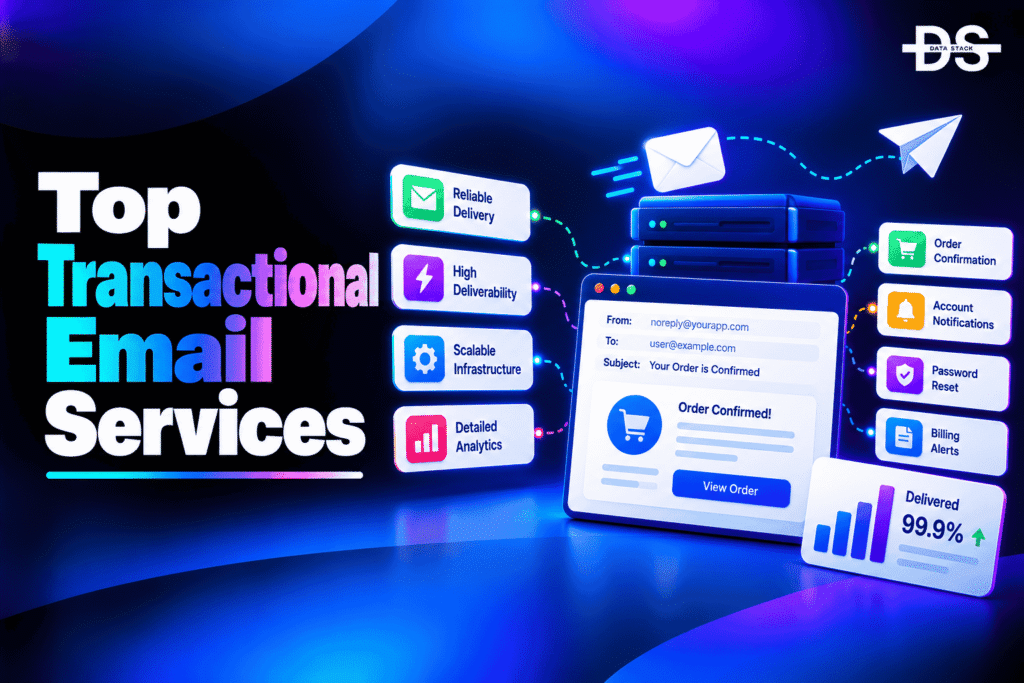
Transactional emails are essential for applications and businesses that need to communicate important information automatically. Password resets, account verification messages, order confirmations, shipping notifications, payment receipts, and security alerts all depend on emails reaching recipients reliably and promptly. Unlike promotional newsletters, these messages are usually triggered by a specific user action or system event and often contain information the recipient expects to receive.
Transactional email services provide the infrastructure required to send these messages at scale. They typically offer SMTP relay, email APIs, delivery monitoring, bounce handling, and tools for managing sending domains and email authentication. Some platforms focus on reliable application-to-user email delivery, while others combine transactional messaging with marketing automation, customer data, and broader engagement capabilities.
AI can support parts of modern email operations, including monitoring, troubleshooting, and analyzing delivery patterns, where a provider offers these capabilities. However, the main factors when choosing a transactional email service are deliverability, reliability, integration flexibility, security, scalability, and operational visibility. Proper SPF, DKIM, and DMARC configuration, together with responsible sending practices, is also important for protecting domain reputation.
In this guide, we compare the 9 best transactional email services in 2026, covering developer-focused email APIs, SMTP relay services, application notifications, and combined transactional and marketing email solutions. We examine their key features, free access, pricing considerations, and ideal use cases to help you select the right service for your application or business.
Why Do You Need Transactional Email Services?
Transactional email services help businesses send automated, event-triggered messages without operating their own email delivery infrastructure. They are useful for ecommerce stores, SaaS applications, financial services, online marketplaces, and other businesses that depend on timely customer communication.
- Automate essential notifications: Send password resets, account verification emails, order confirmations, receipts, and shipping updates automatically.
- Improve email deliverability: Use provider infrastructure, authentication support, delivery monitoring, and bounce handling to help manage email delivery.
- Integrate with applications: Send messages through SMTP or APIs when users perform actions or systems generate events.
- Monitor delivery performance: Track supported delivery events, bounces, rejections, and other signals that help diagnose problems.
- Scale email volume: Handle growing transaction volumes without having to build and maintain a complete email delivery system.
- Protect sender reputation: Manage sending domains, suppression lists, and delivery practices to reduce avoidable sending problems.
- Support security and compliance: Apply appropriate access controls, data handling practices, and authentication settings for transactional communications.
- Simplify email operations: Use provider dashboards, logs, webhooks, and developer tools to troubleshoot delivery issues efficiently.
Transactional Email Services Comparison
Transactional email services differ in their API capabilities, sending infrastructure, delivery monitoring, and pricing models. The following table compares nine options by their primary use cases, key features, free access, and G2 ratings.
| Tool | Key Features | Best For | Free Access | G2 Rating |
|---|---|---|---|---|
| Amazon Simple Email Service (SES) | SMTP relay, email API, delivery events, AWS integrations | Cost-conscious applications and high-volume sending | AWS free-tier eligibility and credits vary | 4.3/5 |
| Twilio SendGrid | Email API, SMTP relay, event webhooks, delivery analytics | SaaS applications and growing businesses | Limited trial or free access; verify current terms | 4.0/5 |
| Mailgun | Email API, SMTP relay, delivery logs, validation tools | Developer-focused transactional email | Free access or trial availability varies | 4.2/5 |
| Postmark | Transactional email API, message streams, delivery tracking | Time-sensitive application notifications | Limited free testing; verify current terms | 4.6/5 |
| Resend | Developer-friendly API, SDKs, React Email support, webhooks | Modern applications and developer teams | Free plan available with limits | 4.8/5 |
| Brevo | Transactional email, SMTP/API delivery, marketing tools | Businesses combining transactional and marketing email | Free plan with limits | 4.5/5 |
| MailerSend | Email API, SMTP relay, templates, delivery analytics | SaaS and ecommerce notifications | Free plan availability and limits should be checked | Verify current G2 rating |
| Zoho ZeptoMail | Transactional email delivery, SMTP/API integration, delivery tracking | Businesses needing dedicated transactional sending | Trial or limited access; verify current terms | 4.8/5 |
| SMTP2GO | SMTP relay, delivery reporting, monitoring, email testing | Businesses needing managed SMTP delivery | Free plan with limits | Verify current G2 rating |
Top Transactional Email Services in 2026
Let’s explore the nine transactional email services in detail, including their delivery capabilities, integrations, free access, and ideal use cases.
#1. Amazon Simple Email Service (SES)
Amazon Simple Email Service (SES) is a cloud-based email delivery service designed for applications and businesses that need to send transactional and other types of email at scale. It is part of Amazon Web Services (AWS), making it particularly relevant to organizations that already use AWS infrastructure. Businesses can use SES to send messages such as password resets, account notifications, order confirmations, and other application-generated emails.
SES supports SMTP relay and API-based email sending, allowing developers to integrate email delivery into applications and backend systems. It provides sending statistics, reputation monitoring, and event publishing options that help teams observe delivery outcomes and identify potential issues. Businesses can configure domain authentication and connect email events with other AWS services to support monitoring and operational workflows. Its flexible infrastructure can accommodate a wide range of sending volumes, subject to account permissions, quotas, and configuration.
Amazon SES is particularly attractive to technically capable teams that prioritize cost control, infrastructure flexibility, and integration with AWS. However, it generally requires more setup and operational knowledge than services built around a simpler developer experience. Businesses should consider configuration effort, deliverability management, monitoring, and support needs alongside the per-email cost. AWS pricing and free-tier eligibility can change, so check current terms before estimating expenses.
Key Features
- SMTP relay: Send application-generated emails through SMTP-compatible systems and frameworks.
- Email API: Integrate transactional email delivery into applications using supported AWS APIs.
- High-volume sending: Support scalable email delivery for applications and businesses with growing messaging needs.
- Delivery event monitoring: Publish supported sending, delivery, bounce, and complaint events for operational analysis.
- Domain authentication: Configure supported email authentication mechanisms to help establish sending-domain legitimacy.
- AWS integrations: Connect email operations with other AWS services and application infrastructure.
- Sending reputation management: Monitor available reputation and sending metrics to identify potential delivery problems.
- Usage-based pricing: Evaluate email volume, optional features, data transfer, and other AWS charges when calculating total costs.
#2. Twilio SendGrid
Twilio SendGrid is an email delivery platform that provides transactional email APIs and SMTP relay for applications and businesses. It is commonly used for messages such as account verification, password resets, order confirmations, and system notifications. Its developer-oriented infrastructure allows businesses to integrate email sending into websites, applications, and backend services without managing their own delivery servers.
SendGrid provides API-based sending, SMTP integration, event webhooks, and reporting capabilities that help developers monitor email activity. Teams can use delivery events and available analytics to investigate bounces, engagement, and other sending outcomes. The platform also offers broader email marketing capabilities, making it relevant to businesses that need transactional delivery alongside campaign-related workflows. Features and sending limits depend on the selected plan.
SendGrid is worth considering for SaaS businesses, ecommerce companies, and applications that need an established email delivery platform with multiple integration options. Developers should assess the API requirements, event reporting, authentication setup, and expected sending volume before selecting a plan. Businesses should also separate transactional and promotional email practices where appropriate, since mixing different email types can affect reputation management and operational visibility.
Key Features
- Transactional email API: Send automated messages from applications using supported API endpoints.
- SMTP relay: Connect applications and systems that use SMTP for outbound email delivery.
- Event webhooks: Receive supported email events to update application records and monitor delivery outcomes.
- Delivery analytics: Review available sending, delivery, bounce, and engagement metrics.
- Email authentication: Configure sending domains and supported authentication settings to support delivery and sender identity.
- Template support: Use supported email templates and dynamic content to generate personalized transactional messages.
- Integration options: Connect email delivery with applications, frameworks, and supported development environments.
- Scalable sending: Choose a plan and configuration suited to expected message volume and operational needs.
Also Read: Best SendGrid Alternatives and Competitors in 2026
Showcase your software to buyers actively comparing tools. Submit your product for editorial review and get featured on Data Stack Hub.
Submit Your Tool →#3. Mailgun
Mailgun is an email delivery service designed for developers and businesses that need to send and manage email through APIs or SMTP. It is suitable for transactional messages such as verification codes, password resets, payment notifications, and application alerts. Its developer-oriented approach provides tools for integrating email delivery into existing systems and monitoring how messages move through the delivery process.
Mailgun offers API-based sending, SMTP relay, delivery logs, event tracking, and webhook capabilities. These features help development teams investigate sending errors, monitor message outcomes, and respond to delivery events in their applications. Depending on the plan, additional capabilities may include email validation and tools that support deliverability management. Businesses can use its APIs to integrate transactional email into web applications, SaaS products, and ecommerce workflows.
Mailgun is worth evaluating when developers need programmatic control and visibility into transactional email delivery. Its suitability depends on sending volume, required retention of delivery logs, validation needs, and integration requirements. Before choosing a plan, compare current message limits, API features, support options, and additional charges. Proper domain authentication and ongoing monitoring remain necessary regardless of the provider.
Key Features
- Email sending API: Integrate transactional email delivery into applications through supported API endpoints.
- SMTP relay: Send messages from compatible applications and systems using SMTP.
- Delivery event tracking: Monitor supported events such as delivery, bounce, rejection, and complaint notifications.
- Email logs: Investigate sending activity and diagnose delivery issues using available message records.
- Webhook integration: Send email events to applications and backend systems for automated processing.
- Email validation: Use available address validation features to help identify potentially invalid addresses before sending.
- Domain authentication: Configure supported authentication settings to establish a legitimate sending identity.
- Plan-based capabilities: Compare current sending limits, retention periods, validation features, and support options before purchasing.
Also Read: Best Mailgun Alternatives and Competitors in 2026
#4. Postmark
Postmark is a transactional email service focused on delivering application-generated messages reliably and providing visibility into their delivery status. It is particularly relevant to SaaS businesses and developers sending time-sensitive communications, such as password resets, account verification emails, receipts, and security alerts. Its focus on transactional messaging makes it a useful option for applications where these emails are central to the user experience.
The platform provides email APIs, SMTP sending, message streams, delivery tracking, and tools for managing transactional email workflows. Message streams help businesses organize different categories of email, making it easier to separate transactional messages from other sending activity. Delivery reporting and message records can help developers investigate problems, while supported templates and integrations can simplify application implementation.
Postmark is worth considering when delivery visibility and a focused transactional email workflow are more important than having a broad all-in-one marketing platform. Businesses should evaluate its sending limits, retention, integrations, and pricing against their application requirements. As with other providers, actual inbox placement depends on authentication, recipient engagement, sender reputation, message quality, and the receiving email provider—not simply the service selected.
Key Features
- Transactional email API: Send application notifications and user-triggered messages through supported API endpoints.
- SMTP sending: Integrate with systems that send email using SMTP.
- Message streams: Organize transactional email categories to improve operational visibility and separation.
- Delivery tracking: Review supported delivery events and message status to investigate sending outcomes.
- Email templates: Use supported templates to standardize recurring messages and simplify application integration.
- Developer integrations: Connect transactional email with applications and supported frameworks.
- Message history: Use available message records and logs to troubleshoot individual email deliveries.
- Usage-based plans: Compare message allowances, additional sending costs, and available features against expected volume.
Also Read: Best Postmark Alternatives and Competitors in 2026
#5. Resend
Resend is a transactional email service designed for developers who want a straightforward way to integrate email delivery into modern applications. It is particularly suitable for SaaS products, web applications, and developer-led teams that need to send account verification emails, password resets, invitations, receipts, and other automated notifications. Its developer-focused approach makes it useful for teams that want to integrate email without managing their own delivery infrastructure.
Resend provides an email API, SMTP support, developer libraries, and webhook capabilities for supported workflows. It also integrates with React Email, allowing developers to create email templates using React components and reuse familiar development practices. These capabilities can help teams maintain consistent templates and integrate email delivery into application code. Delivery records and event information can help developers monitor messages and investigate problems.
Resend is worth considering for teams that prioritize developer experience and a simple integration workflow. Its free plan can be useful for development and smaller applications, although sending limits and other restrictions apply. Businesses planning production use should review current limits, domain authentication requirements, support options, and pricing before selecting a plan.
Key Features
- Email API: Send transactional messages directly from applications through supported API endpoints.
- SMTP support: Connect compatible applications and services that use SMTP for email delivery.
- React Email integration: Build reusable email templates using React components and a developer-friendly workflow.
- Developer libraries: Use supported SDKs to integrate email delivery into application code.
- Webhook support: Receive supported email events and connect them with application workflows.
- Email template development: Create reusable templates for notifications, invitations, verification messages, and receipts.
- Delivery monitoring: Review available message events and delivery information to investigate sending issues.
- Free plan: Test integrations and support smaller workloads within the current plan’s limits.
Also Read: Best Resend Alternatives and Competitors in 2026
#6. Brevo
Brevo is an email marketing and customer communication platform that also provides transactional email delivery. It is useful for businesses that need to send application notifications alongside promotional campaigns and automated marketing messages. This combination can help organizations manage multiple email workflows through one provider instead of maintaining completely separate systems.
Brevo supports transactional email through its available SMTP and API options. Businesses can use these capabilities to send account notifications, order confirmations, receipts, and other event-triggered messages. Its broader marketing features include campaign management, contact organization, and automation, allowing teams to coordinate transactional communications with other customer messaging activities where appropriate. Available functionality depends on the product configuration and subscription.
Brevo is a practical option for small and midsize businesses that want transactional email alongside broader marketing capabilities. However, businesses with demanding application-level requirements should assess its API features, sending limits, delivery monitoring, and separation of transactional and marketing messages. Check the current plan details to determine whether the available sending allowance and reporting features meet your requirements.
Key Features
- Transactional email API: Integrate automated email delivery into applications using supported API endpoints.
- SMTP relay: Send messages from compatible applications and systems using SMTP credentials.
- Transactional templates: Create reusable templates for notifications, receipts, confirmations, and other application messages.
- Delivery tracking: Review available sending and delivery information to monitor transactional email activity.
- Marketing email integration: Manage transactional communication alongside supported marketing campaigns.
- Automation workflows: Use available automation features for eligible customer communication scenarios.
- Contact management: Maintain contact information and coordinate relevant communication across supported workflows.
- Free and paid plans: Compare sending limits, transactional email availability, and premium features before selecting a subscription.
Also Read: Best Brevo Alternatives in 2026
Increase your product visibility by reaching software buyers researching the best tools. Every submission is reviewed by our editorial team.
Feature My Tool →#7. MailerSend
MailerSend is a transactional email service designed for developers and businesses that need to send application-generated messages. It is suitable for SaaS applications, ecommerce systems, and online services that depend on emails such as password resets, account verification, payment notifications, and order confirmations. Its combination of developer tools and email management features helps teams integrate sending into existing applications.
The platform provides an email API, SMTP relay, email templates, and delivery tracking capabilities. Developers can use its integration options to send messages from application workflows, while templates help standardize recurring notifications. Available event tracking and reporting can support troubleshooting and operational monitoring. The service also provides additional email-related capabilities depending on the selected product and plan.
MailerSend is worth considering for businesses that want a transactional email service with an accessible developer workflow. Its suitability depends on the expected sending volume, required integrations, and monitoring needs. Before selecting a plan, review current free access, sending limits, domain authentication requirements, and paid features. Businesses with strict delivery or compliance requirements should also assess the provider’s security documentation and operational controls.
Key Features
- Email API: Send transactional messages from applications using supported API endpoints.
- SMTP relay: Connect systems that rely on SMTP for outbound email delivery.
- Email templates: Create reusable layouts for verification emails, receipts, alerts, and other transactional messages.
- Delivery event tracking: Monitor supported email events to investigate delivery outcomes.
- Webhook integration: Connect email events to application logic and backend workflows.
- Developer integrations: Integrate sending functionality into supported applications and development environments.
- Domain authentication: Configure supported authentication settings to establish a legitimate sending identity.
- Plan-based usage: Compare sending limits, reporting features, and additional capabilities across available plans.
Also Read: Best MailerSend Alternatives and Competitors in 2026
#8. Zoho ZeptoMail
Zoho ZeptoMail is a transactional email service designed for applications and businesses that need to send automated, event-triggered emails. It focuses on messages such as account verification, password resets, invoices, order confirmations, and system notifications. Its dedicated transactional email approach makes it relevant to businesses that want to separate application notifications from promotional email campaigns.
ZeptoMail supports SMTP and API-based email sending, allowing developers to connect applications and business systems to its delivery infrastructure. It also provides tools for managing transactional email activity, monitoring delivery, and organizing sending workflows. These capabilities help teams maintain visibility into automated messages and troubleshoot problems when notifications are delayed or rejected. The precise features available depend on the account configuration and current product offering.
ZeptoMail is worth considering for businesses that want a service focused on transactional communication, particularly those already using Zoho products. Before selecting it, evaluate its integration options, sending allowances, authentication requirements, and reporting capabilities. Businesses with high-volume or complex application requirements should also compare its operational features and total cost with other transactional email providers.
Key Features
- Transactional email delivery: Send application-generated notifications such as verification emails, invoices, and confirmations.
- Email API: Integrate transactional sending into applications through supported API endpoints.
- SMTP integration: Connect compatible applications and systems using supported SMTP settings.
- Delivery monitoring: Review available delivery information and message activity to troubleshoot issues.
- Sending organization: Manage transactional email sending through supported account and configuration controls.
- Email authentication: Configure supported domain authentication to establish sending legitimacy.
- Zoho ecosystem integration: Evaluate compatibility with relevant Zoho products and business workflows.
- Usage-based plans: Review current sending limits, pricing, and any additional charges before choosing a plan.
Also Read: Best ZeptoMail Alternatives and Competitors in 2026
#9. SMTP2GO
SMTP2GO is a managed SMTP email delivery service that helps businesses send email from applications, websites, and business systems. It is useful for organizations that need reliable outbound email delivery but do not want to operate their own SMTP infrastructure. Common use cases include application notifications, website-generated emails, password resets, and messages sent by business software.
The service provides SMTP relay, API-based sending options, delivery reporting, and tools for monitoring email activity. These capabilities allow teams to connect existing applications and review sending outcomes without building an email delivery system from scratch. SMTP2GO also provides diagnostic and testing tools that can help administrators investigate configuration and delivery issues. Actual functionality and limits depend on the account plan and setup.
SMTP2GO is worth evaluating for businesses that need managed SMTP delivery across multiple applications or servers. It can be particularly useful when compatibility with existing software is more important than adopting a specialized application email API. Before choosing a plan, assess sending limits, authentication options, monitoring features, support, and the needs of your email infrastructure.
Key Features
- SMTP relay: Route outbound email from websites, applications, and compatible business systems through managed infrastructure.
- API sending: Use supported API functionality where application-level integration is required.
- Delivery reporting: Review available message and delivery information to investigate email performance.
- Email diagnostics: Use supported testing and troubleshooting tools to identify configuration problems.
- Domain authentication: Configure supported authentication settings for sending domains.
- Application compatibility: Connect existing systems that support SMTP rather than replacing them with a new email platform.
- Monitoring and alerts: Use available monitoring features to identify sending or delivery issues.
- Free and paid plans: Compare current message allowances, usage limits, and support options before selecting a plan.
Also Read: Best SMTP2GO Alternatives and Competitors in 2026
How to Choose the Best Transactional Email Services
The right transactional email service depends on your application architecture, sending volume, delivery requirements, and development resources. Consider these factors before selecting a provider.
- Define your transactional email use cases: Identify whether you need password resets, verification emails, receipts, order notifications, system alerts, or other automated messages. Confirm that the provider supports your expected message types and workflows.
- Evaluate API and SMTP support: Choose API delivery when you need application-level integration and event-driven workflows. SMTP relay can be a better fit for existing software that already supports SMTP. Some businesses need both.
- Assess deliverability and reliability: Review provider monitoring, delivery events, bounce handling, suppression management, and available service commitments. Remember that inbox placement also depends on authentication, sender reputation, recipient engagement, and message quality.
- Check developer tools and integrations: Evaluate SDKs, documentation, webhooks, code examples, templates, and compatibility with your programming language or application framework. Good developer support can reduce implementation and troubleshooting time.
- Review security and compliance: Examine access controls, data handling, account security, and relevant compliance documentation. Configure SPF, DKIM, and DMARC appropriately for your sending domains.
- Compare pricing and sending limits: Review free-tier eligibility, monthly message allowances, overage charges, retention periods, dedicated IP costs, and premium features. Estimate costs using your expected sending volume rather than relying only on advertised entry-level pricing.
- Consider monitoring and troubleshooting: Look for delivery logs, event notifications, searchable message records, and reporting that helps diagnose problems. AI-assisted analysis can be useful where genuinely available, but it should not replace reliable logs and operational monitoring.
- Separate transactional and marketing email where appropriate: Transactional and promotional messages have different purposes and sending patterns. Consider how the provider supports distinct streams, domains, or sending configurations to help protect reputation and improve operational visibility.
Browse expertly curated software recommendations across hundreds of business categories.
Browse Top Tools →Conclusion
Transactional email services help businesses deliver essential application messages without building and maintaining their own email delivery infrastructure. The right provider can simplify integration, provide useful delivery visibility, and support growth as the volume of automated messages increases.
Before selecting a service, compare API and SMTP support, delivery monitoring, authentication options, developer experience, pricing, and expected sending volume. A low-cost service may suit a straightforward application, while a larger business may need more advanced reporting, operational controls, or support. Test the integration and configure domain authentication before relying on the service for critical customer communications.
The following table summarizes the nine transactional email services covered in this guide.
| Tool | Best Use Case |
|---|---|
| Amazon Simple Email Service (SES) | Scalable, cost-conscious email delivery within AWS |
| Twilio SendGrid | Application email delivery with API and event reporting |
| Mailgun | Developer-focused email APIs and delivery monitoring |
| Postmark | Time-sensitive transactional application messages |
| Resend | Modern developer workflows and React-based email templates |
| Brevo | Transactional email alongside marketing campaigns |
| MailerSend | Application email delivery with developer tools |
| Zoho ZeptoMail | Dedicated transactional messaging for business applications |
| SMTP2GO | Managed SMTP relay for applications and business systems |
Frequently Asked Questions
1. What are transactional email services?
Transactional email services provide infrastructure for sending automated messages triggered by user actions or system events. Common examples include password resets, account verification emails, receipts, order confirmations, and security notifications.
2. What are the best transactional email services in 2026?
The nine services covered in this guide are Amazon SES, Twilio SendGrid, Mailgun, Postmark, Resend, Brevo, MailerSend, Zoho ZeptoMail, and SMTP2GO. The best option depends on your sending volume, integration requirements, delivery monitoring needs, and budget.
3. What is the difference between transactional and marketing email?
Transactional emails provide information related to a specific action or relationship, such as an order confirmation or password reset. Marketing emails promote products, services, offers, or content. They have different purposes and may be subject to different consent and compliance requirements.
4. What is a transactional email API?
A transactional email API allows an application to request email delivery programmatically. Developers can use it to send messages when events occur, such as when a user creates an account, requests a password reset, or completes a purchase.
5. What is SMTP relay in transactional email?
SMTP relay routes outbound messages from an application or server through a managed email delivery service. It is useful for existing software that supports SMTP and needs an external provider to handle email delivery.
6. Which transactional email service is best for developers?
Resend, Postmark, Mailgun, and SendGrid are worth evaluating for developer-focused email integration. Compare their APIs, SDKs, documentation, webhooks, delivery records, and pricing to determine which best fits your application.
7. Are there free transactional email services?
Some providers offer free plans, limited testing access, or free-tier eligibility. Resend, for example, offers a free plan with limits, while AWS SES pricing depends on the applicable AWS terms and eligibility. Check current conditions before relying on free access for production workloads.
8. How can I improve transactional email deliverability?
Configure SPF, DKIM, and DMARC correctly, maintain accurate recipient addresses, handle bounces and complaints, and monitor sending reputation. Use clear, expected messages and test the complete sending workflow before production deployment.
9. Can transactional email services send marketing emails too?
Some providers support both transactional and marketing email. Brevo and SendGrid offer broader email capabilities, while other services emphasize transactional delivery. Check each provider’s policies and features, and keep message types appropriately separated where needed.
10. What is the difference between an email API and SMTP?
An email API allows an application to send messages through structured requests to a provider’s endpoint. SMTP is a standard protocol for transferring email. APIs can offer application-specific features, while SMTP is widely supported by existing software. Some providers support both.
11. How much do transactional email services cost?
Costs vary according to sending volume, plan limits, additional features, and infrastructure requirements. Some providers charge based on message volume, while others offer tiered subscriptions. Compare total expected costs, including optional features and any overage charges.
12. Should I use a separate transactional email service for my application?
A dedicated service can be useful when your application needs reliable automated delivery, monitoring, API integration, and clear separation from promotional email. The decision depends on your existing provider, expected message volume, reliability requirements, and operational resources.
13. What are the top transactional email services in 2026?
The top transactional email services are Amazon SES, Twilio SendGrid, Mailgun, Postmark, Resend, Brevo, MailerSend, Zoho ZeptoMail, and SMTP2GO. They support different requirements, including scalable cloud delivery, developer APIs, managed SMTP relay, and transactional messaging integrated with broader marketing workflows. Choose based on your application, delivery requirements, and budget.