
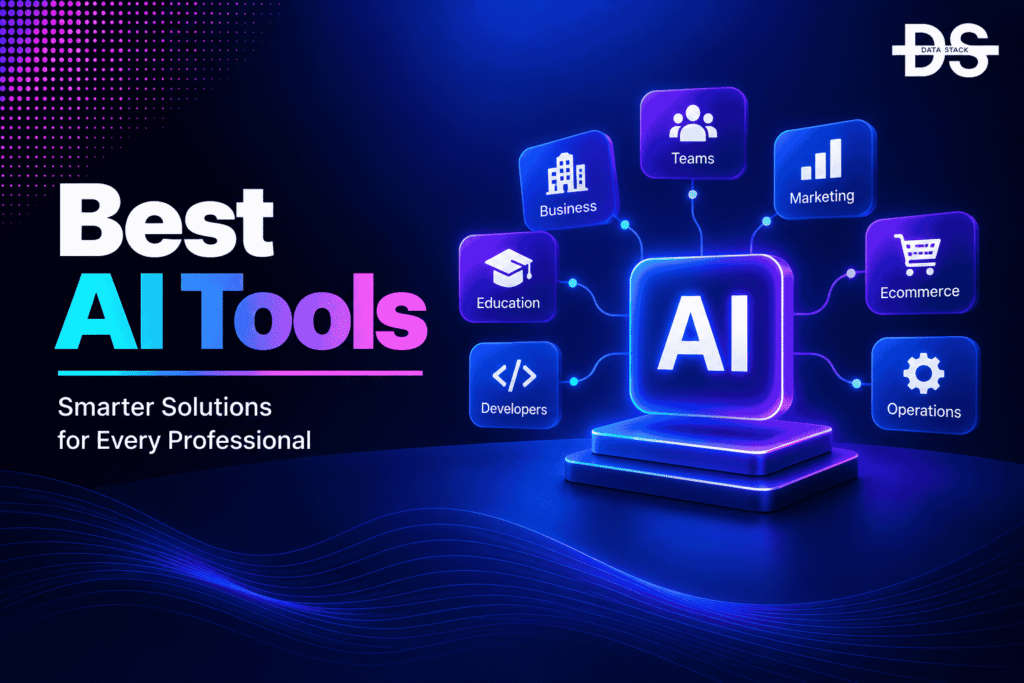
Developers increasingly use AI across the software development lifecycle, from writing and reviewing code to debugging, testing, documentation, and researching unfamiliar technologies. AI coding tools can help development teams handle repetitive programming tasks faster while giving developers more time to focus on architecture, product requirements, and complex engineering problems.
According to market research, the global AI code tools market is expanding as software teams adopt AI-assisted development across coding, testing, code review, and other engineering workflows. The growing availability of AI-powered development environments and coding agents is also moving these tools beyond simple code autocomplete toward more autonomous software development tasks.
AI tools for developers are software platforms that use artificial intelligence to assist with software development tasks such as code generation, debugging, code review, testing, documentation, research, and development workflows. Different tools specialize in different parts of the development process, so developers can combine them based on their programming languages, development environment, and workflow.
For example, GitHub Copilot can assist with coding and development, Cursor provides an AI-focused code editor, Claude can help with complex coding and reasoning tasks, Amazon Q Developer supports developers working with AWS and other development environments, Tabnine provides AI-powered coding assistance, and Snyk brings AI capabilities into application security and code analysis.
This guide covers 6 AI tools for developers in 2026, with each tool selected for a different development need. The goal is to cover coding, AI-native development, general coding assistance, cloud development, developer productivity, and application security without simply listing six tools that perform the same function.
Table of Contents
ToggleWhy Do You Need AI Tools for Developers?
AI development tools can assist developers across multiple stages of the software lifecycle, helping reduce repetitive work while accelerating coding, debugging, testing, research, and security tasks.
- Write code faster: Generate code suggestions, functions, components, and implementations from natural-language instructions.
- Debug applications: Analyze errors and existing code to help identify potential causes and solutions.
- Understand unfamiliar code: Explain functions, classes, repositories, and technical implementations.
- Improve code quality: Assist with code review, refactoring, optimization, and documentation.
- Generate tests: Help create test cases and supporting code for different application components.
- Accelerate research: Help developers understand APIs, frameworks, libraries, programming concepts, and technical documentation.
- Automate repetitive development work: Reduce manual effort involved in common coding and software-engineering tasks.
- Improve application security: Identify potential vulnerabilities and provide assistance with remediation and secure development practices.
Also Read: Best AI Coding Tools in 2026
Top 6 AI Tools for Developers: Comparison
The following AI tools for developers cover different parts of the software development workflow. GitHub Copilot focuses on AI-assisted coding, Cursor on AI-native development, Claude on coding and complex reasoning, Amazon Q Developer on cloud and application development, Tabnine on developer assistance and code privacy, and Snyk on AI-powered application security.
| # | AI Tool | Best For | Best For Teams | Pricing | G2 Rating |
|---|---|---|---|---|---|
| #1 | GitHub Copilot | AI-assisted coding and development | Developers, Engineering | From $10/user/month | 4.5/5 |
| #2 | Cursor | AI-native coding and codebase work | Developers, Engineering | Free; paid plans available | 4.5/5 |
| #3 | Claude | Coding, reasoning, and code analysis | Developers, Engineering, Product | Free; Pro from $20/month | 4.5/5 |
| #4 | Amazon Q Developer | AWS and cloud development | Developers, DevOps, Cloud Teams | Free tier; paid plans available | 4.3/5 |
| #5 | Tabnine | Private AI coding assistance | Developers, Engineering | Paid plans available | 4.2/5 |
| #6 | Snyk | AI-powered application security | Developers, DevSecOps, Security | Free and paid plans | 4.6/5 |
Best AI Tools for Developers in 2026
Let’s take a closer look at the best AI tools for developers in 2026, with each platform addressing a different part of the software development lifecycle. From AI-assisted coding and codebase analysis to cloud development and application security, these tools can help development teams incorporate AI into their existing engineering workflows.
#1 GitHub Copilot
GitHub Copilot is an AI coding assistant that helps developers write, understand, review, and modify code directly within supported development environments. It can assist with everything from generating individual lines of code to working through larger development tasks, making it useful for developers who want AI assistance within their existing coding workflow.
Developers can use Copilot to generate code from natural-language instructions, explain unfamiliar code, troubleshoot errors, create tests, and work with GitHub repositories. Its integration with popular IDEs and GitHub workflows allows developers to use AI assistance without moving between separate applications during development.
For engineering teams, GitHub Copilot can support everyday development while allowing developers to remain responsible for reviewing generated code, validating behavior, and making architectural decisions.
Key Features
- Code completion: Generate inline code suggestions as developers type.
- Copilot Chat: Ask questions about code, development tasks, and technical problems through conversational prompts.
- Code generation: Create functions, classes, components, and other code from natural-language instructions.
- Agent mode: Work through multi-step coding tasks by allowing Copilot to make changes across a project.
- Coding agent: Delegate supported development tasks and have Copilot work through issues and repository changes.
- Code review: Assist with reviewing pull requests and identifying potential issues.
- Test generation: Generate tests for existing code and help developers expand test coverage.
- IDE integrations: Use Copilot within supported development environments.
- GitHub integration: Work with repositories, issues, pull requests, and other GitHub development workflows.
- Code explanation: Explain existing code and help developers understand unfamiliar implementations.
G2 Rating: 4.5/5
#2 Cursor
Cursor is an AI-powered code editor designed around AI-assisted software development. Built on a code-editor workflow, it allows developers to interact with their codebase using natural-language instructions while retaining the familiar editing environment used for software development.
Developers can use Cursor to generate and modify code, ask questions about an entire codebase, troubleshoot problems, refactor implementations, and work through larger coding tasks. Its ability to understand project context makes it useful when changes involve multiple files rather than a single isolated code snippet.
Cursor is particularly relevant for developers who want an AI-native development environment where code generation, codebase understanding, and agent-style workflows are integrated directly into the editor.
Key Features
- Agent mode: Work through multi-file development tasks using natural-language instructions.
- Codebase understanding: Analyze project files and use repository context when responding to coding requests.
- Tab completion: Provide context-aware code suggestions while developers type.
- Inline editing: Modify selected code directly using natural-language instructions.
- AI chat: Discuss code, errors, architecture, and development tasks within the editor.
- Multi-file editing: Apply changes across multiple files for larger development tasks.
- Codebase search: Find relevant code and dependencies across a project using natural-language queries.
- Terminal integration: Work with terminal commands and development workflows from the editor.
- Model selection: Use supported AI models for different development tasks.
- VS Code compatibility: Provide a familiar development environment for developers accustomed to VS Code.
G2 Rating: 4.5/5
Showcase your software to buyers actively comparing tools. Submit your product for editorial review and get featured on Data Stack Hub.
Submit Your Tool →#3 Claude
Claude is an AI assistant developed by Anthropic that can support developers with coding, debugging, code analysis, technical research, and complex reasoning. Its ability to work with long technical contexts makes it useful for developers handling large code files, repositories, documentation, and complicated engineering problems.
Developers can use Claude to generate and explain code, troubleshoot errors, refactor implementations, analyze technical architecture, and work through development problems. It can also help interpret documentation and reason about implementation approaches before developers make changes to a codebase.
For engineering teams, Claude can function as a general-purpose development assistant while also supporting tasks that require deeper reasoning beyond straightforward code completion.
Key Features
- Code generation: Generate functions, components, scripts, and other software implementations.
- Code analysis: Review and explain existing code and technical implementations.
- Debugging: Analyze errors and help identify potential causes and fixes.
- Code refactoring: Suggest and implement changes to improve existing code.
- Long-context processing: Work with large amounts of code and technical information in supported workflows.
- Claude Code: Use an agentic coding environment to work with repositories and development tasks.
- Technical research: Analyze technical documentation, APIs, frameworks, and programming concepts.
- Multi-file workflows: Assist with development tasks that involve multiple files and project components.
- Terminal workflows: Work with supported command-line development environments through Claude Code.
- Natural-language programming: Describe desired functionality in plain language and receive implementation assistance.
G2 Rating: 4.5/5
#4 Amazon Q Developer
Amazon Q Developer is an AI-powered assistant for software development that helps developers write, transform, test, troubleshoot, and understand code. It is particularly relevant for teams building and operating applications on AWS because it integrates AI assistance with AWS development workflows.
Developers can use Amazon Q Developer to generate code, explain implementations, identify potential issues, create tests, and receive guidance on AWS services and application development. It can also help developers understand AWS resources and troubleshoot cloud-related problems.
For development teams already using AWS, Amazon Q Developer can connect AI-assisted coding with cloud development and operational workflows rather than treating coding and cloud infrastructure as separate activities.
Key Features
- Code generation: Generate code and implementations from natural-language instructions.
- Inline code suggestions: Provide coding recommendations while developers work.
- Amazon Q chat: Ask questions about code, AWS services, and development problems.
- Code transformation: Assist with supported application modernization and code-transformation tasks.
- Code reviews: Analyze code and provide suggestions for potential improvements.
- Unit test generation: Generate tests for supported codebases and development workflows.
- AWS assistance: Provide guidance for working with AWS services and resources.
- Security scanning: Identify potential security issues in supported development workflows.
- IDE integrations: Provide AI development assistance within supported IDEs.
- CLI assistance: Help developers work with command-line development and AWS workflows.
G2 Rating: 4.3/5
#5 Tabnine
Tabnine is an AI coding assistant designed to help developers generate, complete, and understand code while providing options focused on enterprise privacy and control. It integrates AI assistance into development environments and supports coding workflows across multiple programming languages.
Developers can use Tabnine for code completion, code generation, code explanations, testing, documentation, and other software development tasks. Its enterprise-oriented approach also makes it relevant for organizations that need greater control over how AI coding assistance is deployed and how source code is handled.
For development teams evaluating AI coding tools with an emphasis on privacy and organizational control, Tabnine provides an alternative to more general-purpose coding assistants.
Key Features
- Code completion: Generate context-aware code suggestions while developers type.
- Code generation: Create code from natural-language descriptions and development requirements.
- AI chat: Ask questions about code and software development tasks.
- Code explanation: Explain existing code and help developers understand implementations.
- Test generation: Assist with creating tests for application code.
- Documentation generation: Generate documentation and comments for supported code.
- IDE integrations: Provide coding assistance within supported development environments.
- Private AI deployment: Offer deployment and data-control options for organizations with stricter privacy requirements.
- Enterprise administration: Provide controls for managing AI coding assistance across development teams.
- Multiple language support: Assist with development across a range of programming languages.
G2 Rating: 4.2/5
#6 Snyk
Snyk is a developer security platform that helps teams identify and remediate vulnerabilities across open-source dependencies, source code, containers, and infrastructure as code. Its AI capabilities can assist developers with understanding security findings and addressing vulnerabilities as part of the development workflow.
Developers can integrate Snyk into development environments and CI/CD pipelines to identify security issues earlier in the software development lifecycle. Instead of treating security as a separate process after development, teams can incorporate security checks directly into coding and deployment workflows.
For development and DevSecOps teams, Snyk is particularly useful when AI-assisted development needs to be paired with automated security analysis. It can help teams identify vulnerabilities while maintaining development velocity.
Key Features
- Snyk Open Source: Identify known vulnerabilities in open-source dependencies and packages.
- Snyk Code: Analyze source code for security vulnerabilities using static application security testing.
- Snyk Container: Scan container images for vulnerabilities and security issues.
- Snyk IaC: Identify security and configuration issues in infrastructure-as-code files.
- AI-powered security: Use AI capabilities to help explain findings and support remediation.
- Fix advice: Provide guidance for addressing identified vulnerabilities.
- Developer integrations: Integrate security checks into supported IDEs and developer workflows.
- CI/CD integration: Run security checks within automated development and deployment pipelines.
- Dependency monitoring: Monitor dependencies for newly discovered vulnerabilities.
- Security reporting: Provide visibility into application security findings across projects and development environments.
G2 Rating: 4.6/5
Also Read: Best Snyk Alternatives and Competitors in 2026
How to Choose the Right AI Tool for Developers
Choosing an AI tool for development depends on the programming workflow, development environment, codebase, cloud infrastructure, and security requirements of the team. Developers should look beyond basic code generation and consider how well a tool fits into the complete software development lifecycle.
- Match the tool to your workflow: Determine whether you need code completion, code generation, debugging, codebase analysis, testing, cloud development, or security assistance.
- Check IDE compatibility: Make sure the AI tool integrates with the editor and development environments your team already uses.
- Evaluate codebase context: For larger projects, consider how well the tool can understand repositories, dependencies, multiple files, and existing architecture.
- Review agentic capabilities: If you want AI to handle multi-step development tasks, evaluate features such as coding agents, terminal access, and multi-file editing.
- Consider programming language support: Check whether the tool performs well with the languages, frameworks, and technologies used by your development team.
- Evaluate security: Review how the provider handles source code, prompts, generated code, access controls, and enterprise data.
- Check development integrations: Consider integrations with GitHub, GitLab, CI/CD systems, cloud platforms, issue trackers, and other tools in your development workflow.
- Look at testing and code review: If quality is a priority, consider tools that can assist with test generation, code review, debugging, and vulnerability detection.
- Consider cloud requirements: AWS-focused teams may benefit from tools with deeper cloud-service integration, while other teams may prioritize broader development-environment support.
- Compare pricing and scalability: Evaluate individual developer pricing, team plans, usage limits, administration features, and costs as the engineering organization grows.
Browse expertly curated software recommendations across hundreds of business categories.
Browse Top Tools →Conclusion
AI tools for developers are moving beyond basic autocomplete and becoming part of broader software development workflows. Developers can now use AI to generate code, understand repositories, debug applications, create tests, review implementations, work with cloud services, and identify security issues.
The tools covered in this guide serve different development requirements. GitHub Copilot provides broad AI-assisted coding and GitHub integration, while Cursor offers an AI-native development environment focused heavily on codebase context and agentic workflows. Claude provides general-purpose coding and reasoning capabilities, including support for more complex development tasks.
Amazon Q Developer is particularly relevant for teams working with AWS and cloud applications, while Tabnine focuses on AI coding assistance with enterprise privacy and deployment considerations. Snyk addresses another important part of the development lifecycle by bringing application security and vulnerability management into developer workflows.
The right choice depends on how your team writes, reviews, tests, deploys, and secures software. Developers should consider IDE integration, codebase understanding, agentic capabilities, programming-language support, security, integrations, pricing, and team requirements before adopting an AI development tool.
AI-generated code should also be reviewed and tested before being incorporated into production systems. Developers remain responsible for validating correctness, security, performance, licensing considerations, and compatibility with the application’s architecture.
Frequently Asked Questions
Increase your product visibility by reaching software buyers researching the best tools. Every submission is reviewed by our editorial team.
Feature My Tool →1. What are AI tools for developers?
AI tools for developers are software platforms that use artificial intelligence to assist with tasks such as code generation, code completion, debugging, testing, code review, documentation, research, and application security.
2. What are the best AI tools for developers?
Popular options include GitHub Copilot, Cursor, Claude, Amazon Q Developer, Tabnine, and Snyk. Each focuses on different parts of the software development lifecycle, so the appropriate choice depends on the team’s workflow.
3. Can AI tools write code?
Yes. AI coding tools can generate functions, components, scripts, tests, and other code from natural-language instructions. Developers should review and test generated code before using it in production.
4. Can AI tools debug code?
Yes. AI development tools can analyze error messages, code, logs, and project context to help developers identify potential problems and suggest fixes.
5. Which AI tool is best for coding?
Different tools are designed around different coding workflows. GitHub Copilot focuses on AI-assisted coding within development workflows, while Cursor provides an AI-native code editor. Developers should compare their IDE, codebase, and agentic-workflow requirements.
6. Can AI tools understand an entire codebase?
Some AI development tools can analyze multiple files and use repository context when responding to requests. The depth of codebase understanding varies between products and plans.
7. Can AI tools generate software tests?
Yes. Several AI coding assistants can generate unit tests and help developers expand test coverage based on existing code.
8. Are AI coding tools useful for debugging?
They can be. Developers can provide errors, logs, or relevant code and ask AI tools to identify possible causes, explain the issue, and suggest potential fixes.
9. Can AI tools help with code review?
Yes. Some AI development platforms provide code-review capabilities that can identify potential bugs, quality issues, security concerns, and areas for improvement.
10. Are AI coding tools secure?
Security varies by provider, product, and plan. Development teams should review data retention, source-code handling, access controls, privacy policies, and enterprise security features before using AI tools with proprietary code.
11. Can developers use AI tools with GitHub?
Yes. Several AI development tools integrate directly with GitHub or support GitHub-based workflows involving repositories, issues, pull requests, code review, and development tasks.
12. Can AI tools replace developers?
AI can automate and accelerate certain development tasks, but developers remain responsible for architecture, requirements, validation, security, testing, and production decisions. AI-generated code still requires human review.
13. Are AI tools useful for DevOps teams?
Yes. AI can assist with infrastructure code, troubleshooting, documentation, deployment workflows, cloud configuration, and security analysis. Tools with deeper cloud or DevOps integrations can be particularly useful for these workflows.
14. Can AI tools improve developer productivity?
AI can reduce the time developers spend on repetitive coding, documentation, debugging, research, and testing tasks. The productivity impact depends on the development workflow and how effectively the team integrates the tool.
15. What should developers consider before choosing an AI coding tool?
Developers should evaluate IDE support, programming languages, codebase context, agentic capabilities, integrations, security, privacy, testing and review features, pricing, and how well the tool fits their existing development workflow.