
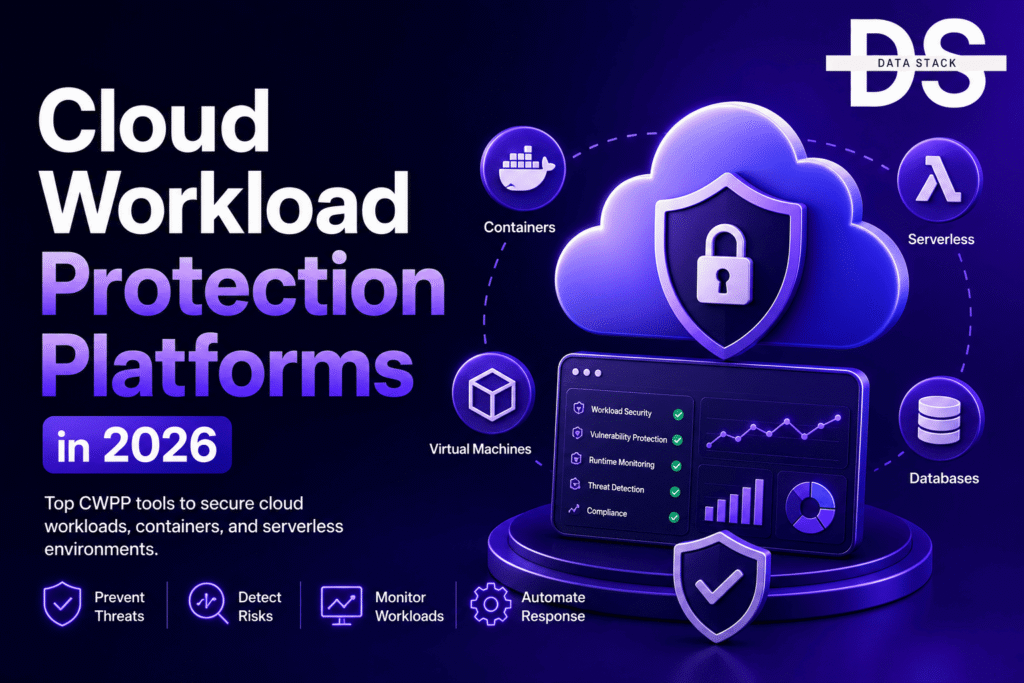
Cloud workloads have become the backbone of modern applications, but they have also become one of the biggest targets for cyberattacks. According to industry research, containers now account for a significant percentage of cloud-native deployments, while Kubernetes adoption continues to grow rapidly across enterprises. As organizations move virtual machines, containers, Kubernetes clusters, and serverless applications to the cloud, protecting workloads throughout their lifecycle has become increasingly complex.
Cloud environments are highly dynamic, with workloads constantly being created, updated, and terminated. Traditional endpoint security solutions often lack the visibility needed to protect ephemeral cloud workloads, leaving organizations vulnerable to malware, ransomware, privilege escalation, container escapes, runtime attacks, and misconfigurations. Security teams also face challenges securing workloads consistently across AWS, Microsoft Azure, Google Cloud Platform (GCP), and hybrid cloud environments.
This is where Cloud Workload Protection Platform (CWPP) tools play a critical role. CWPP tools continuously protect cloud workloads—including virtual machines, containers, Kubernetes clusters, serverless functions, and cloud-native applications—from development through runtime. Leading Cloud Workload Protection Platforms combine workload visibility, vulnerability management, runtime threat detection, container security, Kubernetes security, compliance monitoring, and policy enforcement to help organizations reduce cloud risk without slowing development.
In this guide, we’ve reviewed the best CWPP tools based on workload protection capabilities, runtime security, Kubernetes support, container security, cloud platform coverage, compliance, automation, integrations, ease of deployment, and enterprise adoption. Whether you’re securing a single cloud environment or managing workloads across multiple cloud providers, these Cloud Workload Protection Platforms can help strengthen your cloud security strategy.
Table of Contents
ToggleWhat Are CWPP Tools?
Cloud Workload Protection Platform (CWPP) tools are security solutions designed to protect cloud workloads across public, private, hybrid, and multi-cloud environments. Unlike traditional endpoint protection, CWPP tools secure workloads regardless of where they run, including virtual machines, containers, Kubernetes clusters, serverless functions, and cloud-native applications.
Modern Cloud Workload Protection Platforms continuously monitor workloads for vulnerabilities, malware, runtime threats, unauthorized activity, and compliance violations. They also enforce security policies, detect suspicious behavior, protect containerized applications, and provide visibility across cloud infrastructure. Many enterprise CWPP tools now integrate with Cloud Security Posture Management (CSPM), Cloud Infrastructure Entitlement Management (CIEM), Infrastructure as Code (IaC) scanning, and vulnerability management as part of a broader Cloud-Native Application Protection Platform (CNAPP).
Comparison of the Best CWPP Tools
| Tool | Best For | Cloud Support | Free Trial | G2 Rating |
|---|---|---|---|---|
| Prisma Cloud | Enterprise CNAPP & Cloud Workload Protection | AWS, Azure, GCP | Demo | 4.6/5 |
| Wiz | Agentless Cloud Workload Protection | AWS, Azure, GCP, OCI | Demo | 4.7/5 |
| CrowdStrike Falcon Cloud Security | AI-Powered Runtime Workload Security | AWS, Azure, GCP | Demo | 4.7/5 |
| Microsoft Defender for Cloud | Microsoft & Hybrid Cloud Security | Azure, AWS, GCP | Free Tier | 4.5/5 |
| SentinelOne Singularity Cloud Security | AI-Driven Cloud Workload Protection | AWS, Azure, GCP | Demo | 4.7/5 |
| Sysdig Secure | Kubernetes & Container Workload Security | AWS, Azure, GCP | Free Trial | 4.6/5 |
| Orca Security | Agentless Workload Visibility & Risk Detection | AWS, Azure, GCP, OCI | Demo | 4.8/5 |
| Trend Vision One Cloud Security | Enterprise Runtime Protection & XDR | AWS, Azure, GCP | Demo | 4.5/5 |
| Lacework | Behavioral Analytics & Runtime Security | AWS, Azure, GCP | Demo | 4.6/5 |
| Check Point CloudGuard CNAPP | DevSecOps & Multi-Cloud Security | AWS, Azure, GCP | Demo | 4.4/5 |
10 Best CWPP Tools (Cloud Workload Protection Platforms)
#1 Prisma Cloud
Prisma Cloud by Palo Alto Networks is one of the most comprehensive CWPP tools available for securing modern cloud workloads. Rather than protecting only virtual machines, Prisma Cloud secures containers, Kubernetes clusters, serverless functions, and cloud-native applications throughout their lifecycle. As part of its broader CNAPP platform, it combines Cloud Workload Protection with Cloud Security Posture Management (CSPM), identity security, Infrastructure as Code (IaC) scanning, and runtime protection, providing organizations with unified visibility across development and production environments.
Organizations running workloads across AWS, Microsoft Azure, and Google Cloud Platform rely on Prisma Cloud to continuously monitor workload behavior, detect vulnerabilities, identify malware, prevent runtime attacks, and enforce security policies. Its runtime protection capabilities help security teams detect abnormal processes, privilege escalation attempts, file integrity changes, and network anomalies before they impact production systems. By integrating workload telemetry with cloud configuration data, Prisma Cloud enables faster threat investigation and remediation.
Unlike traditional endpoint security products, Prisma Cloud is purpose-built for cloud-native infrastructure. It secures container images before deployment, scans Infrastructure as Code templates during development, and continuously protects workloads after deployment. These capabilities make it one of the best Cloud Workload Protection Platforms for enterprises adopting Kubernetes, containers, and DevSecOps.
Key Features
- Continuous Cloud Workload Protection across AWS, Microsoft Azure, and Google Cloud Platform.
- Runtime threat detection for virtual machines, containers, Kubernetes clusters, and serverless workloads.
- Container image vulnerability scanning before deployment into production.
- Cloud Workload Protection for Linux and Windows workloads running across hybrid and multi-cloud environments.
- Infrastructure as Code (IaC) security scanning for Terraform, CloudFormation, ARM templates, and Kubernetes manifests.
- Kubernetes security with policy enforcement, admission control, and runtime monitoring.
- Automated compliance monitoring for CIS Benchmarks, PCI DSS, HIPAA, ISO 27001, SOC 2, GDPR, and NIST.
- Native integration with DevOps pipelines, SIEM platforms, and security orchestration tools.
Pricing
Custom enterprise pricing.
Best For
Large enterprises looking for a comprehensive CWPP tool with integrated CNAPP capabilities.
Why Choose This Tool
Prisma Cloud combines industry-leading Cloud Workload Protection, runtime security, container protection, Kubernetes security, and compliance management within a single enterprise platform.
G2 Rating: 4.6/5
Gartner Rating: 4.7/5
#2 Wiz
Wiz has become one of the fastest-growing cloud security platforms by simplifying how organizations secure cloud workloads. Unlike many traditional CWPP tools that rely on agents deployed across every workload, Wiz uses an agentless architecture to provide deep visibility into virtual machines, containers, Kubernetes clusters, serverless functions, and cloud assets. This allows security teams to assess workload risks quickly without introducing additional operational overhead.
As an advanced Cloud Workload Protection Platform, Wiz continuously analyzes workloads running on AWS, Microsoft Azure, Google Cloud Platform (GCP), and Oracle Cloud Infrastructure (OCI). It identifies vulnerable virtual machines, outdated software packages, exposed secrets, malware, container image vulnerabilities, insecure Kubernetes configurations, and runtime risks. Instead of presenting isolated findings, Wiz correlates workload security data with cloud identities, networking, and storage to uncover complete attack paths that attackers could exploit.
Although Wiz is widely recognized for its CSPM capabilities, it also delivers robust Cloud Workload Protection by combining workload visibility, vulnerability management, runtime detection, Kubernetes security, Infrastructure as Code (IaC) scanning, and Cloud Infrastructure Entitlement Management (CIEM) within a unified CNAPP platform. Organizations seeking an agentless CWPP tool with rapid deployment and enterprise-scale visibility will find Wiz a compelling choice.
Key Features
- Continuous Cloud Workload Protection across AWS, Microsoft Azure, Google Cloud Platform, and Oracle Cloud Infrastructure.
- Agentless workload visibility for virtual machines, containers, Kubernetes clusters, and serverless workloads.
- Runtime threat detection to identify malware, suspicious processes, privilege escalation, and abnormal workload behavior.
- Container image vulnerability scanning before workloads are deployed into production.
- Kubernetes security with posture management, runtime monitoring, and configuration analysis.
- Infrastructure as Code (IaC) security scanning for Terraform, CloudFormation, and Kubernetes manifests.
- Attack path analysis that correlates workload, identity, network, and cloud configuration risks.
- Compliance monitoring aligned with CIS Benchmarks, PCI DSS, HIPAA, SOC 2, ISO 27001, and NIST.
Pricing
Custom enterprise pricing.
Best For
Organizations looking for an agentless CWPP tool with comprehensive workload visibility across multi-cloud environments.
Why Choose This Tool
Wiz combines agentless Cloud Workload Protection, runtime security, vulnerability management, Kubernetes security, and attack path analysis into a unified CNAPP platform.
G2 Rating: 4.7/5
Gartner Rating: 4.8/5
Showcase your software to buyers actively comparing tools. Submit your product for editorial review and get featured on Data Stack Hub.
Submit Your Tool →#3 Microsoft Defender for Cloud
Microsoft Defender for Cloud is a strong choice for organizations that want built-in Cloud Workload Protection without deploying a separate security platform. Integrated with Microsoft Azure and extending support to AWS and Google Cloud Platform, it helps organizations secure workloads across hybrid and multi-cloud environments while providing centralized visibility into cloud security risks. Businesses already invested in the Microsoft ecosystem can leverage native integrations with Microsoft Defender XDR, Microsoft Sentinel, and Microsoft Entra ID for streamlined security operations.
As a mature Cloud Workload Protection Platform (CWPP), Microsoft Defender for Cloud continuously protects virtual machines, containers, Kubernetes clusters, databases, storage services, and serverless applications. It identifies workload vulnerabilities, monitors runtime activity, detects malware and suspicious behavior, evaluates cloud configurations, and recommends remediation actions. The platform also calculates a Secure Score that helps organizations continuously improve the security of their cloud workloads.
Microsoft Defender for Cloud goes beyond traditional CWPP tools by integrating Cloud Security Posture Management (CSPM), Cloud Infrastructure Entitlement Management (CIEM), Infrastructure as Code (IaC) scanning, DevOps security, vulnerability assessment, and AI-assisted investigations. This unified approach enables organizations to secure workloads throughout the development and deployment lifecycle.
Key Features
- Continuous Cloud Workload Protection across Azure, AWS, and Google Cloud Platform.
- Runtime protection for virtual machines, containers, Kubernetes clusters, databases, and serverless applications.
- Built-in vulnerability assessment for cloud workloads and operating systems.
- Kubernetes security with threat detection and policy enforcement.
- Cloud Security Posture Management (CSPM) for monitoring cloud configurations and compliance.
- Infrastructure as Code (IaC) security scanning integrated with DevOps workflows.
- Compliance monitoring for major industry and regulatory standards.
- Native integration with Microsoft Defender XDR, Microsoft Sentinel, and Microsoft Entra ID.
Pricing
Foundational cloud security capabilities are included at no additional cost, while advanced workload protection features are available through Microsoft Defender plans.
Best For
Organizations using Microsoft Azure and looking for integrated Cloud Workload Protection across hybrid and multi-cloud environments.
Why Choose This Tool
Microsoft Defender for Cloud combines enterprise-grade Cloud Workload Protection, vulnerability management, runtime security, CSPM, and native Microsoft ecosystem integrations within a unified platform.
G2 Rating: 4.5/5
Gartner Rating: 4.6/5
#4 CrowdStrike Falcon Cloud Security
CrowdStrike Falcon Cloud Security extends the Falcon platform’s industry-leading threat detection capabilities into cloud environments, providing comprehensive Cloud Workload Protection for modern infrastructure. Built as part of the Falcon platform, it secures workloads running across public clouds while combining workload protection, cloud posture management, identity security, and AI-driven threat intelligence into a unified CNAPP solution. Organizations already using CrowdStrike Falcon can seamlessly extend protection from endpoints to cloud workloads through a single console.
As an advanced Cloud Workload Protection Platform, CrowdStrike Falcon Cloud Security continuously monitors workloads across AWS, Microsoft Azure, and Google Cloud Platform. It detects workload vulnerabilities, malware, ransomware, suspicious runtime behavior, exposed cloud resources, insecure container images, Kubernetes threats, and privilege escalation attempts. By correlating workload telemetry with threat intelligence gathered from the Falcon platform, security teams gain faster detection and response capabilities across hybrid and multi-cloud environments.
In addition to robust Cloud Workload Protection, CrowdStrike integrates Cloud Security Posture Management (CSPM), Cloud Infrastructure Entitlement Management (CIEM), Infrastructure as Code (IaC) scanning, container security, Kubernetes security, vulnerability management, runtime detection, and automated remediation. This comprehensive approach makes Falcon Cloud Security one of the strongest CWPP tools for enterprises seeking unified cloud and endpoint security.
Key Features
- Continuous Cloud Workload Protection across AWS, Microsoft Azure, and Google Cloud Platform.
- AI-powered runtime threat detection for virtual machines, containers, Kubernetes clusters, and cloud-native workloads.
- Container image vulnerability scanning to identify security risks before deployment.
- Kubernetes security with runtime monitoring, workload protection, and policy enforcement.
- Infrastructure as Code (IaC) security scanning for Terraform, Kubernetes manifests, and cloud deployment templates.
- Cloud Security Posture Management (CSPM) integrated with workload protection and compliance monitoring.
- Threat intelligence powered by the CrowdStrike Falcon platform for faster incident response.
- Automated remediation workflows and integrations with enterprise security operations.
Pricing
Custom enterprise pricing.
Best For
Large enterprises seeking unified CWPP tools with AI-powered threat detection and integrated endpoint security.
Why Choose This Tool
CrowdStrike Falcon Cloud Security combines enterprise-grade Cloud Workload Protection, runtime security, threat intelligence, Kubernetes protection, and cloud posture management into a single cloud security platform.
G2 Rating: 4.7/5
Gartner Rating: 4.7/5
#5 Trend Vision One™ Cloud Security
Trend Vision One™ Cloud Security provides a unified platform for protecting cloud workloads across development, deployment, and runtime. Instead of relying on separate products for workload protection, cloud posture management, and threat detection, it consolidates these capabilities into a single solution. This makes it easier for security teams to monitor workloads, investigate threats, and enforce security policies across complex multi-cloud environments.
As an enterprise-grade Cloud Workload Protection Platform, Trend Vision One continuously protects workloads running on AWS, Microsoft Azure, and Google Cloud Platform. It secures virtual machines, containers, Kubernetes clusters, and serverless applications by detecting workload vulnerabilities, runtime attacks, malware, exposed secrets, unauthorized processes, and configuration issues. Security teams can prioritize risks using AI-powered attack path analysis, enabling faster remediation of the most critical workload threats.
Trend Vision One extends traditional CWPP capabilities by integrating Cloud Security Posture Management (CSPM), Cloud Infrastructure Entitlement Management (CIEM), Infrastructure as Code (IaC) scanning, Kubernetes security, compliance monitoring, and XDR. Organizations already using Trend Micro’s broader security ecosystem benefit from centralized visibility across cloud workloads, endpoints, email, identities, and networks.
Key Features
- Continuous Cloud Workload Protection across AWS, Microsoft Azure, and Google Cloud Platform.
- Runtime security for virtual machines, containers, Kubernetes clusters, and serverless workloads.
- Cloud workload vulnerability management with automated risk prioritization.
- Kubernetes security including runtime monitoring and workload policy enforcement.
- Infrastructure as Code (IaC) security scanning before cloud deployments.
- AI-powered attack path analysis for faster workload risk remediation.
- Compliance monitoring across CIS Benchmarks, PCI DSS, HIPAA, ISO 27001, SOC 2, and NIST.
- Native integration with Trend Vision One XDR for unified detection and response.
Pricing
Custom enterprise pricing.
Best For
Organizations looking for an enterprise Cloud Workload Protection Platform integrated with XDR and cloud security operations.
Why Choose This Tool
Trend Vision One combines Cloud Workload Protection, runtime security, cloud posture management, and AI-powered threat detection to protect workloads across hybrid and multi-cloud environments.
G2 Rating: 4.5/5
Gartner Rating: 4.6/5
#6 SentinelOne Singularity Cloud Security
SentinelOne Singularity Cloud Security extends the company’s AI-powered security platform beyond endpoints to deliver comprehensive Cloud Workload Protection for modern cloud environments. Built as a unified CNAPP solution, it protects virtual machines, containers, Kubernetes clusters, serverless applications, and cloud-native workloads throughout their lifecycle. By combining workload protection with AI-driven threat detection and cloud security analytics, it enables organizations to detect and stop sophisticated attacks before they impact production environments.
As a next-generation CWPP tool, SentinelOne continuously monitors workloads across AWS, Microsoft Azure, and Google Cloud Platform to detect malware, workload vulnerabilities, privilege escalation attempts, suspicious processes, exposed secrets, container image vulnerabilities, and runtime attacks. The platform correlates workload telemetry with cloud identities, configurations, and threat intelligence to provide security teams with actionable context instead of isolated alerts. This helps reduce investigation time while improving overall cloud workload security.
Beyond Cloud Workload Protection, SentinelOne integrates Cloud Security Posture Management (CSPM), Cloud Infrastructure Entitlement Management (CIEM), Infrastructure as Code (IaC) scanning, Kubernetes security, container security, vulnerability management, and automated remediation into a single cloud security platform. Organizations looking for autonomous security operations will benefit from its AI-powered detection and response capabilities.
Key Features
- Continuous Cloud Workload Protection across AWS, Microsoft Azure, and Google Cloud Platform.
- Runtime threat detection for virtual machines, containers, Kubernetes clusters, and serverless workloads.
- AI-powered behavioral analytics to detect malware, privilege escalation, and suspicious workload activity.
- Container image vulnerability scanning before workloads are deployed into production.
- Kubernetes security with runtime monitoring, policy enforcement, and threat detection.
- Infrastructure as Code (IaC) security scanning for Terraform, Kubernetes manifests, and cloud templates.
- Automated remediation workflows integrated with enterprise security operations.
- Cloud compliance monitoring aligned with major regulatory and industry security standards.
Pricing
Custom enterprise pricing.
Best For
Enterprises seeking AI-powered CWPP tools with autonomous workload protection and cloud threat detection.
Why Choose This Tool
SentinelOne delivers intelligent Cloud Workload Protection, runtime security, Kubernetes protection, and automated threat response through a unified CNAPP platform.
G2 Rating: 4.7/5
Gartner Rating: 4.6/5
Increase your product visibility by reaching software buyers researching the best tools. Every submission is reviewed by our editorial team.
Feature My Tool →#7 Sysdig Secure
Sysdig Secure is purpose-built for organizations running Kubernetes, containers, and cloud-native applications at scale. Unlike traditional security platforms that later added container support, Sysdig was designed specifically for securing modern cloud workloads from build time through runtime. Its deep visibility into containerized environments, combined with advanced runtime protection, makes it one of the most capable CWPP tools for DevOps and platform engineering teams.
As a leading Cloud Workload Protection Platform, Sysdig continuously protects workloads across AWS, Microsoft Azure, Google Cloud Platform, Kubernetes, OpenShift, and container platforms. It identifies vulnerable container images, malware, unauthorized processes, privilege escalation attempts, runtime anomalies, and suspicious network activity before attackers can compromise production workloads. By correlating workload telemetry with vulnerability data and runtime behavior, the platform helps security teams prioritize the most critical threats.
In addition to Cloud Workload Protection, Sysdig Secure includes Kubernetes security, container vulnerability management, Cloud Security Posture Management (CSPM), Infrastructure as Code (IaC) scanning, compliance monitoring, runtime detection, and DevSecOps integrations. These capabilities enable organizations to secure workloads throughout the software development lifecycle while maintaining continuous visibility across cloud-native environments.
Key Features
- Continuous Cloud Workload Protection across AWS, Microsoft Azure, Google Cloud Platform, Kubernetes, and container environments.
- Runtime threat detection for containers, Kubernetes workloads, virtual machines, and cloud-native applications.
- Container image vulnerability scanning to identify security issues before deployment.
- Kubernetes security with runtime monitoring, admission control, policy enforcement, and workload protection.
- Infrastructure as Code (IaC) security scanning for Terraform, Kubernetes manifests, and cloud deployment templates.
- Cloud Security Posture Management (CSPM) to detect cloud configuration risks alongside workload threats.
- Compliance monitoring for CIS Benchmarks, PCI DSS, HIPAA, ISO 27001, SOC 2, and NIST.
- DevSecOps integrations with CI/CD pipelines, vulnerability scanners, and cloud-native workflows.
Pricing
Free trial available. Custom enterprise pricing is available based on deployment size and security requirements.
Best For
Organizations running Kubernetes, containers, and cloud-native applications that require enterprise-grade Cloud Workload Protection.
Why Choose This Tool
Sysdig Secure delivers comprehensive Cloud Workload Protection, Kubernetes security, runtime threat detection, and container vulnerability management, making it one of the best CWPP tools for cloud-native environments.
G2 Rating: 4.6/5
Gartner Rating: 4.6/5
#8 Orca Security
Orca Security has gained significant traction by delivering agentless Cloud Workload Protection without sacrificing visibility or security depth. Instead of deploying agents across thousands of workloads, Orca uses its patented SideScanning™ technology to inspect cloud workloads directly through cloud provider APIs. This approach enables organizations to secure workloads faster while minimizing operational complexity and performance overhead.
As a modern Cloud Workload Protection Platform, Orca continuously monitors workloads running on AWS, Microsoft Azure, Google Cloud Platform, and Oracle Cloud Infrastructure. It detects workload vulnerabilities, malware, exposed secrets, insecure container images, privilege escalation, lateral movement risks, and runtime attacks across virtual machines, containers, and Kubernetes clusters. The platform also correlates workload findings with cloud identities, storage, networking, and configurations to expose complete attack paths.
Orca extends beyond traditional CWPP tools by combining Cloud Security Posture Management (CSPM), Cloud Infrastructure Entitlement Management (CIEM), Data Security Posture Management (DSPM), vulnerability management, Kubernetes security, runtime protection, and compliance monitoring within a unified CNAPP platform. This comprehensive approach makes it an excellent choice for enterprises operating large-scale multi-cloud environments.
Key Features
- Continuous Cloud Workload Protection across AWS, Microsoft Azure, Google Cloud Platform, and Oracle Cloud Infrastructure.
- Agentless workload visibility for virtual machines, containers, Kubernetes clusters, and cloud-native applications.
- Runtime threat detection for malware, suspicious processes, privilege escalation, and lateral movement.
- Container image vulnerability scanning before workloads enter production.
- Kubernetes security with workload monitoring and runtime policy enforcement.
- Attack path analysis that correlates workload, identity, networking, and cloud configuration risks.
- Automated compliance monitoring aligned with leading regulatory and industry frameworks.
- Cloud Security Posture Management (CSPM) integrated with workload protection for unified cloud security.
Pricing
Custom enterprise pricing.
Best For
Organizations looking for an agentless CWPP tool with comprehensive workload visibility and runtime protection.
Why Choose This Tool
Orca Security combines agentless Cloud Workload Protection, runtime security, workload visibility, and attack path analysis to help organizations secure cloud-native workloads with minimal operational overhead.
G2 Rating: 4.8/5
Gartner Rating: 4.7/5
#9 Check Point CloudGuard CNAPP
Check Point CloudGuard CNAPP delivers comprehensive Cloud Workload Protection by securing workloads from the development stage through runtime. Built for enterprises adopting cloud-native applications and DevSecOps practices, the platform combines CWPP, Cloud Security Posture Management (CSPM), application security, identity protection, and runtime defense within a single solution. This unified architecture helps organizations reduce security gaps while maintaining visibility across multi-cloud environments.
As an enterprise-grade Cloud Workload Protection Platform, CloudGuard continuously protects workloads running on AWS, Microsoft Azure, Google Cloud Platform, Kubernetes, containers, and serverless environments. It detects workload vulnerabilities, malware, exposed secrets, privilege escalation attempts, insecure container images, runtime attacks, and compliance violations before they impact production workloads. Security teams can also scan Infrastructure as Code (IaC) templates during development to prevent insecure configurations from reaching production.
CloudGuard extends traditional Cloud Workload Protection by integrating Kubernetes security, Cloud Infrastructure Entitlement Management (CIEM), API security, vulnerability management, DevSecOps automation, runtime protection, and compliance monitoring into a unified CNAPP platform. Its extensive cloud security capabilities make it an excellent option for organizations looking to protect cloud workloads throughout the software development lifecycle.
Key Features
- Continuous Cloud Workload Protection across AWS, Microsoft Azure, and Google Cloud Platform.
- Runtime security for virtual machines, containers, Kubernetes clusters, and serverless applications.
- Container image vulnerability scanning to identify workload risks before deployment.
- Infrastructure as Code (IaC) security scanning for Terraform, CloudFormation, ARM templates, and Kubernetes manifests.
- Kubernetes security with runtime monitoring, workload policy enforcement, and admission control.
- Cloud Infrastructure Entitlement Management (CIEM) to monitor identities and privileged access.
- Compliance monitoring for CIS Benchmarks, PCI DSS, HIPAA, ISO 27001, SOC 2, GDPR, and NIST.
- DevSecOps integrations with CI/CD pipelines and enterprise security workflows.
Pricing
Custom enterprise pricing.
Best For
Organizations adopting DevSecOps and looking for enterprise-grade CWPP tools with integrated cloud application security.
Why Choose This Tool
Check Point CloudGuard combines Cloud Workload Protection, runtime security, Kubernetes protection, identity security, and DevSecOps automation into a comprehensive cloud security platform.
G2 Rating: 4.4/5
Gartner Rating: 4.5/5
#10 Lacework
Lacework uses machine learning and behavioral analytics to secure cloud workloads without overwhelming security teams with excessive alerts. Rather than relying solely on static rules, the platform establishes a baseline of normal workload activity and continuously analyzes runtime behavior to identify anomalies that may indicate compromise. This intelligence-driven approach helps organizations detect sophisticated attacks across dynamic cloud environments while reducing false positives.
As a modern Cloud Workload Protection Platform, Lacework continuously protects workloads across AWS, Microsoft Azure, and Google Cloud Platform. It monitors virtual machines, containers, Kubernetes clusters, and cloud-native applications for workload vulnerabilities, malware, privilege escalation attempts, unauthorized processes, exposed secrets, runtime attacks, and compliance issues. By correlating workload telemetry with cloud identities and configurations, Lacework enables security teams to prioritize the threats that pose the greatest business risk.
Beyond traditional CWPP capabilities, Lacework integrates Cloud Security Posture Management (CSPM), Cloud Infrastructure Entitlement Management (CIEM), Infrastructure as Code (IaC) scanning, Kubernetes security, vulnerability management, runtime protection, and automated compliance reporting into a unified CNAPP platform. This broad feature set makes it well suited for organizations seeking proactive workload protection across multi-cloud environments.
Key Features
- Continuous Cloud Workload Protection across AWS, Microsoft Azure, and Google Cloud Platform.
- Behavioral analytics powered by machine learning to detect abnormal workload activity and runtime threats.
- Runtime threat detection for virtual machines, containers, Kubernetes workloads, and cloud-native applications.
- Container image vulnerability scanning before deployment into production environments.
- Kubernetes security with runtime monitoring and workload policy enforcement.
- Infrastructure as Code (IaC) security scanning for Terraform and cloud deployment templates.
- Automated compliance monitoring aligned with CIS Benchmarks, PCI DSS, HIPAA, SOC 2, ISO 27001, and NIST.
- Cloud Security Posture Management (CSPM) integrated with workload protection for unified cloud security.
Pricing
Custom enterprise pricing.
Best For
Organizations looking for AI-driven Cloud Workload Protection with behavioral analytics and runtime threat detection.
Why Choose This Tool
Lacework combines intelligent Cloud Workload Protection, runtime security, Kubernetes protection, and machine learning to help organizations detect sophisticated cloud threats while minimizing alert fatigue.
G2 Rating: 4.6/5
Gartner Rating: 4.6/5
How to Choose the Best CWPP Tool
Choosing the right CWPP tool depends on your cloud architecture, workload types, compliance requirements, and security maturity. While every Cloud Workload Protection Platform secures workloads, the best solutions also provide runtime threat detection, container security, Kubernetes protection, vulnerability management, and seamless DevSecOps integrations.
- Workload coverage: Ensure the CWPP tool protects all workload types you use, including virtual machines, containers, Kubernetes clusters, serverless functions, and cloud-native applications. Organizations with hybrid or multi-cloud deployments should also verify support for AWS, Microsoft Azure, Google Cloud Platform (GCP), and other cloud providers.
- Runtime threat detection: Effective Cloud Workload Protection Platforms continuously monitor workloads after deployment to detect malware, ransomware, privilege escalation, suspicious processes, fileless attacks, and anomalous runtime behavior. Real-time visibility is essential for minimizing dwell time and reducing the impact of attacks.
- Container and Kubernetes security: If your organization relies on Kubernetes or containerized applications, look for CWPP tools that include container image scanning, Kubernetes runtime protection, admission control, policy enforcement, and workload monitoring to secure applications throughout their lifecycle.
- Vulnerability management: The best Cloud Workload Protection solutions automatically scan operating systems, software packages, container images, and application dependencies to identify vulnerabilities before attackers can exploit them. Prioritized remediation recommendations help security teams focus on the most critical risks.
- Compliance and governance: Organizations operating in regulated industries should choose a CWPP tool with built-in compliance frameworks for CIS Benchmarks, PCI DSS, HIPAA, ISO 27001, SOC 2, GDPR, and NIST. Automated reporting simplifies audits and ensures continuous compliance.
- DevSecOps and automation: Modern Cloud Workload Protection Platforms should integrate with CI/CD pipelines, Infrastructure as Code (IaC) workflows, SIEM platforms, SOAR tools, and ticketing systems. Automation helps reduce manual effort while accelerating threat detection and remediation.
Browse expertly curated software recommendations across hundreds of business categories.
Browse Top Tools →Conclusion
As cloud-native applications continue to replace traditional infrastructure, securing workloads has become one of the highest priorities for enterprise security teams. The best CWPP tools provide continuous visibility into cloud workloads, detect runtime threats, identify vulnerabilities, secure containers and Kubernetes environments, and automate remediation across hybrid and multi-cloud infrastructures.
For organizations seeking the most comprehensive Cloud Workload Protection Platform, Prisma Cloud remains the market leader with extensive workload security, Kubernetes protection, and CNAPP capabilities. Wiz excels with its agentless architecture and rapid deployment, while CrowdStrike Falcon Cloud Security stands out for AI-powered runtime detection and threat intelligence. Microsoft Defender for Cloud is an excellent choice for Microsoft-centric environments, and Sysdig Secure remains one of the strongest platforms for Kubernetes and container security.
Ultimately, the best CWPP tool is the one that aligns with your cloud architecture, workload types, compliance obligations, and security operations while providing continuous protection throughout the cloud workload lifecycle.
Frequently Asked Questions
1. What are CWPP tools?
Cloud Workload Protection Platform (CWPP) tools are security solutions that protect cloud workloads such as virtual machines, containers, Kubernetes clusters, and serverless applications throughout their lifecycle. They provide runtime threat detection, vulnerability management, compliance monitoring, and workload visibility across public, private, and hybrid cloud environments.
2. What is the difference between CWPP and CSPM?
CWPP focuses on protecting cloud workloads by detecting runtime threats, malware, vulnerabilities, and suspicious activity. CSPM (Cloud Security Posture Management) focuses on identifying cloud misconfigurations, compliance issues, and configuration drift. Many modern CNAPP platforms combine both capabilities.
3. Which cloud providers do CWPP tools support?
Most enterprise CWPP tools support AWS, Microsoft Azure, Google Cloud Platform (GCP), and many also support Oracle Cloud Infrastructure (OCI), Kubernetes, OpenShift, VMware environments, and hybrid cloud deployments.
4. Why are CWPP tools important?
Cloud workloads are constantly created, updated, and removed, making them difficult to secure using traditional endpoint protection. Cloud Workload Protection Platforms continuously monitor workloads, detect runtime attacks, identify vulnerabilities, and enforce security policies to reduce the risk of cloud breaches.
5. Which is the best CWPP tool?
The best CWPP tool depends on your requirements. Prisma Cloud is ideal for enterprises seeking a comprehensive CNAPP platform, Wiz is known for agentless workload protection, CrowdStrike Falcon Cloud Security excels in runtime threat detection, Microsoft Defender for Cloud integrates seamlessly with Azure, and Sysdig Secure is one of the strongest choices for Kubernetes and container security.